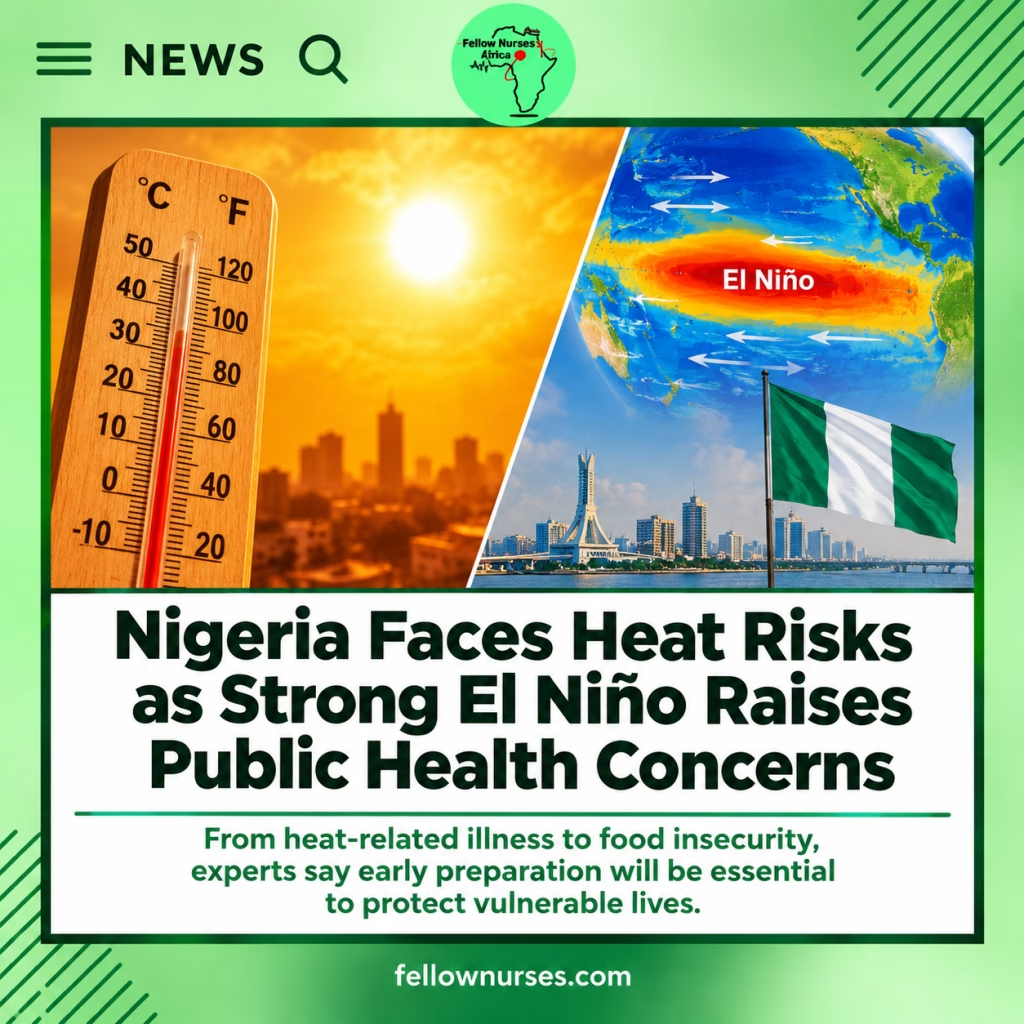
Nigeria Faces Heat Risks as Strong El Niño Raises Public Health Concerns
FNA NEWS, 23rd OF OCTOBER, 2026
A projection of 31,400 additional heat-related deaths has intensified concerns about Nigeria’s preparedness, as international climate agencies warn of a powerful El Niño developing into 2027.
👉 Join Fellow Nurses Africa on WhatsApp
Nigeria faces renewed public-health concerns as a strengthening El Niño raises the risk of extreme heat and weather disruption in the coming months.
On 8 October 2026, the United States National Oceanic and Atmospheric Administration (NOAA) reported that El Niño was intensifying, with a strong-to-very-strong event likely to persist through January to March 2027.
The warning comes amid growing concern about the potential consequences of extreme temperatures for vulnerable populations, food security, water supplies and healthcare services.
A report published by TheCable on 22 October, citing the Climate Impact Lab, said Nigeria could experience an estimated 31,400 additional heat-related deaths between September 2026 and February 2027.
The figure is a research projection, not a confirmed death toll or a certainty about future deaths. However, it highlights the potential human cost of extreme heat and the importance of early intervention.
For Nigeria, the challenge extends beyond monitoring temperatures. It includes ensuring that hospitals are prepared, communities have access to safe drinking water, outdoor workers are protected and vulnerable people receive timely health information.
What is El Niño, and why does it matter?
El Niño is a naturally occurring climate phenomenon characterised by unusually warm sea-surface temperatures in the central and eastern tropical Pacific Ocean.
It influences atmospheric circulation and can alter temperature and rainfall patterns around the world. Depending on the region, its effects may include increased heat, drought or heavier rainfall and flooding.
On 8 October, NOAA’s Climate Prediction Center said El Niño continued to strengthen and that a strong-to-very-strong event was likely through early 2027.
The World Meteorological Organization has also warned that the event could significantly affect global weather patterns and called for governments and humanitarian organisations to prepare for potential impacts.
However, a powerful El Niño does not mean every country will experience the same conditions. Nigeria’s specific risks must be assessed using national and regional meteorological forecasts, including updates from the Nigerian Meteorological Agency (NiMet).
Why extreme heat is a public-health concern
👉 Join Fellow Nurses Africa on WhatsApp
Prolonged exposure to high temperatures can cause dehydration, heat exhaustion and heatstroke. Heat can also worsen existing cardiovascular, respiratory and kidney conditions, particularly among people who have limited access to cooling or medical care.
People who work outdoors, including farmers, construction workers, transport operators and street traders, may face increased exposure.
Older adults, young children, pregnant women and people with certain chronic illnesses may also need additional protection.
The risks can extend into homes. Poor ventilation, crowded living conditions and unreliable electricity can make it difficult for households to escape high temperatures, especially when nights remain hot.
The projected death toll attributed to the Climate Impact Lab should therefore be treated as a warning about potential risks rather than a prediction that a fixed number of Nigerians will die.
Water, food and infectious disease risks
Extreme weather can affect more than body temperature.
High temperatures may increase demand for drinking water and place additional pressure on already unreliable water supplies. Shortages can also complicate hygiene and infection-prevention measures in healthcare facilities.
Changes in rainfall can affect agricultural production, livestock, transport and food prices. Where household incomes are already stretched, these disruptions may make nutritious food less affordable.
Climate-related changes in rainfall and temperature can also influence infectious disease risks, although the effects vary by location.
Flooding may contaminate water supplies and damage sanitation infrastructure, while water shortages can encourage unsafe water storage. Changes in mosquito breeding conditions may also affect malaria transmission in some settings.
These outcomes are not inevitable consequences of El Niño. They require local monitoring and should be assessed alongside other environmental, social and public-health factors.
What the warning means for hospitals and health workers
👉 Join Fellow Nurses Africa on WhatsApp
For nurses, doctors, pharmacists and other healthcare professionals, extreme heat should be considered an important preparedness issue.
Recognising heat-related illness early is essential. Symptoms of heat exhaustion can include heavy sweating, weakness, dizziness, headache, nausea and excessive thirst.
Heatstroke is a medical emergency. Warning signs may include confusion, altered consciousness, seizures or a markedly elevated body temperature. Emergency assistance and rapid cooling should begin according to established clinical protocols, without delaying urgent medical care.
Health workers should also be alert to dehydration and the worsening of existing conditions during periods of extreme heat.
Healthcare facilities can strengthen preparedness by reviewing water and electricity supplies, ventilation, cooling arrangements, essential medicines and emergency equipment. Staff safety and procedures for identifying and managing heat-related emergencies should also be included in contingency plans.
Public-health messaging must be realistic. Advice should take account of households that cannot afford air conditioning or do not have reliable electricity.
People should be encouraged to drink safe water, reduce strenuous activity during the hottest parts of the day and seek cooler environments when possible. Those with heart or kidney conditions who have been advised to restrict fluids should follow their individual clinical guidance.
Health facilities should also monitor unusual increases in heat-related symptoms and other climate-sensitive health problems, reporting them through established surveillance channels.
What should government do?
Nigeria’s response should begin with coordinated early-warning and preparedness measures.
NiMet, public-health authorities, state ministries of health and emergency-management agencies should work together to translate climate information into practical advice for individual communities.
Warnings should be communicated through accessible channels, including radio, local media, community health workers and digital platforms.
Hospitals and primary healthcare centres should assess whether their water supplies, electricity arrangements, ventilation and emergency resources are adequate for periods of extreme heat or other weather-related disruption.
Authorities should also consider measures to protect outdoor and informal workers, including access to drinking water and shade, suitable rest breaks and adjustments to working hours when conditions become dangerous.
Water and sanitation systems need attention, while farmers should receive locally relevant weather and agricultural advisories. Where climate-related disruption threatens household food security, targeted assistance may help protect vulnerable families.
Preparedness should include clear responsibilities, emergency funding, public communication plans and cooperation across the health, environment, agriculture, water and disaster-management sectors.
Avoiding panic while preparing for risk
👉 Join Fellow Nurses Africa on WhatsApp
The current outlook warrants attention, but it should not be presented as proof that Nigeria will experience a uniform nationwide heat emergency.
The projected 31,400 additional deaths are estimates based on research modelling. They are not deaths that have already occurred, and the actual outcome will depend on multiple factors, including weather conditions, population vulnerability and the effectiveness of preventive measures.
Similarly, El Niño’s influence on rainfall varies by region. National and state-specific forecasts are necessary to establish which communities may face the greatest risks.
Citizens should follow reliable weather and public-health advisories and take practical precautions during periods of high temperatures. Particular attention should be given to children, older people, individuals with chronic illnesses and those whose work requires prolonged outdoor exposure.
Community leaders, employers and healthcare professionals can help ensure that people without reliable electricity, safe water or easy access to medical care are not left behind.
Nigeria’s opportunity to prepare
El Niño is a natural climate phenomenon that governments cannot prevent. However, early warnings and appropriate public-health interventions can help reduce the harm associated with extreme weather.
For Nigeria, the developing event raises important questions about hospital readiness, access to safe water, worker protection and the ability of public-health systems to reach vulnerable communities before conditions deteriorate.
The coming months will require continued monitoring of climate forecasts and local health indicators. Authorities must translate warnings into practical preparedness measures, while health workers and communities need clear, evidence-based guidance.
The central question is not whether Nigeria can stop El Niño. It is whether the country can use the available warning to reduce preventable illness, protect vulnerable people and strengthen its response before the most serious impacts occur.
👉 Join Fellow Nurses Africa on WhatsApp
Fellow Nurses Africa is the independent voice of African nursing, we educate, inform, and support nurses across Africa.

Durowoju Abisola is a registered nurse, nurse writer and On-Air Correspondent at Fellow Nurses Africa (FNA), passionate about nursing leadership, health education and advocacy.
Through journalism, storytelling and content creation, she amplifies important conversations around nursing, healthcare and the experiences of nurses in Nigeria. She is committed to using her voice and professional knowledge to educate the public, challenge misconceptions and inspire the next generation of nurses.