
FNA News | Lagos Nigeria | 15th October 2026.
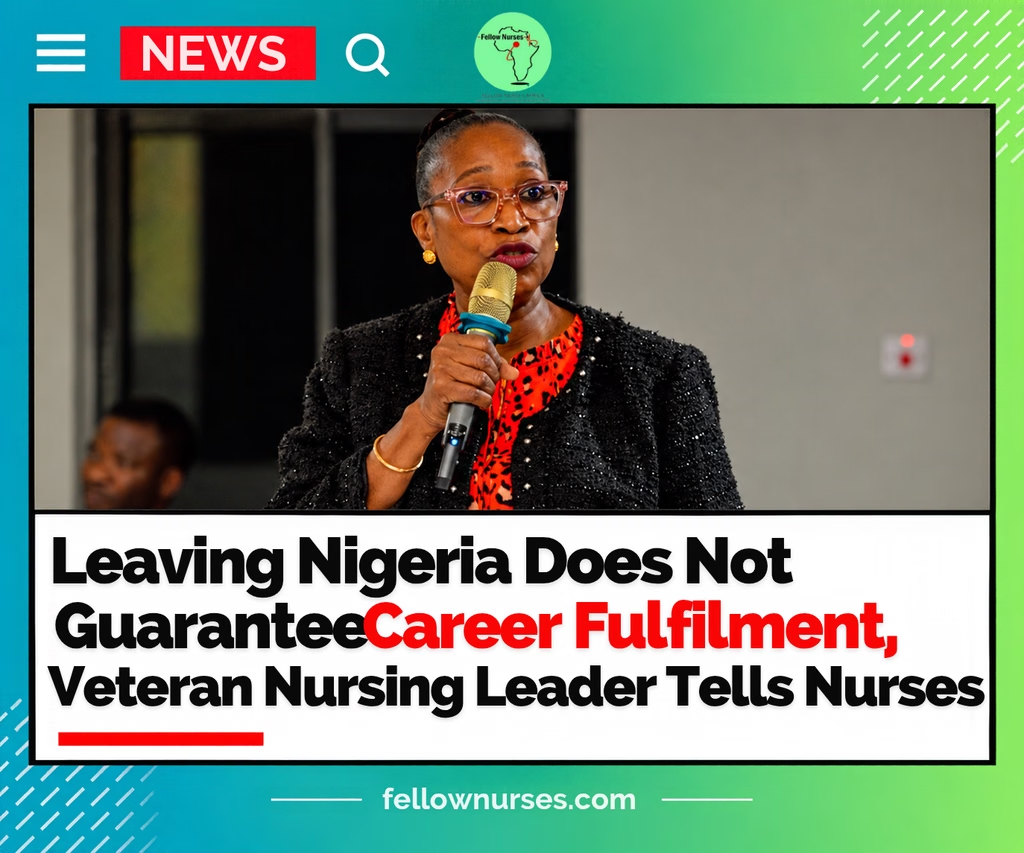
Leaving Nigeria Does Not Guarantee Career Fulfilment, Veteran Nursing Leader Tells Nurses
Mrs Bukola Ajayi, chief executive of Florence John Ltd, has urged nurses to define their career goals, embrace healthcare technology and seek opportunities for professional growth, warning that working abroad does not always deliver the career outcomes they expect.
LAGOS, Nigeria — Leaving Nigeria in search of better opportunities does not automatically guarantee career fulfilment, veteran nursing leader Mrs Bukola Ajayi has told nurses.
Ajayi, chief executive officer of Florence John Ltd, made the remarks while delivering a keynote address at the Future Ready Nursing Leadership Conference in Lagos.
She drew on her 45 years of experience in nursing, including her years before retirement eight years ago, to challenge nurses to think carefully about their ambitions and the opportunities they pursue.
“Many of them are not doing what they actually studied for,” she said, referring to nurses working abroad.
Her remarks came during a conference that brought together nursing leaders, healthcare administrators and other professionals to discuss how the profession can respond to changing demands in healthcare delivery, leadership, education and technology.
The event placed the future of nursing leadership at the centre of discussions about innovation, digital transformation, professional development and workforce retention.
A conference focused on the future of nursing
The conference was held on Wednesday, 14 October 2026, at The Zone (Workforce), Gbagada, Lagos.
Organised by the Directorate of Nursing Services, Lagos State Ministry of Health, in conjunction with the London Professional Training Centre (LPTC), the event was themed “Future Ready Nursing Leadership: Driving Healthcare Transformation Through Innovation, Strategic, Digital and Collaborative Leadership.”
👉 Join Fellow Nurses Africa on WhatsApp
The programme brought together nursing leaders, policymakers, educators and healthcare professionals to examine the skills and leadership approaches nurses need to help shape the future of healthcare.
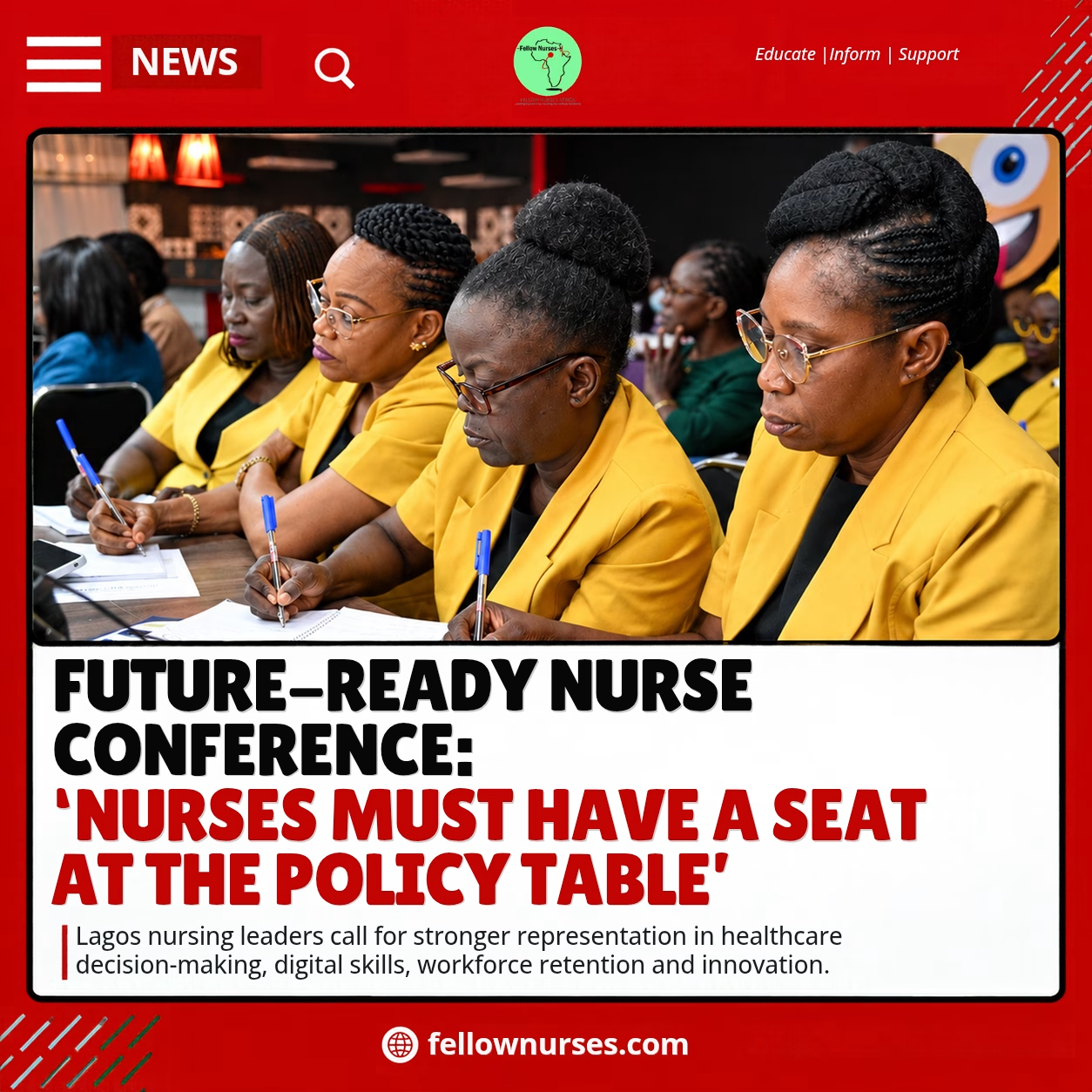
Dr Kemi Ogunyemi, Special Adviser on Health to the Lagos State Governor, was among the featured speakers. She called for stronger nursing representation in healthcare decision-making, arguing that nurses should have a meaningful role in shaping policies and decisions that affect patient care.
Ogunyemi also encouraged nurses to embrace innovation and develop the policy, financial and leadership knowledge needed to influence healthcare systems.
Mrs Omowunmi Ekong, Director of Nursing Services at the Lagos State Ministry of Health, hosted the conference, while Dr Melvin Humphrey, chief executive officer of the LPTC Group, served as co-host.
Other participants included Mrs Olusola Aketi, immediate past Director of Nursing Services, and other nursing professionals and healthcare stakeholders.
A panel discussion, anchored by Mrs Feyintoluwa Ogungbenro, chief nursing officer of Evercare Hospital, Lagos, examined what it means to be a future-ready nurse.
The panellists included Dr Ololade Fadipe, Dr Olawale Oladapo, Dr Bimbo Ojo and Mrs Cole, who represented nursing and healthcare leadership perspectives.
Discussions covered digital health records, capacity building, nurse retention, entrepreneurship and the need for nurses to think beyond traditional approaches to professional practice.
Against this backdrop, Ajayi’s remarks focused on a closely related issue: how nurses can make deliberate choices about their careers and find opportunities for professional fulfilment.
‘You need to know what you want’
For many Nigerian nurses, working abroad offers the prospect of better pay, improved working conditions, further education and access to advanced healthcare systems.
However, Ajayi cautioned against assuming that relocation alone would deliver professional satisfaction.
“You need to know what you want,” she said, urging nurses to identify what brings them job satisfaction and to consider the direction they want their careers to take.
She encouraged practitioners to assess their current positions, identify their ambitions and take practical steps towards achieving them.
Her message was that nurses should not allow their careers to progress without a clear sense of purpose.
For some, this may mean pursuing specialist qualifications or leadership positions. Others may find opportunities in nursing education, research, healthcare management or entrepreneurship.
For nurses considering international employment, understanding registration requirements, available roles, working conditions and career progression pathways can also help them make informed decisions.
‘Don’t just stay in your comfort zone’
Ajayi also called on nurses to become more proactive about their professional development.
She encouraged practitioners to identify what they could do to move from their current positions to the next stage of their careers.
“Be proactive,” she said, urging nurses to consider the steps needed to achieve their professional ambitions.
She also stressed the importance of making meaningful contributions that increase their visibility within the profession.
“Look for what you can contribute that will make you visible. Don’t just stay in your comfort zone,” she said.
Nurses can build their professional profiles through continuing education, research, leadership responsibilities, mentoring, teaching and participation in professional organisations.
👉 Join Fellow Nurses Africa on WhatsApp
Developing expertise beyond routine responsibilities can help practitioners identify new opportunities and contribute to decisions affecting healthcare delivery.
However, professional advancement is not solely an individual responsibility. Employers and policymakers must also provide fair access to training, transparent promotion pathways and working environments that allow nurses to develop their potential.
Why technology matters to the future of nursing
Another major theme in Ajayi’s address was the importance of healthcare technology.
“The future is bright for nurses,” she said, arguing that practitioners must familiarise themselves with available equipment, devices and technologies to improve care and productivity.
Her comments aligned with the wider conference discussion on digital transformation and the skills nurses need to work effectively in changing healthcare environments.
Healthcare systems increasingly use electronic medical records, remote monitoring and digital tools to support communication, documentation and clinical decision-making.
For nurses, adapting to these changes requires continuous learning and the ability to use technology safely and effectively.
Technology can improve efficiency and support better-informed clinical decisions. However, its benefits depend on appropriate training, reliable infrastructure and effective implementation.
Digital tools cannot replace clinical judgement, professional accountability or the compassion that remains central to nursing.
Preparing nurses for the future therefore requires a combination of clinical expertise, digital competence, leadership skills and a commitment to lifelong learning.
Multiple jobs and the realities of working abroad
Reflecting on many who have relocated, Ajayi suggested that some may not be experiencing the professional satisfaction they anticipated.
She pointed to nurses working two or three jobs abroad as an example of the pressures some may face.
“That’s why you see them over there doing two, three jobs,” she said.
Working multiple jobs can reflect financial pressures, personal circumstances or individual choices. It does not, by itself, establish that a nurse is dissatisfied or that migration has failed to meet their expectations.
Nevertheless, balancing several jobs can raise questions about work-life balance, fatigue and the time available for personal wellbeing and professional development.
Nurses considering relocation need realistic information about employment conditions, expected working hours, living costs and opportunities for career progression.
They should also consider what professional fulfilment means to them, whether that involves specialist practice, leadership, financial security, further education or a better balance between work and personal life.
The wider lesson is that career decisions should be based on informed expectations rather than the assumption that opportunities in another country will automatically resolve every professional challenge.
Retaining nurses requires more than encouragement
Ajayi’s comments also connect with a broader challenge facing Nigeria’s healthcare system: how to create an environment in which nurses can develop their careers and deliver quality care.
Encouraging nurses to remain in the country will require more than motivational messages or appeals to professional loyalty.
Competitive remuneration, safe working environments, adequate staffing, continuing professional education and transparent opportunities for advancement are important considerations for workforce retention.
Nurses also need opportunities to contribute to research, policy development, healthcare management and leadership.
These issues were reflected in the conference’s wider discussions about workforce retention, innovation and the need for nurses to participate more actively in healthcare decision-making.
While individual nurses must take responsibility for their professional development, healthcare institutions and policymakers must create conditions in which that development is possible.
Nurses should also be free to pursue international opportunities that suit their circumstances. The challenge for Nigeria is to strengthen its healthcare system so that remaining in the country can offer a credible pathway to professional growth.
A future built on opportunity and professional growth
The Future Ready Nursing Leadership Conference brought together different perspectives on the future of the nursing profession, from stronger representation in healthcare policy to digital competence and workforce development.
Ajayi’s contribution added a focus on individual career planning, job satisfaction and the need for nurses to take deliberate steps towards their ambitions.
Her message was not simply about whether nurses should leave Nigeria. It was about understanding what they want from their careers and preparing themselves to achieve it.
For nurses, this means combining professional ambition with continuous learning, informed decision-making and a willingness to embrace change.
For healthcare leaders and policymakers, it means creating environments where nurses can develop their skills, contribute to decisions and advance professionally.
Ultimately, the future of nursing depends on both individual initiative and institutional support. Nurses need opportunities to grow, while healthcare systems need the expertise and experience of a motivated, well-supported workforce.
👉 Join Fellow Nurses Africa on WhatsApp
Fellow Nurses Africa is the independent voice of African nursing, we educate, inform and support nurses across Africa.

Kehinde Oluwatosin is one of the many editors here at Fellow Nurses Africa and fellownurses.com.
He is a registered nurse with a Master of Science degree in healthcare leadership from the University of Hull, United Kingdom. Kehinde is passionate about advancing the nursing profession across Africa. As Co-Founder of Fellow Nurses Africa, he plays a key role in shaping editorial direction, ensuring our content educates, informs, and empowers nurses continent-wide.
With expertise in leadership, patient flow, and healthcare operations, Kehinde brings valuable insights to nursing news, career development, and policy discussions. He is committed to amplifying the voice of African nurses and driving positive change in the profession.