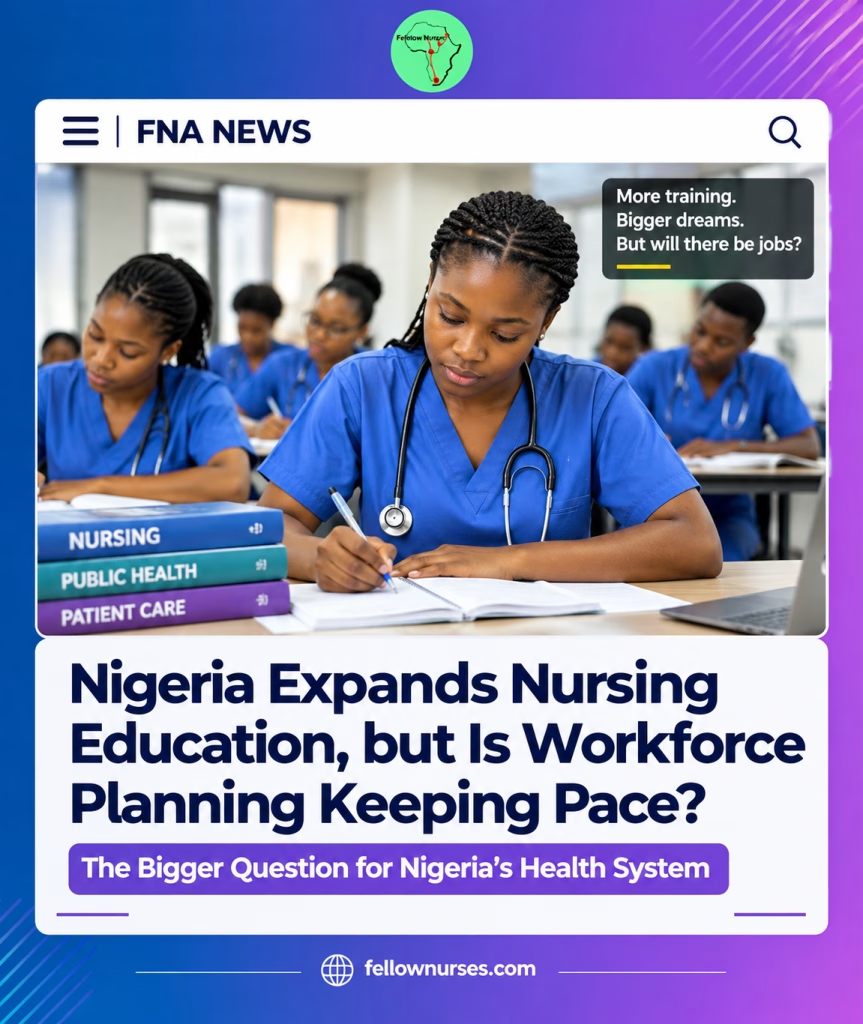
Nigeria Expands Nursing Education, but Is Workforce Planning Keeping Pace?
FNA NEWS, 13th Of OCTOBER, 2026
Nigeria’s expansion of nursing education has raised an important question about the country’s ability to turn increased training capacity into a stronger, adequately staffed healthcare workforce.
👉 Join Fellow Nurses Africa on WhatsApp
The Federal Government says annual nursing and midwifery enrolment capacity has increased significantly in recent years. However, the expansion also highlights the need to align nursing education with employment opportunities, workforce needs and the distribution of healthcare professionals across the country.
In April 2026, the Federal Ministry of Health and Social Welfare reported that enrolment in nursing and midwifery education had increased from 28,000 in May 2023 to 110,000 in the 2024/2025 academic year. An earlier government announcement in October 2025 put the annual enrolment quota at 115,000 for the 2025 academic year.
The figures refer to different reporting periods or measures and require clarification before they can be compared directly. Nevertheless, both announcements reflect the government’s drive to expand the country’s capacity to train nurses and midwives.
The question now is how this expansion is being matched with recruitment, deployment and long-term workforce planning.
Government Reports Recruitment of More Health Workers
The Federal Government has also reported progress in recruiting healthcare professionals into public facilities.
According to the Ministry of Health’s April 2026 statement, more than 20,000 health workers had been recruited into federal health facilities over the preceding 24 months, with nurses and midwives making up the majority.
The recruitment figure is an important part of the discussion. It shows that workforce expansion is not limited to education alone.
However, the available announcement does not provide a detailed breakdown of the number of nurses recruited, the number of vacancies remaining or how recruitment has compared with the number of newly qualified nurses entering the labour market.
These figures are essential for assessing whether the country is producing and employing nurses at a rate that meets its healthcare needs.
More Training Must Translate Into Better Healthcare
Expanding nursing education can help Nigeria address shortages of skilled professionals. However, increasing the number of students admitted into training institutions is only one part of building a stronger nursing workforce.
The World Health Organization’s State of the Health Workforce in Africa 2026 report highlights the importance of matching increased training output with quality assurance, affordable education and the capacity of labour markets to absorb graduates.
Although the report examines the broader African health workforce, its findings offer a useful framework for assessing Nigeria’s nursing expansion.
For Nigeria, effective workforce planning must consider the number of nurses trained, the quality of their education, available employment opportunities and the facilities in which they are needed.
A hospital with too few nurses cannot benefit fully from expanded nursing education if recruitment is delayed or staffing budgets remain inadequate. Similarly, a graduate who cannot secure an appropriate position represents a missed opportunity to strengthen healthcare delivery.
The challenge is therefore not simply to train more nurses, but to ensure that their skills are put to effective use.
Where Are Nurses Most Needed?
👉 Join Fellow Nurses Africa on WhatsApp
Workforce distribution is another important consideration.
The availability of nurses can vary between states, urban centres, rural communities and different levels of healthcare delivery. A national increase in training capacity does not automatically ensure that underserved communities have enough qualified professionals.
Nigeria’s Strategic Directions for Nursing and Midwifery 2025–2030 identifies workforce planning, professional development, leadership and improved service delivery as priorities for strengthening the profession.
Turning these priorities into measurable outcomes will require coordination between federal and state governments, nursing education institutions, healthcare employers and professional regulators.
Authorities need reliable information about where nurses are employed, where vacancies remain and which facilities require additional staff. Such data would help guide recruitment, improve deployment and support decisions about future training capacity.
What the Government Needs to Clarify
The expansion of nursing education provides an opportunity to assess how effectively Nigeria connects professional training with workforce demand.
The Federal Ministry of Health and Social Welfare, the Federal Ministry of Education and the Nursing and Midwifery Council of Nigeria should provide clearer, comparable data on annual nursing admissions, graduations, recruitment and vacancies.
They should also clarify the difference between approved admission quotas and actual student enrolment. This distinction matters because an institution’s authorised capacity does not necessarily equal the number of students admitted or the number of graduates produced each year.
Further information is needed on how many nurses have been recruited into federal facilities, how state-level recruitment contributes to the national picture and how staffing gaps are being addressed in underserved areas.
These details would allow the public and nursing stakeholders to assess whether the expansion is delivering the intended results.
From Expanding Training to Strengthening the Profession
Nigeria’s efforts to increase nursing education capacity represent an important step towards developing its healthcare workforce. But the success of this expansion will depend on more than enrolment figures.
Training must be accompanied by quality education, transparent recruitment, adequate staffing budgets, fair working conditions and opportunities for professional development.
For nurses, these measures affect career progression and the ability to contribute fully to patient care. For healthcare facilities, they influence staffing levels, service delivery and the quality of care patients receive.
Nigeria now has an opportunity to connect its investment in nursing education with a clear, measurable workforce strategy.
The central question is no longer only how many nurses the country can train, but how effectively it can employ, deploy and retain them where they are needed most.
👉 Join Fellow Nurses Africa on WhatsApp
Fellow Nurses Africa is the independent voice of African nursing, we educate, inform and support nurses across Africa.

Durowoju Abisola is a registered nurse, nurse writer and On-Air Correspondent at Fellow Nurses Africa (FNA), passionate about nursing leadership, health education and advocacy.
Through journalism, storytelling and content creation, she amplifies important conversations around nursing, healthcare and the experiences of nurses in Nigeria. She is committed to using her voice and professional knowledge to educate the public, challenge misconceptions and inspire the next generation of nurses.