
Fellow Nurses Africa | Lagos, Nigeria | 02 December, 2025
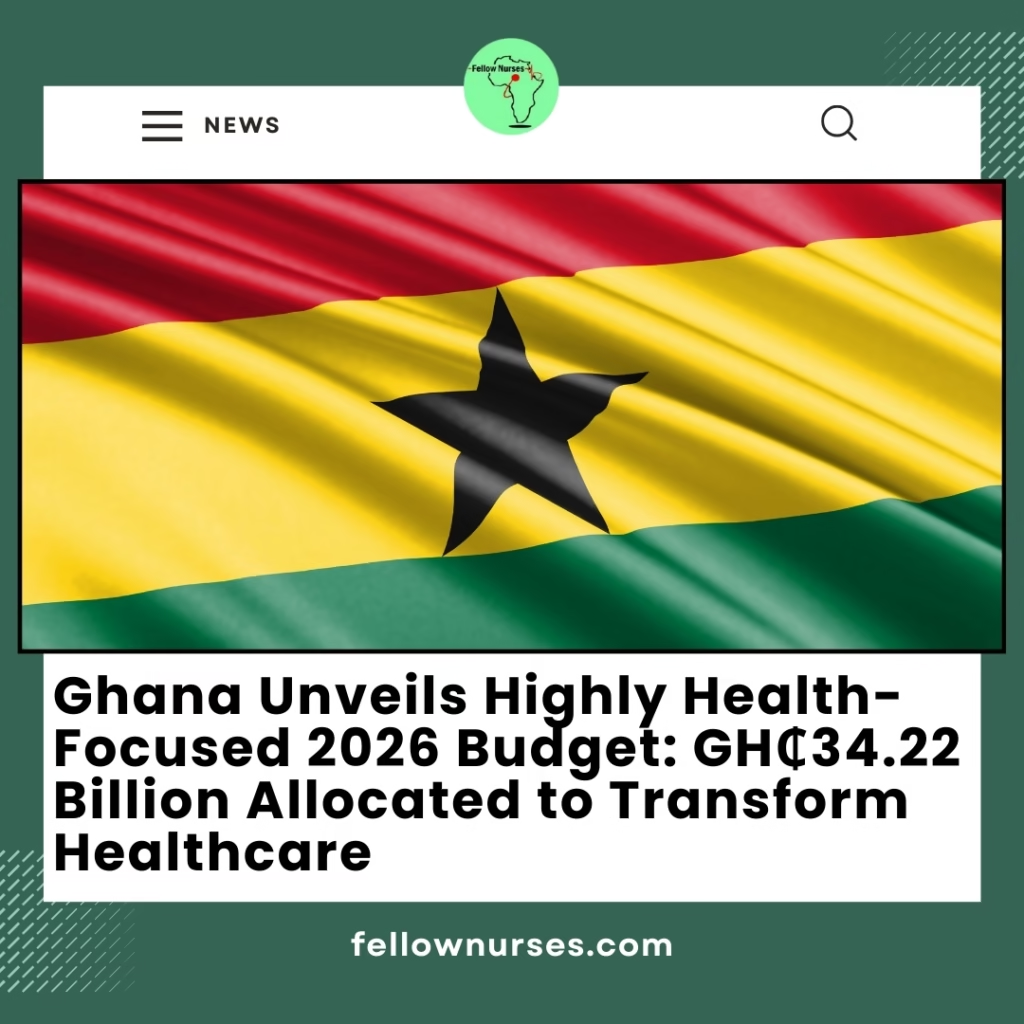
Ghana has announced its 2026 national budget, and experts are calling it one of the country’s most health-centered and people-focused budgets in recent years.
The government has dedicated GH₵34.22 billion to strengthen health systems, expand access to care, and accelerate nationwide primary healthcare reforms.
The Health Minister described the budget as “a decisive investment in the wellbeing of every Ghanaian.”
Key Highlights of Ghana’s 2026 Health Budget
- GH₵34.22 Billion for Health Sector Development
The budget allocates a record amount targeting: ▪️ Better staffing and training of nurses, midwives, and community health workers ▪️ Improved hospital infrastructure and medical equipment ▪️ Expanded health-insurance coverage ▪️ Strengthened public-health surveillance and outbreak response
- Free Primary Healthcare to Roll Out Nationwide in 2026
A major pillar of the budget is the rollout of Free Primary Healthcare, which aims to provide every Ghanaian with no-cost access to: ▪️ Preventive services ▪️ Routine medical consultations ▪️ Basic curative care ▪️ Health promotion and early-diagnosis services
This move is expected to reduce hospital congestion, improve early disease detection, and minimize out-of-pocket spending.
- Strong Focus on Health Equity and Rural Access
The budget includes funding to expand community-based health planning and services (CHPS) zones, ensuring underserved and rural communities receive: ▪️ More health workers ▪️ More mobile clinics ▪️ Better emergency referral systems
- Investment in Digital Health & Data Systems
The government plans to scale digital innovations such as: ▪️ Electronic medical records ▪️ Telemedicine services ▪️ Health-data integration for faster decision-making ▪️ Digitized health-insurance verification systems
These upgrades aim to improve efficiency and reduce system delays.
Ghana’s health-focused 2026 budget signals a strong commitment to building a resilient, equitable, and accessible health system. The combination of increased funding, free primary healthcare, and improved rural services could significantly improve national health outcomes over the next decade.
Health professionals, including nurses, midwives, and public-health workers, are expected to benefit from better training opportunities, improved working environments, and increased community engagement.
With the largest health allocation in recent years, Ghana is positioning itself as a leader in strengthening healthcare access in West Africa. The rollout of Free Primary Healthcare in 2026 may become one of the most impactful reforms in the country’s health history.
Fellow Nurses Africa is the independent voice of African Nursing. We educate, inform and support the Nursing profession.

Kehinde Oluwatosin is one of the many editors here at Fellow Nurses Africa and fellownurses.com.
He is a registered nurse with a Master of Science degree in healthcare leadership from the University of Hull, United Kingdom. Kehinde is passionate about advancing the nursing profession across Africa. As Co-Founder of Fellow Nurses Africa, he plays a key role in shaping editorial direction, ensuring our content educates, informs, and empowers nurses continent-wide.
With expertise in leadership, patient flow, and healthcare operations, Kehinde brings valuable insights to nursing news, career development, and policy discussions. He is committed to amplifying the voice of African nurses and driving positive change in the profession.