
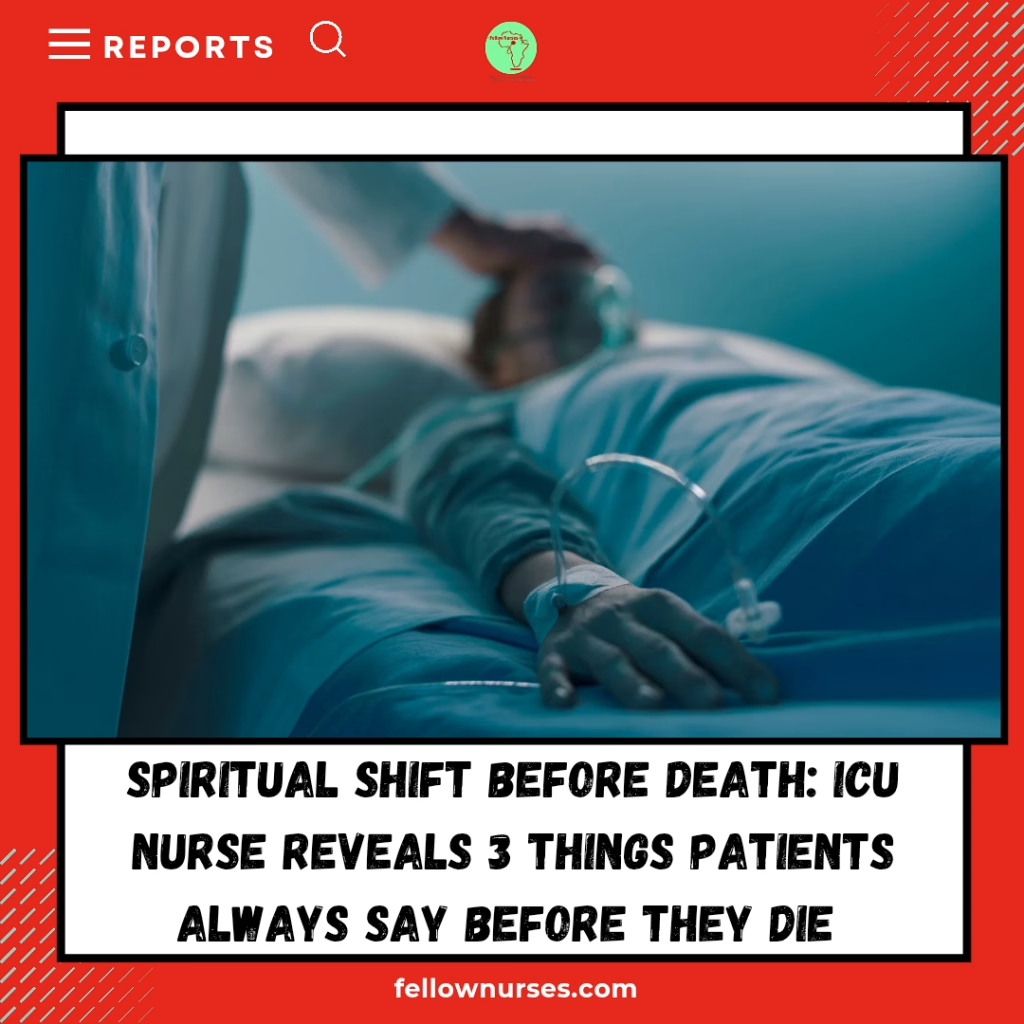
Spiritual Shift Before Death: ICU Nurse Reveals 3 Things Patients Always Say Before Passing
Fellow Nurses Africa
20 February 2026
A US-based intensive care unit (ICU) nurse has drawn widespread attention after describing a recurring pattern in the final moments of critically ill patients, one she attributes to an inexplicable “spiritual shift”.
Kirstie Roberts, 29, who has four years of experience in ICU settings, shared her observations in a viral social media video that has since been reported by multiple outlets, including The Mirror, Daily Express and Wales Online.
👉 Join our Whatsapp channel Here
According to Ms Roberts, patients nearing the end of life frequently express variations of the same three phrases, often in quick succession:
- “Can you please tell my family I love them?”
- “I don’t feel good.”
- “I know I’m going to die.”
She emphasises that these statements appear even when physiological indicators remain stable and no acute deterioration is immediately apparent on monitoring equipment.
“There’s a shift that happens, that’s spiritual that nobody can explain,” Ms Roberts said. “Their vitals may be stable, their condition may be the exact same way it was when they came in. There’s nothing inherently dangerous that’s screaming ‘This is going to kill them.’ Yet every time they say these words… they pass.”
Ms Roberts notes that, in her experience, patients who voice this awareness of impending death invariably succumb shortly afterwards, irrespective of ongoing medical interventions such as mechanical ventilation, vasopressor support or pharmacological adjustments.
The phenomenon she describes aligns with longstanding anecdotal reports from palliative care, hospice and critical care professionals worldwide. Many clinicians observe that dying individuals often exhibit a sudden clarity, calm or sense of resolution in their final hours, sometimes referred to in literature as “terminal lucidity” or pre-death awareness though no definitive physiological mechanism has been established.
Reflecting on the emotional demands of her role, Ms Roberts acknowledged the cumulative impact on healthcare workers.
“It never truly gets easier to deal with experiencing patients passing away,” she said. “We spend a lot of time caring for patients and building relationships with them and their families. Over time, you learn to accept it’s a huge part of our reality in this setting, and we learn to cope with it by knowing the work we’ve done is enough.”
She concluded with a broader reflection on life and mortality: “Life is inherently spiritual. It is not just about amassing all these things that we one day leave behind. Love others, and live grateful for all you have.”
The account has prompted discussion within nursing communities, with many professionals sharing parallel experiences from diverse cultural and clinical contexts. In African healthcare settings where family involvement and spiritual beliefs often play a central role in end-of-life care similar patterns of expressed love, discomfort and foreknowledge have been noted by nurses in medical wards, ICUs and community palliative services.
This story underscores the profound human dimension of nursing practice and the need for continued dialogue around death, dying and spiritual care in professional education and support systems.
We invite registered nurses and midwives across the continent to contribute anonymised insights or reflections on end-of-life observations in their own practice.
👉 Join our Whatsapp channel Here
Fellow Nurses Africa is the independent voice of African nursing, we educate, inform and support nurses across Africa

Kehinde Oluwatosin is one of the many editors here at Fellow Nurses Africa and fellownurses.com.
He is a registered nurse with a Master of Science degree in healthcare leadership from the University of Hull, United Kingdom. Kehinde is passionate about advancing the nursing profession across Africa. As Co-Founder of Fellow Nurses Africa, he plays a key role in shaping editorial direction, ensuring our content educates, informs, and empowers nurses continent-wide.
With expertise in leadership, patient flow, and healthcare operations, Kehinde brings valuable insights to nursing news, career development, and policy discussions. He is committed to amplifying the voice of African nurses and driving positive change in the profession.