
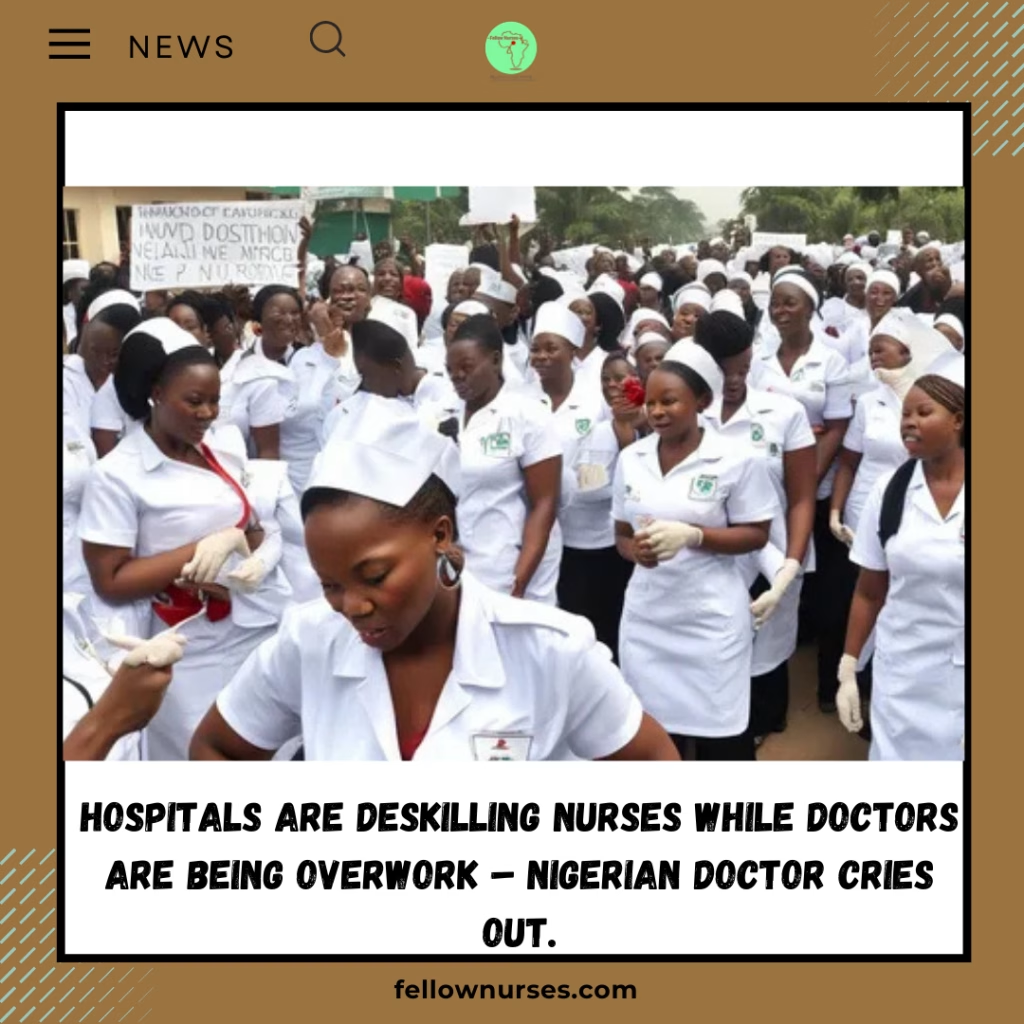
Hospitals Are Deskilling Nurses While Doctors Are Dying of Overwork – Nigerian Doctors Finally Cry Out!
Lagos, Nigeria – 19 February 2026
A growing outcry among Nigerian healthcare professionals has highlighted deep inefficiencies in public hospitals, where trained nurses are increasingly limited to basic tasks such as recording vital signs and documentation, while junior doctors (house officers) shoulder a wide range of clinical procedures traditionally performed by nursing staff.
The debate gained traction following a widely shared post on X (formerly Twitter) by medical doctor Dr Popoola (@popoolaadaniel) on 17 February 2026. In it, he described the situation as unfair to nurses, who undergo extensive training only to see their roles diminished, and unsustainable for house officers forced to handle tasks outside their primary medical training.
👉 Join our Whatsapp channel Here
“Many Government hospitals have reduced the work of nurses to just taking vitals and writing reports… Nothing else,” Dr Popoola wrote. “It’s really not fair on them having studied so much in school to be reduced to just that. Using House Officers to do nursing procedures isn’t something that should be tolerated.”>
The post quickly amassed thousands of views, hundreds of likes, and dozens of replies from doctors, nurses, and other health workers. Contributors described delayed patient care, professional burnout, and skill erosion on both sides.
One respondent highlighted the consequences for patients: “While nurses are in the wards 24/7. HOs cover different wards and clinics. This leads to patients having delayed treatment, irregular and missed doses.”
House officers reported performing procedures including intravenous cannulation, nasogastric tube insertion, urinary catheterisation, blood transfusions, labour monitoring, and administration of emergency medications—duties many argue fall within the core scope of nursing practice.
Nurses expressed frustration at perceived “de-skilling,” with some noting reluctance among newer generations to perform traditional roles, leading to progressive loss of hands-on competencies. Others pointed to longstanding professional tensions and systemic failures, including understaffing, poor resource allocation, and blurred role boundaries in under-resourced facilities.
This pattern reflects broader challenges in Nigeria’s public healthcare system. Recent reports indicate persistent underemployment of qualified nurses, high workloads for remaining staff, and ongoing migration of professionals abroad (“brain drain”). Junior doctors, meanwhile, face extended shifts, salary delays, and excessive non-medical tasks, contributing to widespread burnout.
Experts in health workforce planning stress that optimal patient outcomes depend on clear delineation of roles aligned with each profession’s training. Without reform—such as improved staffing, policy enforcement on scope of practice, and collaborative training—inefficiencies risk further compromising care quality, safety, and staff retention.
Healthcare stakeholders, including professional associations, have long called for urgent government intervention to address manpower distribution, remuneration, and working conditions. The current discourse underscores the need for evidence-based reforms to ensure trained professionals work to full capacity, reducing avoidable delays and exhaustion across the workforce.
Fellow Nurses Africa and similar platforms continue to monitor the conversation, advocating for equitable utilisation of skills to strengthen Nigeria’s health system.
This article draws from public discussions on X and contextual reporting on Nigeria’s healthcare workforce challenges.
👉 Join our Whatsapp channel Here
Fellow Nurses Africa is the independent voice of African nursing, we educate, inform and support nurses across Africa

Kehinde Oluwatosin is one of the many editors here at Fellow Nurses Africa and fellownurses.com.
He is a registered nurse with a Master of Science degree in healthcare leadership from the University of Hull, United Kingdom. Kehinde is passionate about advancing the nursing profession across Africa. As Co-Founder of Fellow Nurses Africa, he plays a key role in shaping editorial direction, ensuring our content educates, informs, and empowers nurses continent-wide.
With expertise in leadership, patient flow, and healthcare operations, Kehinde brings valuable insights to nursing news, career development, and policy discussions. He is committed to amplifying the voice of African nurses and driving positive change in the profession.