
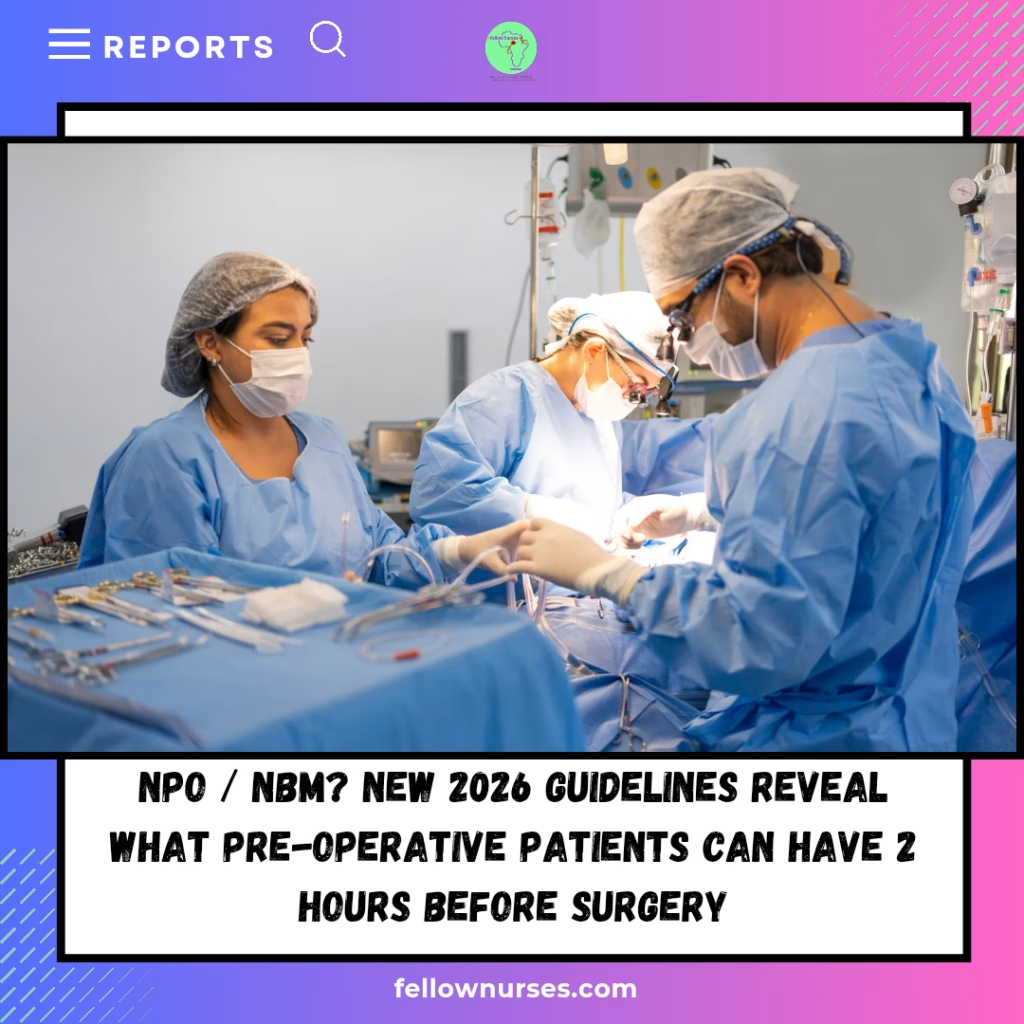
NPO / NBM? New 2026 Guidelines Reveal What Pre-Operative Patients Can Have 2 Hours Before Surgery
Fellow Nurses Africa
Published: 21 February 2026
Traditional “nil per oral” (NPO) or “nil by mouth” (NBM) instructions have long been a cornerstone of pre-operative preparation, with many patients still advised to avoid all food and drink from midnight before surgery. A new international consensus statement, published on 9 February 2026 in the journal Anaesthesia, challenges prolonged fasting practices and offers updated, evidence-informed guidance aimed at improving patient comfort and outcomes while preserving safety.
👉 Join our Whatsapp channel Here
The multidisciplinary document developed through a systematic literature review and a three-round Delphi process involving 68 stakeholders (including anaesthetists, surgeons, nurses, physicians, patient representatives and international organisations from five continents) — does not permit solid food 2 hours before anaesthesia. Instead, it reaffirms the standard 6-hour fast for solids while strongly advocating for liberal intake of clear liquids up to (and in many cases beyond) 2 hours pre-procedure.
Core Recommendations at a Glance
- Solid food and non-clear liquids (e.g. full milk, milk products, meal replacement drinks, enteral formulas): Fast for at least 6 hours before anaesthesia or sedation. Extend to 8 hours or longer for large, fatty or heavy meals.
- Clear liquids including water, tea, coffee (with sugar/honey and up to one-fifth milk by volume), clear juices without pulp, lemonade and clear carbohydrate drinks should be encouraged until 2 hours before the start of anaesthesia or sedation.
- Institutions are strongly recommended (100% Delphi agreement) to develop local protocols that minimise prolonged clear liquid fasting, potentially allowing intake less than 2 hours before (e.g. “Sip Til Send” models where patients may sip until called to theatre).
- Salivation stimulants (chewing gum, lollipops) may be permitted until transfer to the procedure room and after recovery to alleviate thirst and anxiety.
- Post-operative resumption: Unless clinically contraindicated, oral liquids and diet should restart as soon as feasible to support recovery.
The consensus highlights that real-world fasting often far exceeds recommendations with reported medians of 14–17 hours for solids and 9–12 hours for clear liquids leading to avoidable harms such as dehydration, anxiety, impaired glucose metabolism, delayed bowel function return, increased inflammatory response and reduced muscle strength. Pulmonary aspiration remains rare in elective cases (around 2–3 per 10,000), and evidence does not support that strict prolonged fasting meaningfully reduces this already low risk further.
Implications for Practice
This guidance builds on but goes beyond existing recommendations from bodies such as the American Society of Anesthesiologists (ASA) and European Society of Anaesthesiology and Intensive Care (ESAIC) by explicitly endorsing institutional flexibility for more liberal clear liquid policies. It empowers hospitals to tailor approaches that better meet patient needs without compromising safety.
👉 Join our Whatsapp channel Here
For nurses involved in pre-assessment, day surgery units and theatre preparation, this represents an opportunity to advocate for updated protocols, educate patients accurately and reduce unnecessary distress from extended fasting. Multidisciplinary discussion with anaesthesia and surgical teams will be essential to implement changes safely and monitor outcomes.
Read the full open-access consensus statement here:
Peri-operative fasting in adults: an international, multidisciplinary consensus statement
👉 Join our Whatsapp channel Here
Fellow Nurses Africa is the independent voice of African nursing, we educate, inform and support nurses across Africa

Kehinde Oluwatosin is one of the many editors here at Fellow Nurses Africa and fellownurses.com.
He is a registered nurse with a Master of Science degree in healthcare leadership from the University of Hull, United Kingdom. Kehinde is passionate about advancing the nursing profession across Africa. As Co-Founder of Fellow Nurses Africa, he plays a key role in shaping editorial direction, ensuring our content educates, informs, and empowers nurses continent-wide.
With expertise in leadership, patient flow, and healthcare operations, Kehinde brings valuable insights to nursing news, career development, and policy discussions. He is committed to amplifying the voice of African nurses and driving positive change in the profession.