
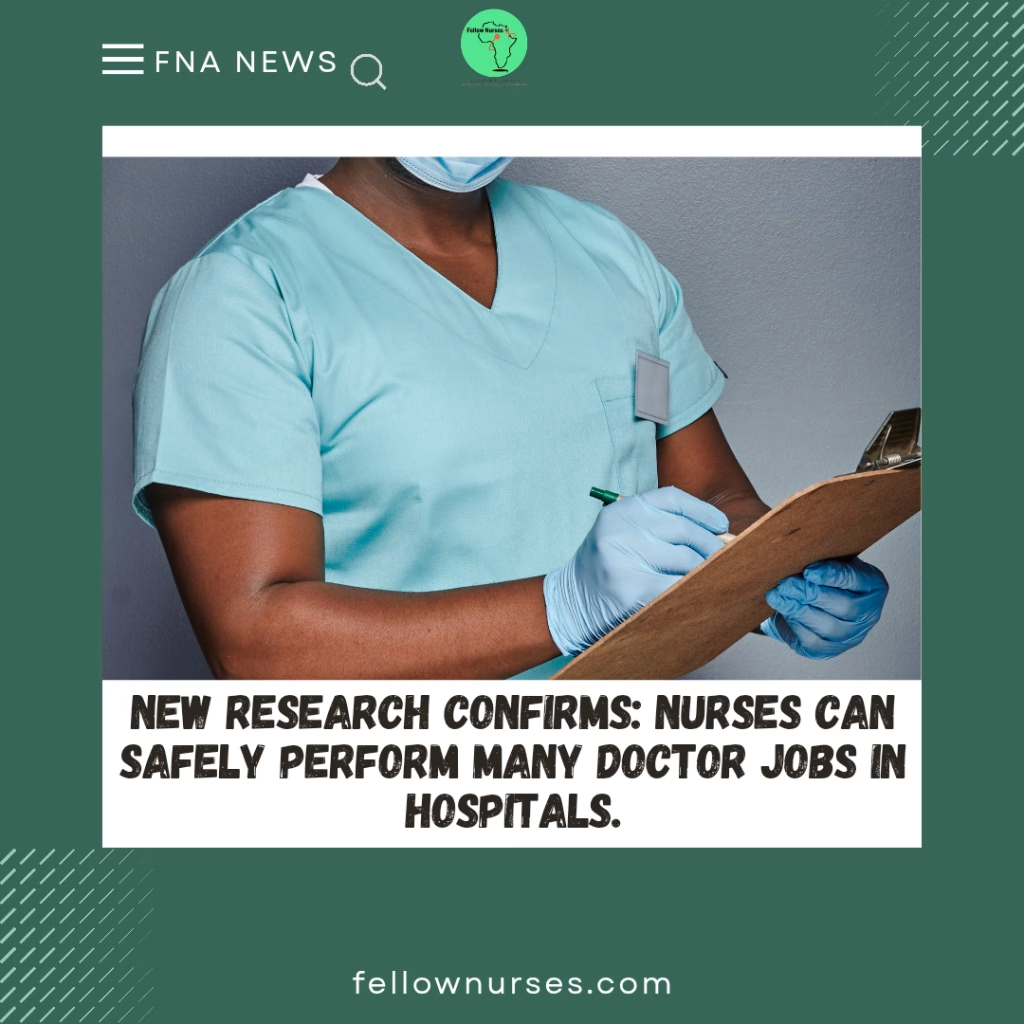
New Research Confirms: Nurses Can Safely Perform Many Doctor Jobs in Hospitals
By Fellow Nurses Africa
Published: 12 February 2026
A groundbreaking Cochrane review has revealed that nurses can safely and effectively take on many tasks traditionally reserved for doctors in hospital settings, with little to no difference in patient outcomes such as mortality rates or safety incidents. This evidence, drawn from 82 international studies involving over 28,000 patients, could pave the way for addressing chronic healthcare shortages and reducing patient wait times across the UK and beyond.
👉 Join our Whatsapp channel Here
Key Findings from the Cochrane Review
The systematic review, led by researchers from Ireland, the UK, and Australia, examined four main areas where nurses substitute or share roles with doctors:
- Inpatient care: Nurses managing post-acute or recovery patients.
- Nurse-led clinics: Outpatients receiving care from nurses in place of doctor-led sessions.
- Role substitution: Such as in emergency departments, where nurses treat minor injuries.
- Task substitution: Including procedures like endoscopy, medical abortion, or pre-operative assessments.
The analysis showed “little to no difference” in critical metrics, including patient deaths and safety events, when nurses handled these responsibilities. In specific cases, such as managing diabetes or eczema, nurse-led care even demonstrated slight improvements in clinical outcomes.
Professor Michelle Butler from Dublin City University, a lead researcher, emphasised the practical implications: “We’re very much aware of the challenges hospitals face with increasing demand and staff shortages. This review shows that nurse-led interventions are as safe and effective as traditional doctor-led care, potentially increasing access and reducing wait times for patients.”
More than a third of the studies were UK-based, making the findings particularly relevant to the NHS, which is grappling with workforce pressures amid rising patient numbers.
Insights and Expert Analysis: Implications for Healthcare
As an organisation, we see this review as a vital endorsement of advanced nursing practice. It’s not about nurses “replacing” doctors as Professor Butler clarified but about collaborative models where nurses expand their scope to optimise team efficiency.
From an expertise standpoint, this aligns with global trends in healthcare reform. For instance, advanced nurse practitioners (ANPs) in the UK already perform diagnostic and prescribing roles, supported by bodies like the Nursing and Midwifery Council (NMC). This Cochrane evidence, rated as moderate to high certainty, strengthens the case for policy changes, such as those outlined in the NHS Long Term Workforce Plan, to integrate more nurse-led services.
Authoritatively, Cochrane reviews are gold-standard in evidence-based medicine, synthesising data from rigorous studies to inform practice. Here, the inclusion of diverse countries (20 in total) underscores the universality of these findings, though future research on patient satisfaction and cost-effectiveness – as planned by the team will add further layers.
Trustworthiness is key: This isn’t advocacy for cutting corners but for evidence-driven innovation. Empowering nurses could alleviate burnout among doctors, enhance multidisciplinary teamwork, and ultimately improve patient-centred care. However, implementation must include robust training, supervision, and evaluation to maintain standards.
Advocacy for Change in Nursing Roles
This research arrives at a critical juncture for the UK, where nurse vacancies exceed 40,000 and doctor shortages persist. Advocacy groups like the Royal College of Nursing (RCN) have long called for expanded roles, and this review provides the ammunition needed. Policymakers should prioritise funding for nurse education and role expansion programmes to harness this potential.
In conclusion, the Cochrane findings affirm that nurses are not just capable but essential partners in modern healthcare delivery. By embracing these models, we can build a more resilient, accessible system – one that benefits patients, professionals, and the public purse.
👉 Join our Whatsapp channel Here
Fellow Nurses Africa is the independent voice of African nursing, we educate, inform and support nurses across Africa

Kehinde Oluwatosin is one of the many editors here at Fellow Nurses Africa and fellownurses.com.
He is a registered nurse with a Master of Science degree in healthcare leadership from the University of Hull, United Kingdom. Kehinde is passionate about advancing the nursing profession across Africa. As Co-Founder of Fellow Nurses Africa, he plays a key role in shaping editorial direction, ensuring our content educates, informs, and empowers nurses continent-wide.
With expertise in leadership, patient flow, and healthcare operations, Kehinde brings valuable insights to nursing news, career development, and policy discussions. He is committed to amplifying the voice of African nurses and driving positive change in the profession.