Nigerian Government Prioritise Roads Over Healthcare as World Bank Raises Concerns Over Spending
FNA NEWS, 3rd Of NOVEMBER, 2026
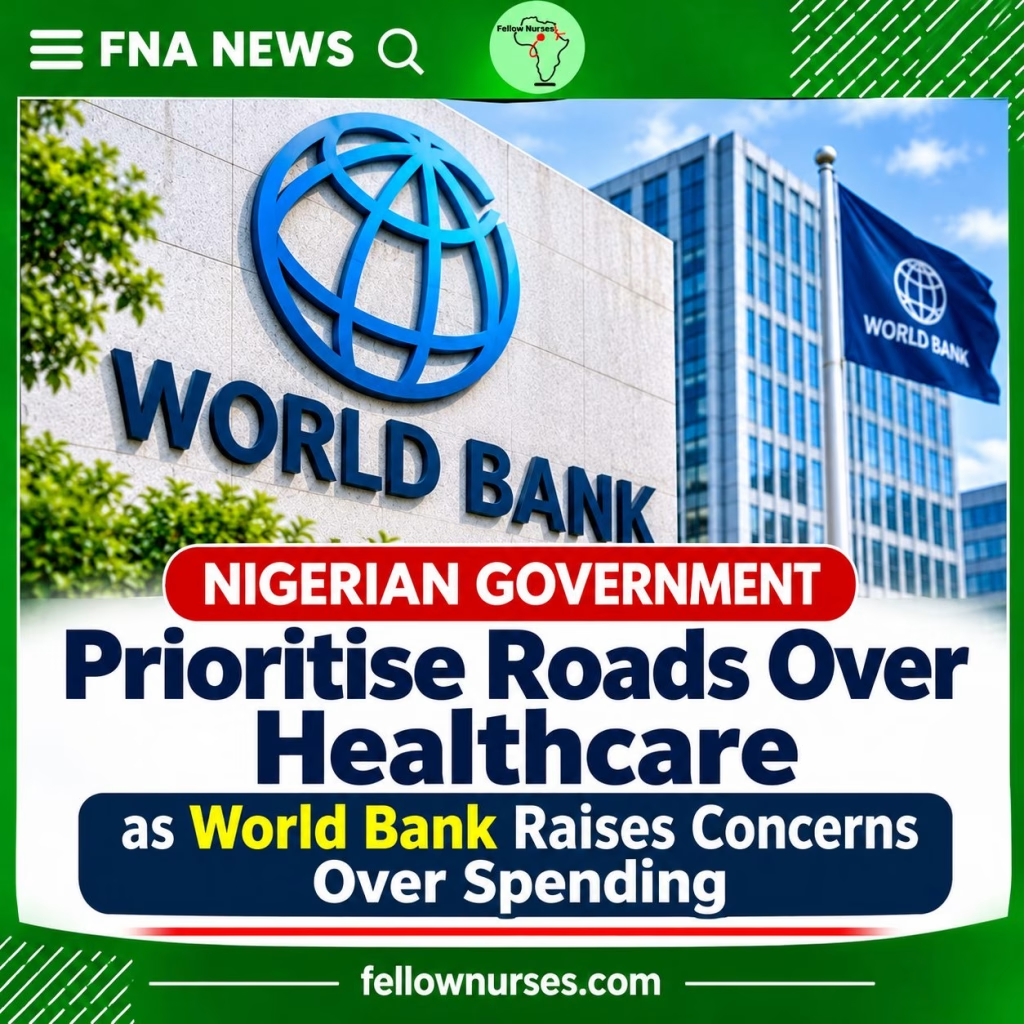
Nigeria’s state governments have increased spending on transport infrastructure faster than investments in education, healthcare and social protection, despite a significant rise in public revenues, according to the World Bank.
👉 Join Fellow Nurses Africa on WhatsApp
The World Bank has raised concerns over the spending priorities of Nigerian state governments, warning that increased public revenues are not being translated into improvements in essential social services at the same pace as investments in infrastructure.
The concern comes as state governments record significant growth in revenue following economic reforms introduced since 2023, including the removal of the petrol subsidy, foreign exchange market reforms and improvements in tax administration.
Speaking at the launch of the 11th edition of BudgIT’s State of States Report, Gloria Joseph-Raji, a World Bank representative, said spending on transport infrastructure had grown faster than allocations to education, healthcare and social protection.
The report, themed From Allocation to Impact: Rethinking State Spending Priorities, examines how state governments have managed their financial resources and whether increased revenues are producing meaningful development outcomes.
Joseph-Raji said state governments now had greater financial capacity to meet their obligations and invest in public services. However, she stressed that the way these resources are allocated would determine their impact on citizens.
According to the World Bank, the challenge is no longer simply how much revenue state governments receive, but whether they direct those resources towards sectors with the greatest development impact.
State revenues increase by 93 per cent
The World Bank’s October 2026 Nigeria Development Update, titled Beyond the Federal Purse: How Higher Revenues Reshaped State Priorities, found that aggregate state revenues increased by approximately 93 per cent in real terms between 2023 and 2025.
State expenditure also increased by about 92 per cent over the same period.
The increase in revenue followed several economic and fiscal changes, including the removal of the petrol subsidy, exchange rate unification, stronger tax administration and increased federal transfers to state governments.
With more resources available, states expanded their capital expenditure, increasing its share of total spending from 46 per cent to 61 per cent.
Transport infrastructure recorded the largest increase in spending, with roads and other infrastructure projects receiving significant attention.
However, the World Bank noted that spending on health, education and social protection, although higher in real terms, did not grow at the same pace as economic infrastructure expenditure.
Education’s share of state spending declines
👉 Join Fellow Nurses Africa on WhatsApp
The World Bank’s findings also highlight a shift in the proportion of state budgets allocated to education.
Education’s share of total state expenditure declined from 14.9 per cent in 2021 to 12.1 per cent in 2025.
Healthcare spending remained broadly stable at approximately 7 per cent of total state expenditure over the same period.
Meanwhile, social protection’s share increased from 1.4 per cent to 4.4 per cent.
These figures do not mean that actual spending on education declined. The World Bank reported that education and healthcare expenditure increased in real terms. However, their growth was slower than the expansion recorded in economic infrastructure spending.
The distinction is important because a declining share of the budget does not automatically mean that a government has reduced the amount of money spent on a particular sector.
Rather, it raises questions about whether investments in essential public services are keeping pace with the resources available to government.
What the spending priorities mean for healthcare
For Nigeria’s healthcare sector, the findings raise important questions about the commitment of state governments to strengthening health systems and improving access to quality care.
State governments play significant roles in healthcare delivery, particularly through the management of secondary healthcare facilities and their shared responsibilities with local governments for primary healthcare services.
The availability of adequate funding affects several areas of healthcare delivery, including the recruitment and retention of health workers, hospital infrastructure, essential medical equipment, medicines, emergency services and the maintenance of existing facilities.
For nurses and other healthcare professionals, government spending priorities have direct implications for their working conditions and the quality of care they can provide.
Hospitals require more than buildings and physical infrastructure to function effectively. They also need adequately staffed wards, functional equipment, essential supplies and sustainable funding for daily operations.
Investments in roads can improve access to healthcare facilities, particularly for people living in rural and underserved communities. However, access to a hospital does not necessarily guarantee quality care if the facility lacks sufficient nurses, doctors, medicines and basic equipment.
This makes the balance between infrastructure development and investment in human capital particularly important.
The World Bank’s findings therefore raise a wider policy question: how can state governments ensure that increased public revenues translate into better healthcare outcomes for the people they serve?
World Bank calls for stronger accountability
👉 Join Fellow Nurses Africa on WhatsApp
Beyond spending priorities, the World Bank called for improvements in public financial management and accountability to ensure that increased revenues produce measurable benefits.
Joseph-Raji identified several areas requiring attention, including budget credibility, cash management, commitment controls, public investment management and stronger fiscal risk and debt management.
She also urged state governments to incorporate donor-funded activities into their budget systems and consistently report them in budget implementation reports and annual financial statements.
According to the World Bank, transparency has improved across Nigerian states over the years.
Joseph-Raji noted that when BudgIT began its State of States assessment, only five of Nigeria’s 36 states publicly released their budgets.
Nearly all states now publish annual budgets, quarterly budget implementation reports, audited financial statements and debt reports.
However, she stressed that publishing financial information must translate into better spending decisions and improved public services.
The challenge: Turning increased revenue into better public services
Nigeria’s states are at an important point in their fiscal development. Increased revenues provide an opportunity to address longstanding infrastructure gaps while strengthening education, healthcare and other essential services.
However, the impact of these resources will depend on how effectively governments allocate, manage and monitor public expenditure.
For the healthcare sector, this means ensuring that increased state revenues support stronger hospitals, adequate staffing, functional medical equipment and accessible healthcare services.
For nurses and other healthcare professionals, it also means that discussions about public spending must include the workforce responsible for delivering care.
Ultimately, the success of increased government revenue should not be measured only by the number of roads constructed or infrastructure projects announced. It should also be reflected in better-equipped hospitals, improved healthcare access, stronger educational institutions and better living conditions for Nigerians.
The central question remains whether the additional resources available to state governments will translate into tangible improvements in the everyday lives of citizens.
👉 Join Fellow Nurses Africa on WhatsApp
Fellow Nurses Africa is the independent voice of African nursing, we educate, inform, and support nurses across Africa.

Durowoju Abisola is a registered nurse, nurse writer and On-Air Correspondent at Fellow Nurses Africa (FNA), passionate about nursing leadership, health education and advocacy.
Through journalism, storytelling and content creation, she amplifies important conversations around nursing, healthcare and the experiences of nurses in Nigeria. She is committed to using her voice and professional knowledge to educate the public, challenge misconceptions and inspire the next generation of nurses.