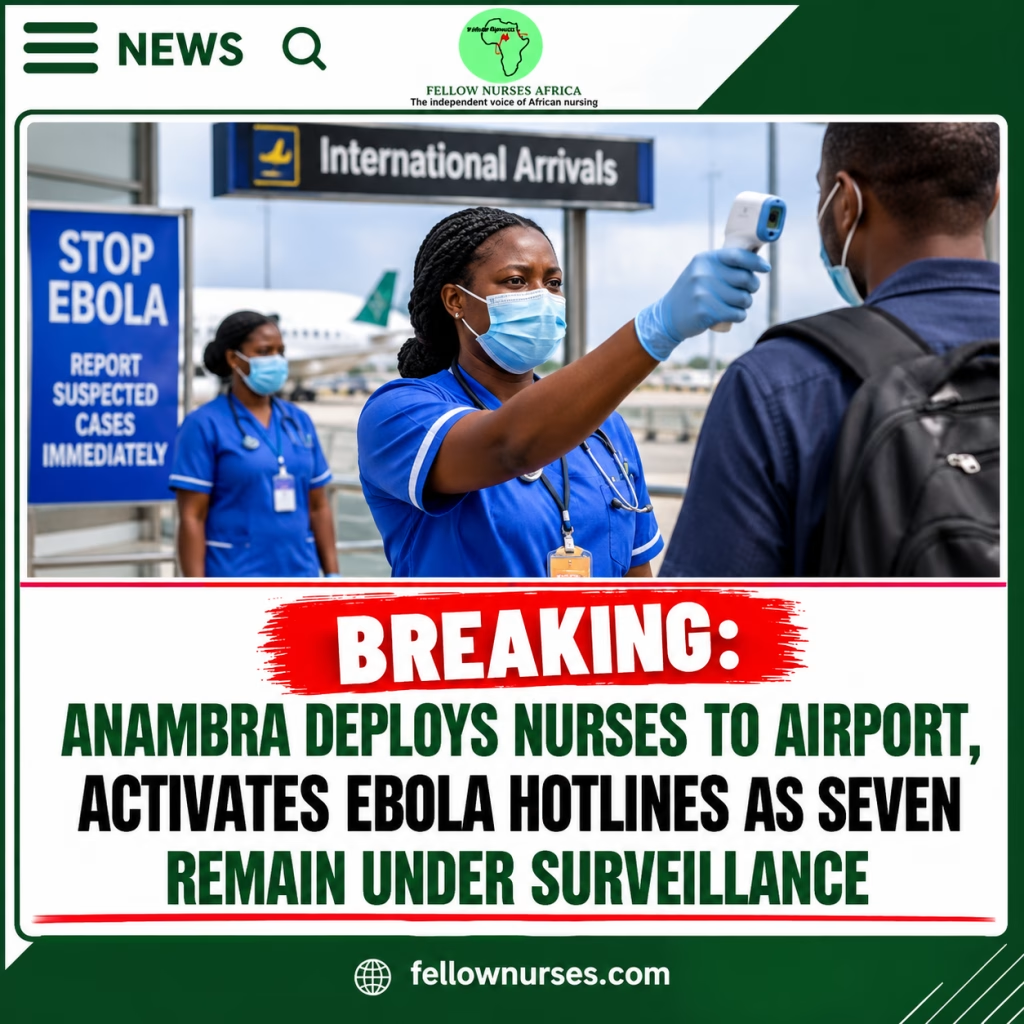
Anambra Deploys Nurses to Airport, Activates Ebola Hotlines as Seven Remain Under Surveillance
FNA NEWS, 24th Of OCTOBER, 2026
Anambra State has intensified Ebola preparedness through airport surveillance, emergency reporting channels and public health awareness, as authorities say seven people remain under monitoring following Nigeria’s confirmed case in Abuja.
👉 Join Fellow Nurses Africa on WhatsApp
The Anambra State Government has strengthened surveillance at key entry points, including Chinua Achebe International Airport, and activated emergency reporting channels as part of efforts to prevent the spread of Ebola Virus Disease (EVD) into the state.
The measures follow Nigeria’s confirmation of an Ebola case in the Federal Capital Territory (FCT) on October 20, 2026.
According to report, the state has deployed nurses to the airport and intensified public awareness, while encouraging residents to report suspected cases promptly.
The Commissioner for Health, Dr Afam Obidike, disclosed the measures in Awka, stressing that the government was strengthening its capacity to detect and respond to suspected infections.
The state is also working with public health partners, including the World Health Organisation (WHO), UNICEF, Médecins Sans Frontières (MSF) and the Association of Public Health Practitioners of Nigeria, to improve surveillance, early detection and emergency response.
Anambra Reports No Confirmed Case
In a statement published on the Anambra State Government’s official website, the government said no Ebola case had been confirmed in the state as of October 21.
The state also reported that 33 of 40 people identified for monitoring had completed the prescribed 21-day monitoring period and been cleared. Seven others remained under active surveillance and were reported to be stable.
Authorities emphasised that being placed under monitoring does not mean that a person has contracted Ebola.
The monitoring process helps public health officials identify symptoms promptly and assess possible exposure while reducing the risk of further transmission.
The state has also mobilised community health informants and strengthened surveillance across healthcare facilities and its local government areas.
Why Airport Surveillance Matters
Airports and other transport hubs are important points for public health surveillance because people travel across national and state borders.
Screening, travel and exposure assessments, prompt reporting and appropriate referral arrangements can help health authorities identify suspected infections early.
The Nigeria Centre for Disease Control and Prevention (NCDC) had previously advised states to strengthen surveillance at entry points, prepare facilities to identify and isolate suspected cases safely, and ensure that frontline health workers receive appropriate infection prevention and control guidance.
These measures are particularly important when early symptoms resemble common illnesses such as malaria and other febrile infections.
Fever, headache, muscle pain and weakness can occur in several illnesses. These symptoms alone do not confirm Ebola, but a person with compatible symptoms and a relevant exposure history needs prompt professional assessment.
Nurses and Frontline Health Workers Have a Critical Role
👉 Join Fellow Nurses Africa on WhatsApp
The deployment of nurses and other health personnel highlights the importance of the nursing workforce in emergency preparedness.
Nurses may be among the first healthcare professionals to assess patients with suspected infectious diseases. Their ability to recognise warning signs, obtain relevant travel and exposure histories, follow infection prevention protocols and escalate concerns promptly can help protect patients, colleagues and the wider community.
However, effective preparedness requires more than deploying personnel.
Healthcare workers must have access to appropriate personal protective equipment (PPE), practical training, clear reporting procedures, safe referral pathways and adequate staffing.
Health authorities and healthcare facilities must also ensure that workers understand the protocols for managing suspected cases and preventing occupational exposure.
Protecting nurses and other frontline personnel is an essential part of protecting the public.
Government Warns Against Salt Water Remedies
The Anambra State Government has cautioned residents against unproven claims that drinking or bathing with salt water can prevent Ebola infection.
Such practices do not prevent Ebola and should not replace established public health precautions.
Ebola can spread through direct contact with the blood or other bodily fluids of an infected person who is experiencing symptoms, contaminated materials and certain infected animals.
Residents should practise regular hand hygiene, avoid contact with potentially infectious bodily fluids and follow guidance issued by recognised public health authorities.
Anyone who develops concerning symptoms after a possible exposure should contact public health officials promptly and disclose their exposure history. Calling ahead before visiting a healthcare facility can help staff make appropriate arrangements.
Residents should also avoid spreading unverified reports or identifying people undergoing monitoring, as misinformation and stigma can undermine disease control efforts.
Nigeria Strengthens Its Ebola Response
The Federal Government confirmed Nigeria’s imported Ebola case on October 20, 2026, and announced that contact tracing had begun, with 44 close contacts initially identified.
The response includes surveillance, isolation and treatment arrangements, laboratory investigations and strengthened infection prevention measures.
The government has urged public and private healthcare facilities nationwide to remain alert, identify suspected cases promptly and report them to public health authorities.
For Anambra, the immediate priority is to sustain surveillance, ensure that health workers are prepared and communicate accurate information to residents without creating unnecessary panic.
The state’s response also reinforces a broader public health lesson: early detection, a protected healthcare workforce, coordinated reporting and public cooperation are essential when responding to a potential infectious disease threat.
👉 Join Fellow Nurses Africa on WhatsApp
Fellow Nurses Africa is the independent voice of African nursing, we educate, inform, and support nurses across Africa.

Durowoju Abisola is a registered nurse, nurse writer and On-Air Correspondent at Fellow Nurses Africa (FNA), passionate about nursing leadership, health education and advocacy.
Through journalism, storytelling and content creation, she amplifies important conversations around nursing, healthcare and the experiences of nurses in Nigeria. She is committed to using her voice and professional knowledge to educate the public, challenge misconceptions and inspire the next generation of nurses.