One FCT Nurse Can Attend to 35 Patients and Work Up to 15 Hours, Association Says as It Calls for Recruitment of 7,000 Nurses
FNA NEWS, 24th Of OCTOBER, 2026
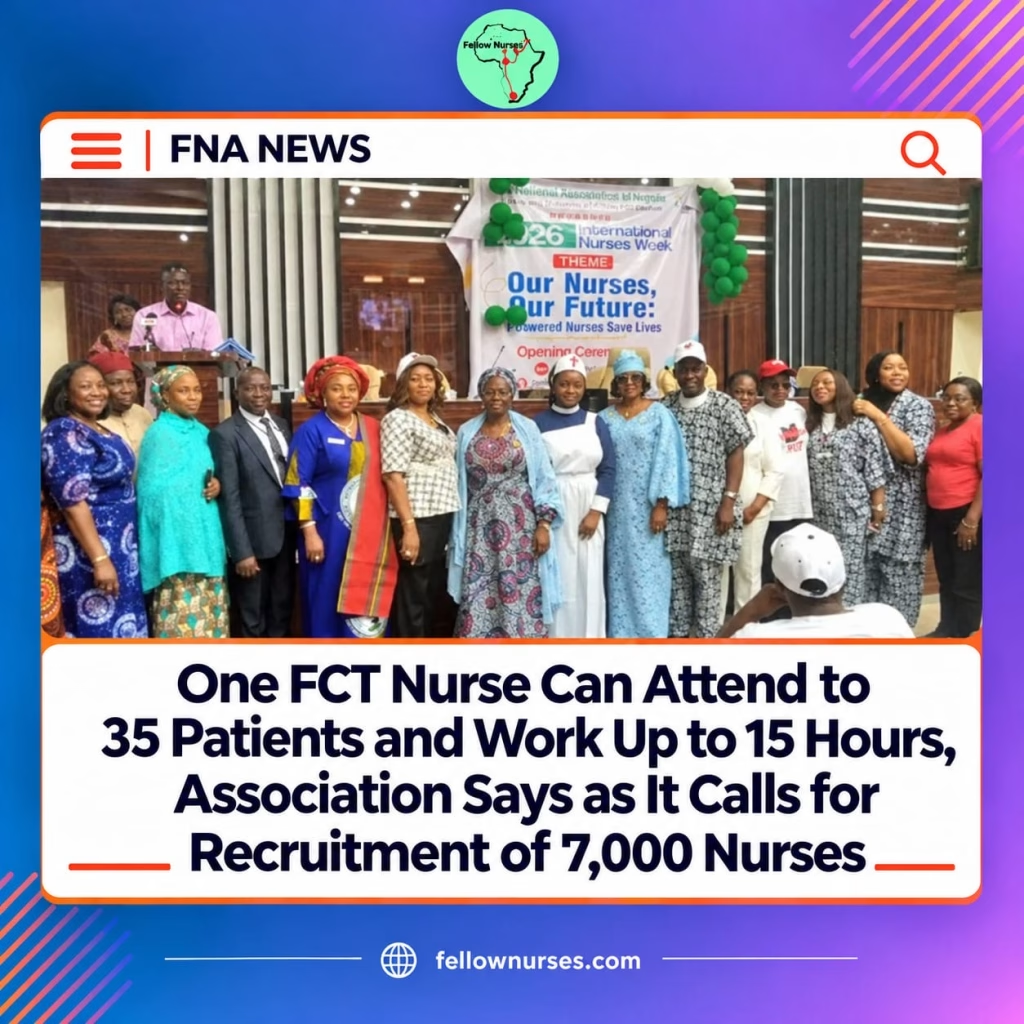
NANNM has called on the Federal Capital Territory Administration (FCTA) to recruit at least 7,000 nurses and midwives, citing staff shortages, heavy workloads and concerns about working conditions in the territory’s healthcare facilities.
👉 Join Fellow Nurses Africa on WhatsApp
The call was made by the National Association of Nigeria Nurses and Midwives (NANNM) during the 2026 International Nurses Week celebration organised by its FCT Council in Abuja.
Dr Jama Medan, Chairman of the NANNM FCT Council, said some nurses in the territory attend to as many as 35 patients per shift and work between 12 and 15 hours daily, compared with the standard eight-hour workday.
His remarks highlight the workload facing nurses in the FCT, where the association says staffing levels remain inadequate to meet growing healthcare needs.
FCT secondary facilities have fewer than 1,000 nurses
According to Medan, secondary healthcare facilities across the FCT have fewer than 1,000 nurses, against an estimated requirement of more than 8,000.
He also said more than 300 primary healthcare centres across the territory’s six area councils have fewer than 100 nurses and midwives providing essential services.
The association is urging the FCTA to approve additional recruitment to strengthen healthcare delivery, particularly in maternal and child health, disease prevention and efforts to achieve universal health coverage.
NANNM calls for better welfare and working conditions
👉 Join Fellow Nurses Africa on WhatsApp
The National President of NANNM, Haruna Mamman, said staff shortages, excessive workloads and poor working conditions threatened effective healthcare delivery and patient safety.
He called for adequate staffing, improved remuneration, continuous professional development, specialised training and greater participation by nurses in health policy decisions.
Mamman also urged governments to clear outstanding allowances and promotion arrears and strengthen protections for nurses against workplace violence.
He called for increased investment in nursing and midwifery institutions, improved career progression opportunities and the passage of the Safe Staffing and Nursing Workforce Bill.
Healthcare investment should include staffing
Medan acknowledged ongoing healthcare infrastructure projects in the FCT, including the planned renovation and rehabilitation of 14 hospitals, the completion of Jabi Hospital and the procurement of 12 ambulances.
However, he stressed that investment in infrastructure should be matched by adequate staffing, modern medical equipment, personal protective equipment and improved welfare for nurses and midwives.
Representing the FCT Minister, Nyesom Wike, the Head of Service, Nancy Sabanti, reaffirmed the administration’s commitment to providing a conducive working environment and supporting improvements in healthcare delivery.
The Registrar and Chief Executive Officer of the Nursing and Midwifery Council of Nigeria, Dr Alhassan Ndagi, represented at the event by his Chief of Staff, Godswill Stella, also emphasised the importance of investing in the nursing workforce.
He identified staff shortages, migration, inadequate resources and demanding working conditions as challenges confronting the profession.
He called for adequate rest periods, modern healthcare technology, competency-based nursing education and greater involvement of nurses in leadership and policymaking.
The wider question of nurse staffing
👉 Join Fellow Nurses Africa on WhatsApp
The association’s appeal places nurse recruitment and working conditions at the centre of discussions about healthcare delivery in the FCT.
The reported workload of up to 35 patients per nurse per shift, alongside working hours of 12 to 15 hours, raises questions about staffing capacity, workload management and the conditions required for nurses to provide safe, effective care.
The proposed recruitment of 7,000 nurses and midwives is intended to address manpower shortages in the territory’s secondary healthcare facilities. The FCTA’s response to the recruitment appeal will be important in determining the next steps.
For nurses and patients alike, adequate staffing, appropriate working hours and improved welfare remain important considerations in building a healthcare system capable of meeting the population’s needs.
👉 Join Fellow Nurses Africa on WhatsApp
Fellow Nurses Africa is the independent voice of African nursing, we educate, inform, and support nurses across Africa.

Durowoju Abisola is a registered nurse, nurse writer and On-Air Correspondent at Fellow Nurses Africa (FNA), passionate about nursing leadership, health education and advocacy.
Through journalism, storytelling and content creation, she amplifies important conversations around nursing, healthcare and the experiences of nurses in Nigeria. She is committed to using her voice and professional knowledge to educate the public, challenge misconceptions and inspire the next generation of nurses.