
NMCN Board Chairman Sets New Agenda, Calls for All Colleges of Nursing to Be Affiliated With Universities
The Chairman of the Nursing and Midwifery Council of Nigeria Governing Board has outlined an ambitious reform agenda aimed at unifying nursing education, improving professional standards and resolving longstanding delays in issuing registration certificates.
By FNA News Desk | 3 November 2026
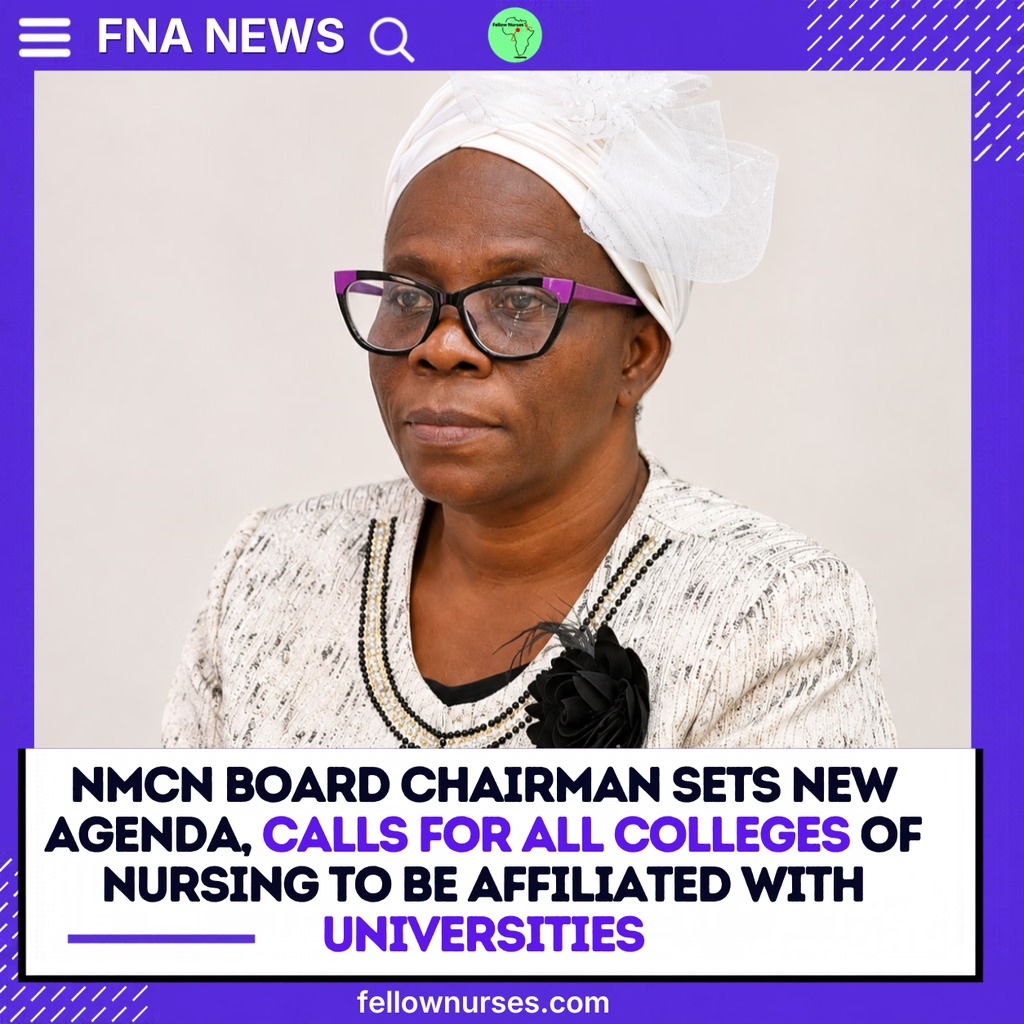
IBADAN, NIGERIA — The Chairman of the Governing Board of the Nursing and Midwifery Council of Nigeria (NMCN), Dr Alice Igbekeleoluwa Ogundele, has called for all colleges of nursing in Nigeria to be affiliated with universities, describing the move as a key priority in efforts to reform nursing education and address longstanding divisions within the profession.
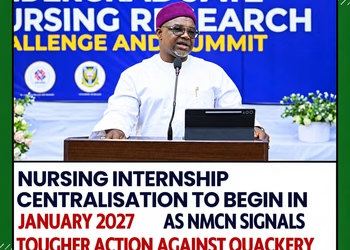
Speaking exclusively to a Fellow Nurses Africa (FNA News) correspondent during the 2026 Undergraduate Nursing Research Challenge and Summit in Ibadan, the Board Chairman outlined her vision for a more unified nursing education system, improved training standards and greater professional development opportunities for Nigerian nurses.
She also disclosed that 98% of outstanding certificates of registration had been signed, with the remaining 2% expected to be completed within the coming weeks.
👉 Join Fellow Nurses Africa on WhatsApp
The development comes as the newly constituted NMCN Governing Board sets out its priorities for addressing some of the challenges facing nursing education and professional regulation in Nigeria.
NMCN Chairman Pushes for University-Based Nursing Education
Asked by FNA News about her priorities as Chairman of the Governing Board, Dr Ogundele identified improving educational standards, strengthening the quality of nursing education and raising professional practice standards as central to her agenda.
A major focus, she explained, would be the transition towards a university-affiliated system of nursing education.
“All colleges to be affiliated with the university,” she stated, according to the interview notes obtained by FNA News.
She explained that one of the objectives of the proposed reform was to address the longstanding dichotomy and internal divisions associated with different educational pathways into the nursing profession.
According to her, a unified entry-level qualification for nurses would help create a more consistent approach to professional education and career progression.
The proposal could have significant implications for nursing education in Nigeria, where university degree programmes and college-based training have historically operated through different academic pathways.
For years, differences in qualifications, career progression and professional recognition have fuelled debates within the nursing community.
Dr Ogundele’s proposal seeks to address these concerns by encouraging closer integration between colleges of nursing and universities.
However, she did not provide a specific implementation timeline or announce a formal directive requiring existing colleges to immediately change their institutional status.
The proposed reforms would require further policy development, regulatory coordination and consultation with educational institutions.
98% of Outstanding Registration Certificates Signed
In another significant disclosure, the Board Chairman provided an update on the longstanding delays affecting nurses’ certificates of registration.
Speaking to FNA News, Dr Ogundele said that “98% of certificates of registration have been signed,” adding that the remaining 2% would be signed within the coming weeks.
The announcement represents reported progress in addressing a backlog that has generated concern among nursing professionals, particularly newly qualified nurses seeking employment, further education and other career opportunities.
The delays had become a subject of professional debate, with affected nurses raising concerns about the impact on their career progression.
The issue was particularly prominent during the period when the NMCN operated without a fully constituted governing board.
With the new Board inaugurated in June 2026, attention has increasingly turned towards resolving outstanding administrative issues and improving regulatory efficiency.
Although the Chairman’s disclosure suggests substantial progress, she did not specify the total number of certificates involved or provide a detailed timetable for their distribution.
For nurses still awaiting their documents, an important distinction remains between certificates being signed and being made available for collection.
A New Agenda for Nursing Education and Professional Standards
Beyond university affiliation and registration certificates, Dr Ogundele emphasised the importance of improving the overall quality of nursing education and practice.
Her priorities reflect growing discussions about how Nigeria can prepare nurses for increasingly complex healthcare needs while maintaining consistent professional standards.
The proposed university affiliation model could potentially strengthen academic progression, research opportunities and collaboration between training institutions.
However, experts have long recognised that educational reforms must also be supported by adequate clinical training facilities, qualified educators, effective supervision and appropriate funding.
For existing nursing students and graduates, any future transition would also need to address the recognition of previously obtained qualifications and opportunities for further academic advancement.
A successful reform would therefore require an approach that strengthens educational standards without creating unnecessary barriers for those already within the profession.
GLLIA Summit Brings Together Nursing Leaders and Young Researchers
The exclusive interview took place on the sidelines of the 2026 Undergraduate Nursing Research Challenge and Summit, organised by the Golden Lamp Leadership Initiative Africa (GLLIA) on Saturday, 31 October, at Trenchard Hall, University of Ibadan.
👉 Join Fellow Nurses Africa on WhatsApp
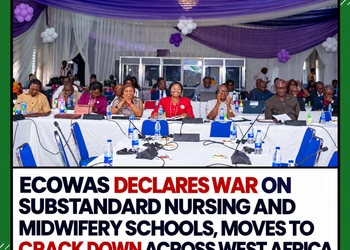
The event, themed “Minds and Machines: New Frontiers of Nursing Research,” brought together nursing students, academics, professional regulators and healthcare innovators from across Nigeria to explore the future of nursing research, artificial intelligence and evidence-based practice.
Among the distinguished personalities in attendance were the NMCN Registrar, Alhaji (Dr) Ndagi Alhassan; Professor Prisca Olabisi Adejumo, Dean of the Faculty of Nursing, University of Ibadan; Professor Adekemi Olowokere of Obafemi Awolowo University; Nurse Abiola Ayilara, Founder of My Qura; and Dr Olushola Ayoola of Robotics and Artificial Intelligence Nigeria.
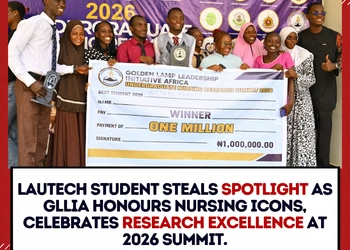
The summit also featured the presentation of Nursing Icon Awards to distinguished speakers and the recognition of outstanding undergraduate researchers.
Bakare Fawasi of Ladoke Akintola University of Technology (LAUTECH) emerged as the overall winner of the nationwide research competition, while Kushimo Adeyosola of Olabisi Onabanjo University (OOU) and Paul Bamise of Federal University Oye-Ekiti (FUOYE) finished second and third respectively.
Fellow Nurses Africa was present to cover the proceedings and conduct exclusive interviews with selected nursing leaders and participants.
FNA News Analysis: Will University Affiliation End the Nursing Education Divide?
The Board Chairman’s proposal raises an important question about the future of nursing education in Nigeria: can a more unified educational pathway address the longstanding differences between nurses trained through university and college-based programmes?
A coordinated university-affiliated system could provide clearer academic progression and encourage greater consistency in educational standards.
However, affiliation alone would not automatically resolve every challenge facing nursing education.
The quality of clinical training, access to qualified educators, availability of learning resources and opportunities for professional development remain equally important.
Any significant restructuring would also need to protect existing students and graduates from unintended consequences.
For Fellow Nurses Africa, the proposed reform presents an opportunity for constructive dialogue among regulators, educational institutions, professional associations and practising nurses.
The ultimate goal should not simply be to unify qualifications, but to build a stronger educational system that produces competent nurses, supports career progression and improves patient care.
Similarly, the reported progress on outstanding registration certificates is encouraging, but affected nurses will be looking for confirmation that their documents have been completed and made accessible.
As the NMCN Governing Board moves to translate its priorities into policy, attention will turn to the practical steps required to deliver these reforms.
For thousands of Nigerian nursing students and professionals, the central concern remains whether the proposed changes will create a more inclusive, efficient and professionally rewarding nursing system.
👉 Join Fellow Nurses Africa on WhatsApp
Fellow Nurses Africa is the independent voice of African nursing, we educate, inform and support nurses across Africa.

Kehinde Oluwatosin is one of the many editors here at Fellow Nurses Africa and fellownurses.com.
He is a registered nurse with a Master of Science degree in healthcare leadership from the University of Hull, United Kingdom. Kehinde is passionate about advancing the nursing profession across Africa. As Co-Founder of Fellow Nurses Africa, he plays a key role in shaping editorial direction, ensuring our content educates, informs, and empowers nurses continent-wide.
With expertise in leadership, patient flow, and healthcare operations, Kehinde brings valuable insights to nursing news, career development, and policy discussions. He is committed to amplifying the voice of African nurses and driving positive change in the profession.