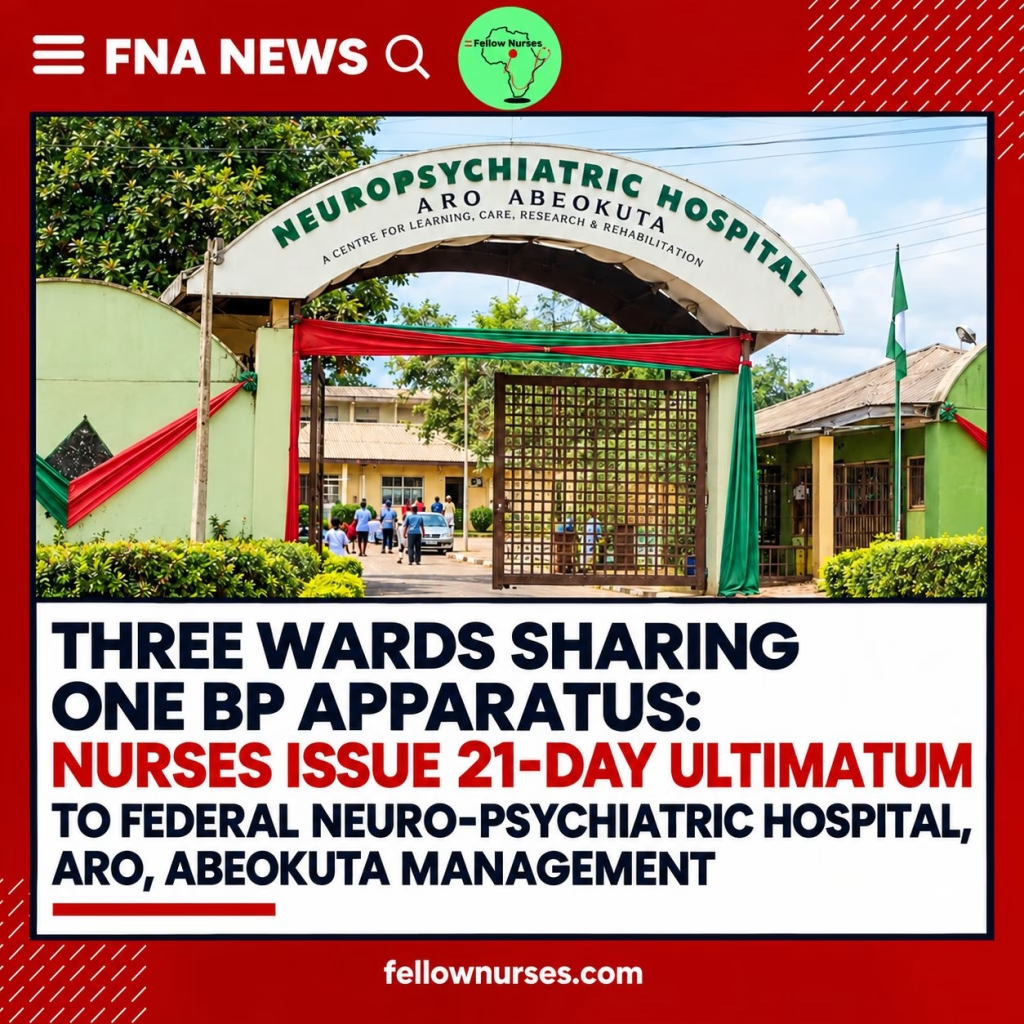
Three Wards Sharing One BP Apparatus: Nurses Issue 21-Day Ultimatum to Federal Neuro-Psychiatric Hospital, Aro, Abeokuta Management
FNA NEWS, 26th OF OCTOBER, 2026
Nurses at the Federal Neuro-Psychiatric Hospital, Aro, Abeokuta, Ogun State, have given management 21 days to address shortages of essential medical equipment, inadequate staffing and poor working conditions, warning that the deficiencies could undermine patient safety and healthcare delivery.
👉 Join Fellow Nurses Africa on WhatsApp
Nurses at the Federal Neuro-Psychiatric Hospital, Aro, Abeokuta, have issued a 21-day ultimatum to the hospital’s management over what they describe as persistent shortages of essential equipment, inadequate staffing and poor working conditions.
The nurses, operating under the National Association of Nigeria Nurses and Midwives (NANNM) at the hospital, raised the concerns during a protest over deficiencies in the facility’s working environment.
One of the most striking concerns is the reported shortage of blood pressure monitoring equipment, with three hospital wards allegedly having to share and queue for a single blood pressure apparatus to conduct routine clinical assessments.
The situation has raised concerns about the availability of basic equipment needed by nurses to monitor patients and deliver timely care in a specialist psychiatric hospital that provides services around the clock.
According to report, the association has called on management to take urgent and meaningful action within 21 days.
Nurses List Shortages of Essential Medical Equipment
Beyond the reported shortage of blood pressure monitors, the nurses identified several other essential medical devices and supplies that they said were inadequate.
These include manual and digital blood pressure monitors, pulse oximeters, cardiac monitors, thermometers, weighing scales and glucometers.
The association also called for oxygen cylinders in the wards, emergency and resuscitation trays, essential emergency supplies and adequate medicines for patients.
These items support routine clinical observations and emergency responses. Their availability is particularly important in facilities where patients may require regular monitoring and prompt intervention.
The nurses argued that the reported shortages were inconsistent with the demands of a specialist hospital expected to provide continuous care.
Staffing Shortages Add to Nurses’ Concerns
👉 Join Fellow Nurses Africa on WhatsApp
The ultimatum also addresses staffing gaps across key clinical areas.
The association called for the recruitment and deployment of specialist nurses to accident and emergency, perioperative, psychiatric, intensive care and midwifery services.
It also demanded an end to what it described as single-qualified staffing arrangements and called for regular training and retraining for healthcare personnel.
Inadequate staffing can increase workloads and make it more difficult for healthcare professionals to maintain timely patient observations, respond to emergencies and provide consistent care.
For nurses working in specialist facilities, appropriate staffing and access to essential equipment are important parts of creating a safe working environment and supporting effective patient care.
The association said the reported conditions were placing avoidable pressure on healthcare workers and could affect the timely and safe delivery of services.
Nurses Demand Reliable Electricity, Water and Patient Amenities
The demands extend beyond medical equipment and staffing to include basic hospital facilities.
The nurses called for reliable electricity, adequate water supply and bedspreads for patients.
They also raised concerns about the reported absence of DStv subscriptions in hospital wards for more than eight months. The association argued that television programmes could provide diversional activities for patients receiving psychiatric care.
Although recreational activities do not replace clinical treatment, a supportive therapeutic environment can contribute to patients’ experience during hospital care.
The association maintained that adequate equipment, sufficient staffing, reliable electricity and clean water were essential to patient safety, infection prevention and control, staff welfare and effective healthcare delivery.
Hospital Management Given 21 Days to Act
👉 Join Fellow Nurses Africa on WhatsApp
The nurses have called on the hospital’s management to address the identified deficiencies within 21 days, urging it to take concrete steps to resolve their concerns.
The development has also received support from the Medical and Health Workers Union of Nigeria (MHWUN), Aro branch.
The union’s branch president, Ojewande Oluwafemi, confirmed that the two unions were aligned on the ultimatum.
Speaking to Sunday PUNCH, Oluwafemi said the protest was in its second day and that both unions supported the action.
The reports reviewed did not establish whether management had formally responded to all the demands or announced a plan to address them.
Why the Concerns Matter for Patient Safety
The dispute highlights an important issue in healthcare delivery: the ability of nurses to provide safe and timely care depends not only on their clinical skills but also on the equipment, staffing and infrastructure available to them.
Blood pressure monitoring, for example, is a routine part of patient assessment. When several wards must queue to use a single device, access to that equipment may become a practical challenge during busy periods.
However, the actual effect on patient outcomes at the hospital has not been independently established in the reports reviewed. The nurses’ concerns therefore underscore the need for management to investigate the reported shortages, assess their implications for care and communicate the steps being taken to resolve them.
For healthcare workers, adequate staffing and functional equipment are also essential to a working environment that supports professional practice and patient dignity.
The 21-day ultimatum places the hospital’s response in focus. Timely engagement with the unions, transparent communication and concrete action on essential equipment, staffing and basic amenities will be important in addressing the concerns raised.
👉 Join Fellow Nurses Africa on WhatsApp
Fellow Nurses Africa is the independent voice of African nursing, we educate, inform, and support nurses across Africa.

Durowoju Abisola is a registered nurse, nurse writer and On-Air Correspondent at Fellow Nurses Africa (FNA), passionate about nursing leadership, health education and advocacy.
Through journalism, storytelling and content creation, she amplifies important conversations around nursing, healthcare and the experiences of nurses in Nigeria. She is committed to using her voice and professional knowledge to educate the public, challenge misconceptions and inspire the next generation of nurses.