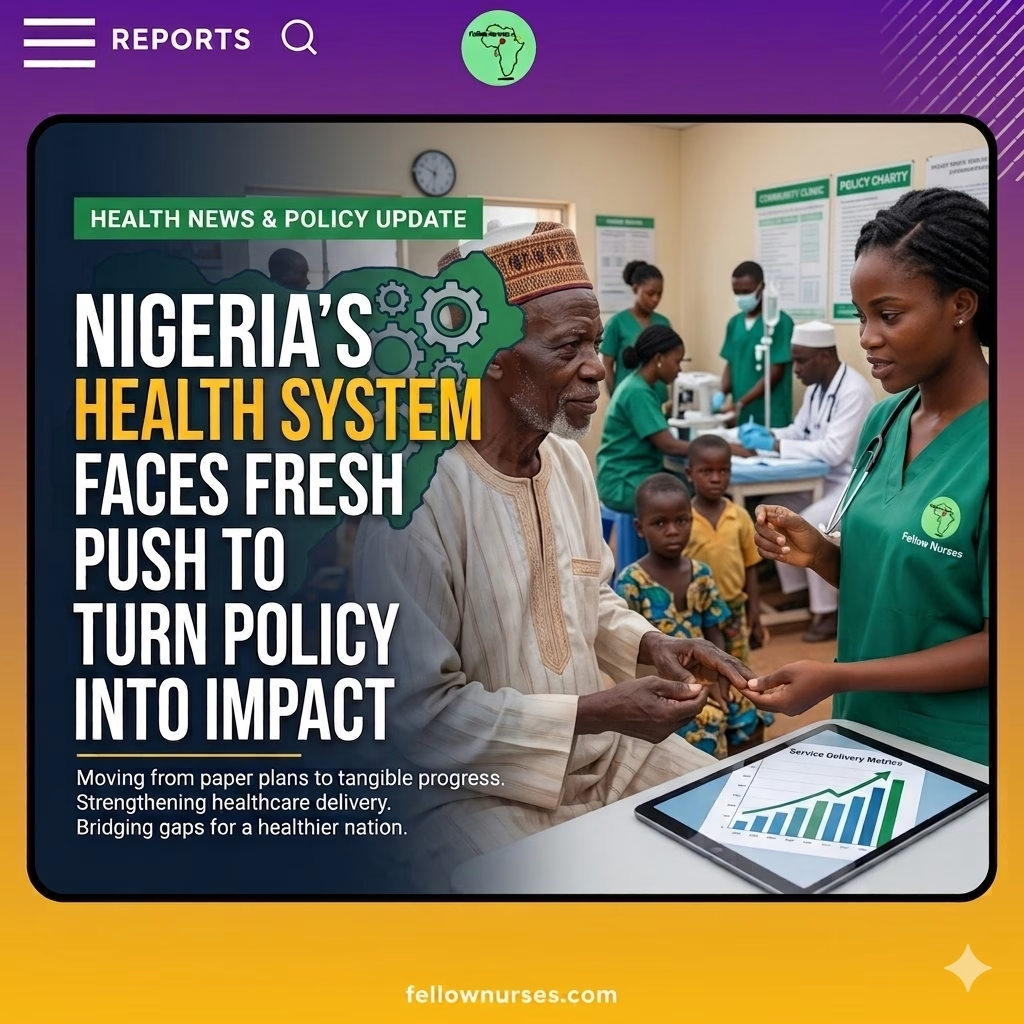
Nigeria’s Health System Faces Fresh Push to Turn Policy Into Impact
FNA NEWS,9th Of September, 2026
Nigeria’s health system is set for a fresh conversation on how to turn health policies into better care for patients.
👉 Join Fellow Nurses Africa on WhatsApp
Health policymakers, legislators, healthcare professionals, regulators, development partners and patient representatives are expected to meet in Abuja for the 2026 National Health Equity Conference, scheduled for October 13–15 at the Nigeria National Merit Award House, Maitama.
The conference, organised by OneBarrow International Limited, will focus on the theme: “From Policy to Impact: Care Coordination as the Core Engine of Health Equity.” ([One Barrow][1])
From policy to practice
Nigeria has developed several health policies and frameworks. But the challenge is ensuring that these policies translate into practical improvements for people and communities.
According to OneBarrow CEO Yemi Ajao, the conference will examine how existing policies can move from documents to implementation across federal, state and local levels.
The organisers say stronger coordination among doctors, nurses, pharmacists, laboratory scientists, health administrators and other professionals could help reduce fragmentation in healthcare delivery. ([Premium Times Nigeria][2])
This matters because patients rarely receive all their care from one professional or one facility.
A patient may begin treatment at a primary healthcare centre, require laboratory investigations, receive a referral to another facility and later return for follow-up.
When these points of care do not communicate effectively, patients can face delays, repeated processes and gaps in follow-up.
Why care coordination matters
Care coordination is about ensuring that the different people and services involved in a patient’s care work together.
For nurses, this is already part of everyday practice.
Nurses support patient education, referrals, documentation, discharge planning, follow-up and communication between patients and other healthcare professionals.
A stronger coordination system can therefore help healthcare workers understand a patient’s care journey and ensure that important information is not lost when the patient moves between facilities.
The conference will also examine stronger referral systems, communication and accountability within Nigeria’s health system. ([Premium Times Nigeria][2])
Health equity goes beyond access
👉 Join Fellow Nurses Africa on WhatsApp
Having a health facility nearby does not automatically guarantee equitable healthcare.
Patients also need to be able to navigate the system, receive appropriate information and move between different levels of care without unnecessary barriers.
The organisers say the conference will explore the impact of poor coordination on people who face difficulties accessing healthcare.
Technology, health data, citizen participation, digital feedback systems, transparency, access to health information and awareness of patients’ rights are also expected to form part of the discussions. ([Premium Times Nigeria][2])
This puts patients at the centre of the conversation.
People should not only receive healthcare; they should also have meaningful ways to understand their rights and provide feedback about the quality of services they receive.
What happens after the conference?
The real test will be what happens after the discussions end.
The organisers say the conference is expected to produce a post-conference communiqué and implementation roadmap, containing recommendations and commitments from participants.
The roadmap is intended to support policy implementation, track commitments and strengthen collaboration among stakeholders. ([Premium Times Nigeria][2])
That follow-through will be critical.
Nigeria does not simply need more conversations about healthcare reform. It needs systems that make good policies work at the point of care.
For nurses and other healthcare professionals, this means better referral pathways, clearer communication, stronger teamwork and systems that allow patients to move through healthcare without being lost between facilities.
Ultimately, the success of a health policy should not be measured only by its approval.
It should be measured by what changes for the patient.
The October conference could provide an important platform for stakeholders to address that gap — and, more importantly, identify practical steps for closing it.
👉 Join Fellow Nurses Africa on WhatsApp
Fellow Nurses Africa is the independent voice of African nursing, we educate, inform and support nurses across Africa

Durowoju Abisola is a registered nurse, nurse writer and On-Air Correspondent at Fellow Nurses Africa (FNA), passionate about nursing leadership, health education and advocacy.
Through journalism, storytelling and content creation, she amplifies important conversations around nursing, healthcare and the experiences of nurses in Nigeria. She is committed to using her voice and professional knowledge to educate the public, challenge misconceptions and inspire the next generation of nurses.