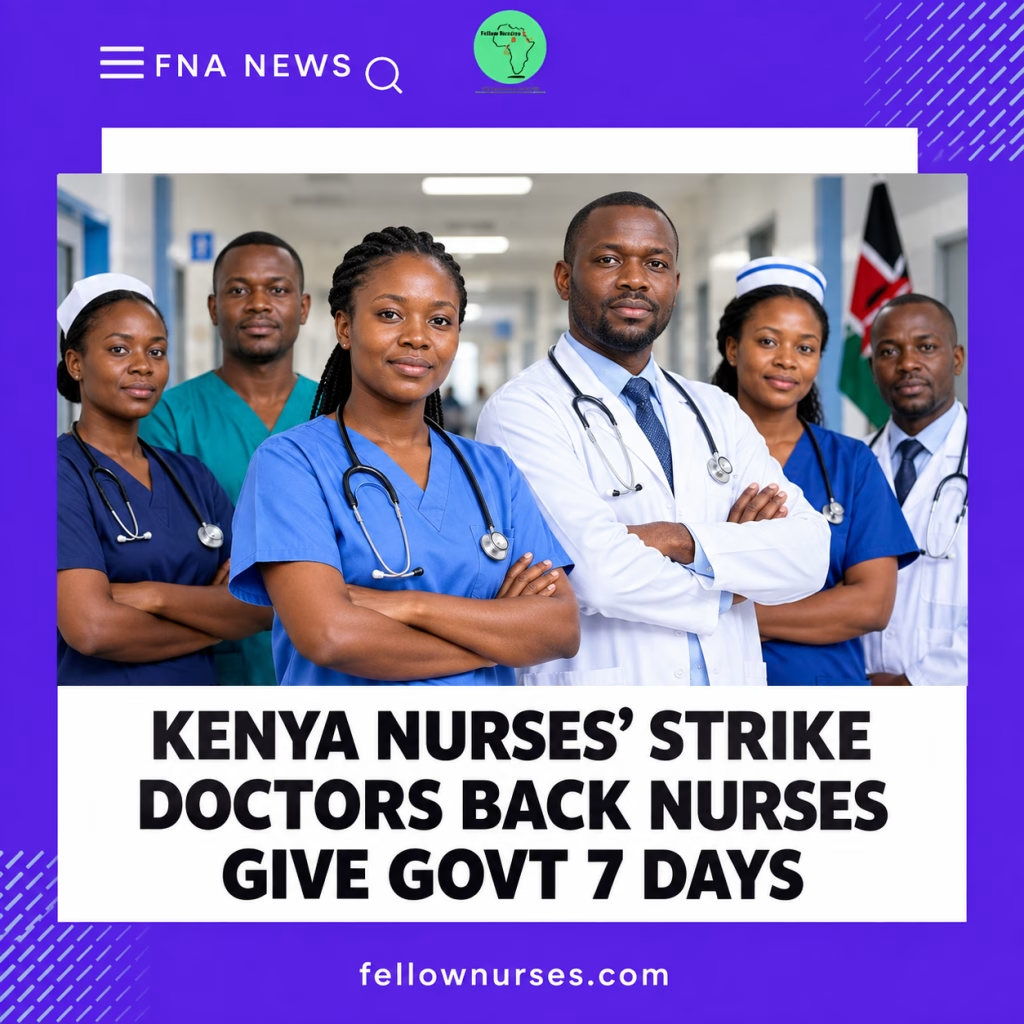
Kenya Nurses’ Strike: Doctors Back Nurses, Give Government 7 Days
By FNA News, September 8, 2026
Kenyan doctors have thrown their support behind striking nurses, giving the government seven days to resolve the dispute and warning that they could join the industrial action if the crisis remains unresolved.
👉 Join Fellow Nurses Africa on WhatsApp
The Kenya Medical Practitioners, Pharmacists and Dentists Union (KMPDU) issued the ultimatum on Monday, September 7, as the nurses’ strike continued to disrupt services in public hospitals across the country.
The union said its position was driven by concerns over patient safety, the growing pressure on doctors and the impact of prolonged disruption to nursing services.
KMPDU has specifically said that any strike notice issued by doctors would be in solidarity with nurses, placing the latest development in the wider context of Kenya’s health workforce dispute.
Doctors say nurses cannot be replaced
KMPDU Secretary-General Dr Davji Atellah said the prolonged absence of nurses was placing an increasing burden on doctors and limiting hospitals’ ability to provide essential care.
He stressed that doctors could not simply take over nursing responsibilities.
“Doctors cannot do the nursing jobs,” Atellah said, according to reports from the briefing.
The union said nursing care is particularly critical in areas such as intensive care units, high-dependency units and hospital wards, where patients require continuous monitoring and hands-on care.
👉 Join Fellow Nurses Africa on WhatsApp
Atellah warned that doctors, who are already in short supply, were becoming increasingly overburdened as the nurses’ strike continued.
KMPDU said hospitals were operating under severe constraints and that the situation was becoming increasingly unsafe for both patients and healthcare workers.
A dispute that has lasted more than six weeks
The nurses’ strike has now stretched beyond 40 days, according to reports from Kenyan media, with the disruption affecting public hospitals across the country. The Standard reported on September 8 that the strike had entered its 43rd day.
The dispute centres on unresolved issues between nurses and government authorities, including outstanding commitments linked to previous labour agreements.
KMPDU Secretary-General Atellah said some of the issues behind the current dispute could be traced to the 2017 return-to-work formula, arguing that the government has had years to address outstanding commitments.
The doctors’ union has therefore urged the government and other stakeholders to return to dialogue and find a solution before the situation escalates further.
Patient safety at the centre of concern
Beyond the labour dispute, KMPDU has raised concerns about the effect of the nurses’ absence on patients.
The union said patients who require nursing care are struggling to access essential services and linked the disruption to worsening conditions and preventable complications.
It also reported concerns about deaths involving patients, including children and mothers. However, these claims are statements from the doctors’ union and should not be interpreted as independently established evidence that the strike directly caused individual deaths.
The wider concern is that prolonged disruption to one part of a healthcare team can place additional pressure on the remaining workforce.
For doctors, KMPDU argues, this has created a situation in which medical professionals are being asked to work in a system without the nursing support required for normal hospital operations.
Doctors’ solidarity could widen the dispute
The seven-day ultimatum introduces a new dimension to the nurses’ strike.
Rather than treating the nurses’ action as an isolated labour dispute, KMPDU has publicly positioned its intervention as an expression of solidarity with nurses and a warning about the wider consequences of leaving the dispute unresolved.
If the government fails to reach a resolution within the seven-day period, KMPDU says it will proceed with a nationwide strike notice in support of the nurses.
That could significantly increase pressure on Kenya’s public healthcare system, where nurses and doctors play complementary roles in patient care.
The development also highlights a broader issue facing healthcare systems: patient care depends not on one professional group working alone, but on different cadres functioning together.
As the seven-day deadline approaches, attention will now turn to whether the national and county governments can reach an agreement with the striking nurses and prevent the dispute from expanding to another major group of healthcare workers.
For patients already affected by the disruption, the outcome could determine whether public hospital services begin returning to normal or face another layer of industrial action.
FNA will continue to monitor the dispute and report on developments affecting nurses, doctors, patients and healthcare delivery in Kenya.
👉 Join Fellow Nurses Africa on WhatsApp
Fellow Nurses Africa is the independent voice of African nursing, we educate, inform and support nurses across Africa.

Durowoju Abisola is a registered nurse, nurse writer and On-Air Correspondent at Fellow Nurses Africa (FNA), passionate about nursing leadership, health education and advocacy.
Through journalism, storytelling and content creation, she amplifies important conversations around nursing, healthcare and the experiences of nurses in Nigeria. She is committed to using her voice and professional knowledge to educate the public, challenge misconceptions and inspire the next generation of nurses.