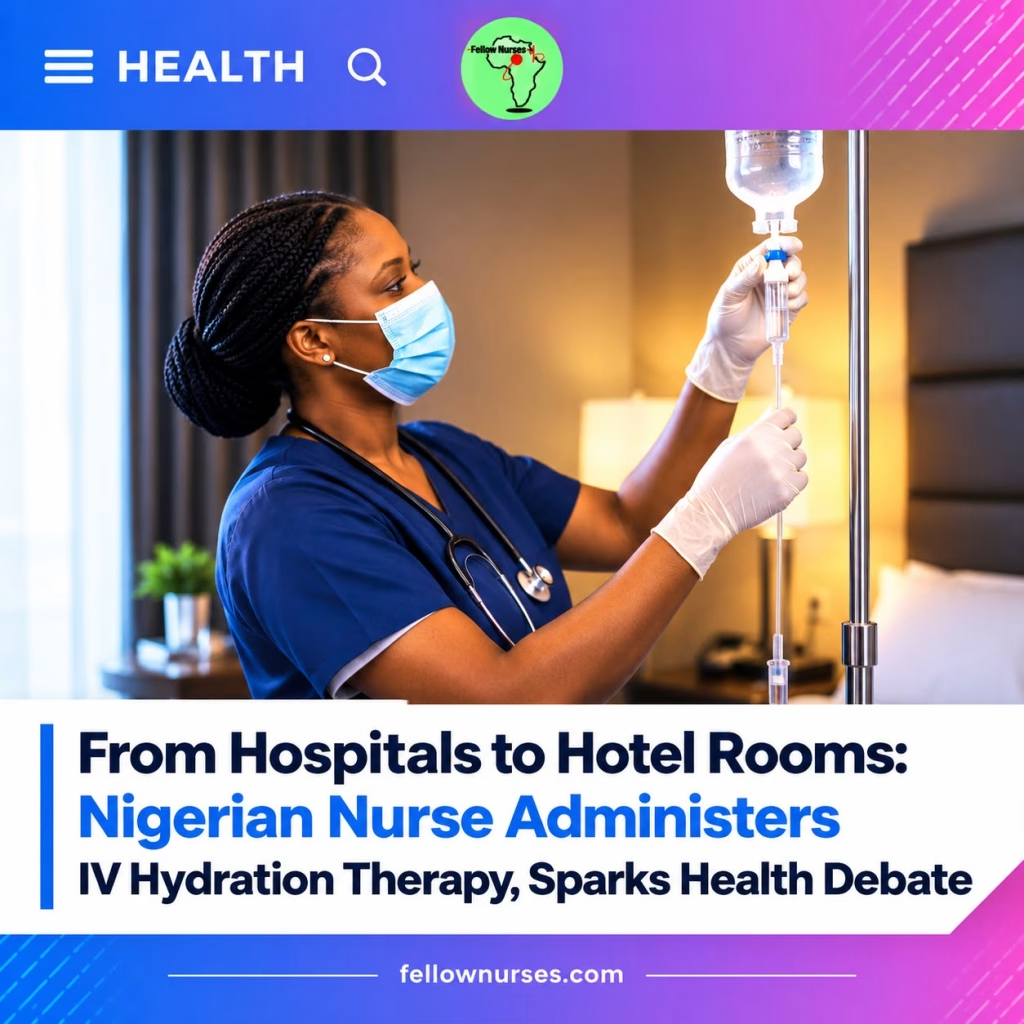
From Hospitals to Hotel Rooms: IV Hydration Therapy by Nigerian Nurses Sparks Health Debate
FNA NEWS, 7th of September 2026
The growing use of intravenous (IV) hydration therapy outside conventional healthcare facilities is generating conversation in Nigeria, following videos circulating online showing nurses administering IV treatments in hotel-style settings.
👉 Join Fellow Nurses Africa on WhatsApp
The videos appear to show clients receiving intravenous fluids and vitamin-based infusions, with some of the services presented as treatments for hydration, energy, immunity and general wellness.
The trend has raised questions about the boundaries of healthcare delivery outside hospitals, particularly around clinical need, patient safety, professional responsibility and regulation.
But beyond the social media reactions is a more important question: when is IV hydration a medically necessary treatment, and when is it being used primarily as a wellness service?
From clinical treatment to wellness service
Intravenous therapy is an established part of modern healthcare.
IV fluids may be used to manage dehydration, replace fluids and electrolytes, administer certain medicines or support patients who cannot take treatment orally.
In recent years, however, IV therapy has increasingly moved beyond hospitals and clinics into the wellness industry.
Some businesses now offer IV hydration and vitamin infusions to people who are otherwise healthy, promoting the treatments for purposes such as increased energy, improved hydration, immunity and recovery.
That shift has created a growing debate among healthcare professionals and members of the public.
The concern is not necessarily about the use of IV therapy itself. Rather, it is about whether the treatment is clinically indicated and whether patients are adequately assessed before it is administered.
👉 Join Fellow Nurses Africa on WhatsApp
What does the evidence say?
The popularity of IV vitamin therapy has grown faster than the evidence supporting many of its wellness claims.
The Cleveland Clinic notes that there is limited high-quality evidence showing that IV vitamin therapy provides broad health benefits for otherwise healthy people. It also warns that the treatment is not without potential risks.
This distinction is important.
A patient receiving intravenous fluids because of clinically significant dehydration is not in the same situation as a healthy person receiving an IV infusion because they feel tired or want an immunity boost.
The same treatment route can therefore have very different clinical implications depending on why it is being given, what is being administered and who is receiving it.
Why IV treatment requires caution
An IV drip may look simple, but it is an invasive medical procedure.
Unlike oral supplements, substances administered intravenously enter the bloodstream directly. This means that errors involving the substance, dose, rate of administration or patient selection can have immediate consequences.
Potential complications can include infection at the injection site, bruising, fluid overload, medication interactions and adverse reactions. The risks may be greater for people with certain underlying health conditions.
This is why the description of an infusion as “just vitamins” should not remove the need for proper clinical assessment.
A vitamin can still be a medicine when administered intravenously, and the route of administration matters.
What happens when care moves outside the hospital?
Healthcare is no longer confined to hospitals.
👉 Join Fellow Nurses Africa on WhatsApp
Nurses and other healthcare professionals provide services in homes, workplaces, community settings and other locations. Providing care outside a hospital is therefore not, by itself, evidence that a service is inappropriate.
The critical issue is whether the same standards of professional care are maintained.
For IV hydration services, this includes appropriate patient assessment, consideration of medical history and allergies, proper identification and preparation of the products being administered, infection prevention, monitoring during treatment and the ability to respond appropriately if a patient develops a complication.
A professional regulator in the United States, for example, has issued guidance specifically addressing IV hydration and wellness clinics as non-traditional practice settings. The guidance emphasises nurses’ responsibility to provide safe and competent care and the importance of appropriate clinical orders for IV fluids, nutrients and medications.
The broader principle is relevant to Nigeria: the professional responsibility attached to an intervention does not disappear simply because the intervention is performed outside a hospital.
What about the Nigerian nursing profession?
The debate also touches on professional accountability.
The Nursing and Midwifery Council of Nigeria (NMCN) is responsible for regulating nursing and midwifery practice in the country, including the licensing of nurses and midwives.
For nurses providing IV therapy, professional competence and scope of practice remain important regardless of whether the service is provided in a hospital, clinic, home or private setting.
The question is therefore not simply whether a nurse can physically administer an IV drip.
It is whether the nurse is appropriately qualified, authorised and competent to provide the particular service under the circumstances in which it is being offered.
That distinction is essential when discussing emerging healthcare models.
Patients also have a role
As IV wellness services become more visible, patients need to be able to make informed decisions.
Anyone considering an IV infusion should feel comfortable asking basic questions before treatment begins.
Patients have a right to understand the treatment they are receiving and the potential risks involved.
The commercialisation of wellness
👉 Join Fellow Nurses Africa on WhatsApp
The rise of IV wellness therapy also reflects a wider change in healthcare consumption.
People increasingly want healthcare services that are convenient, private and personalised. Businesses have responded by taking services traditionally associated with hospitals and bringing them into homes, hotels and other private spaces.
There can be legitimate benefits to convenient healthcare delivery.
But there is also a risk that the language of wellness can make medical procedures appear simpler or safer than they actually are.
A treatment being marketed as a way to “boost energy” or “strengthen immunity” does not necessarily mean there is strong clinical evidence supporting that claim.
That is where healthcare professionals, regulators and consumers need to be particularly careful.
Nigeria needs clearer conversations around emerging healthcare services
The current discussion should not become a blanket condemnation of nurses providing IV services outside hospitals.
Nor should every wellness claim surrounding IV therapy be accepted without scrutiny.
Instead, the conversation should focus on evidence, regulation, professional standards and patient safety.
As healthcare delivery continues to evolve, regulators and professional bodies may need to provide clearer guidance on emerging services such as mobile IV therapy and wellness infusions.
For nurses, the principles remain familiar: assess the patient properly, practise within professional standards, use appropriate products and prioritise patient safety.
For patients, the message is equally straightforward: before allowing any substance to enter your bloodstream, understand what it is, why you need it and who is responsible for administering it.
The movement of IV therapy from hospitals into hotels and other private settings may be part of a changing healthcare landscape. But convenience should never replace clinical judgement.
Where healthcare goes, professional responsibility must go with it.
👉 Join Fellow Nurses Africa on WhatsApp
Fellow Nurses Africa is the independent voice of African nursing, we educate, inform and support nurses across Africa.

Durowoju Abisola is a registered nurse, nurse writer and On-Air Correspondent at Fellow Nurses Africa (FNA), passionate about nursing leadership, health education and advocacy.
Through journalism, storytelling and content creation, she amplifies important conversations around nursing, healthcare and the experiences of nurses in Nigeria. She is committed to using her voice and professional knowledge to educate the public, challenge misconceptions and inspire the next generation of nurses.