
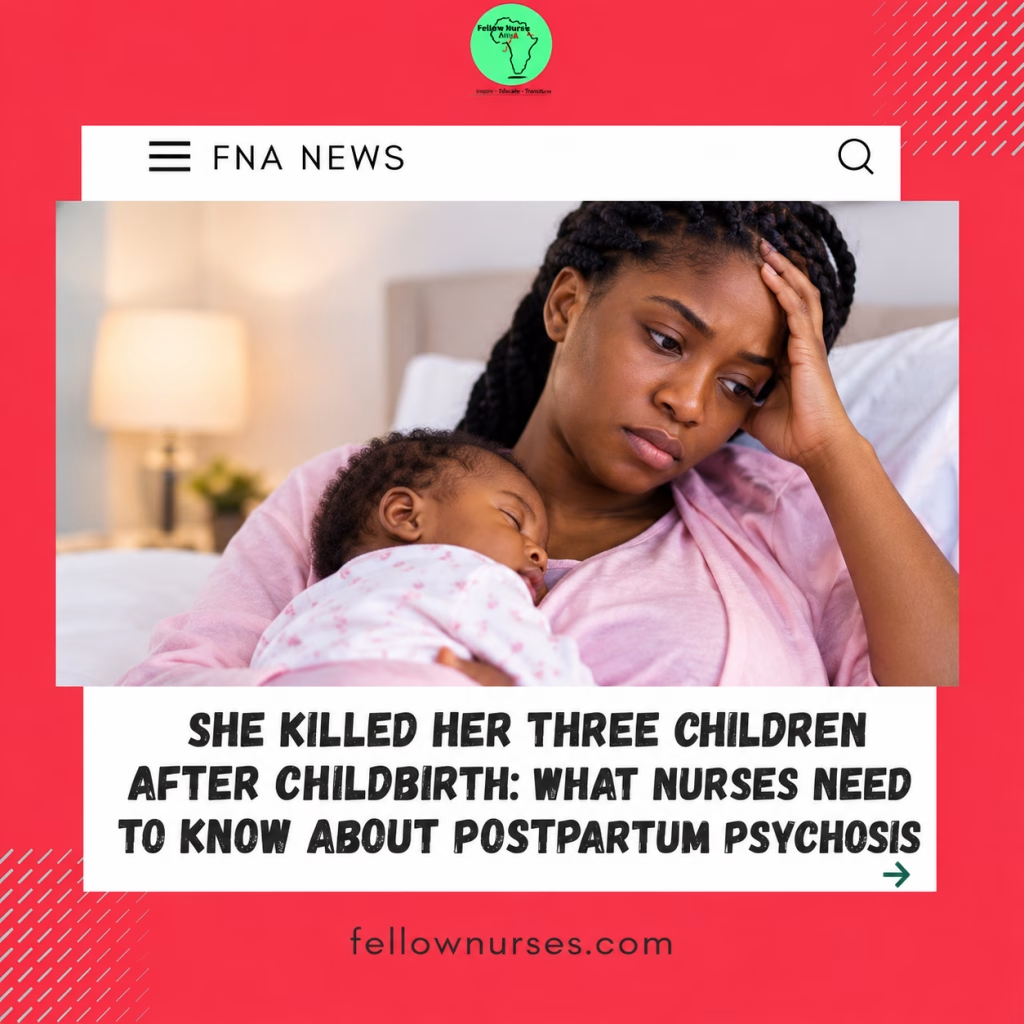
She Killed Her Three Children After Childbirth: What Nurses Need to Know About Postpartum Psychosis
FNA NEWS, 7th Of September 2026
A former labour and delivery nurse in the United States is at the centre of a case that has renewed attention on one of the most serious mental health emergencies associated with childbirth: postpartum psychosis.
👉 Join Fellow Nurses Africa on WhatsApp
Lindsay Clancy was accused of killing her three children in Massachusetts in January 2023. During her trial, her defence argued that she was experiencing postpartum psychosis and was not criminally responsible for her actions.
After seven days of deliberations, the jury failed to reach a unanimous verdict, leading to a mistrial on September 4, 2026. Clancy remains in psychiatric custody, and prosecutors may decide whether to retry the case. ([Reuters][1])
But beyond the courtroom lies a question that should matter to every healthcare professional:
Would we recognise postpartum psychosis early enough to intervene?
Postpartum psychosis is not postpartum depression
Postpartum depression is more common and can cause persistent sadness, anxiety, hopelessness and difficulty functioning.
Postpartum psychosis is different.
It is a psychiatric emergency that can develop rapidly, often within days or the first few weeks after childbirth. It affects about 1 in 1,000 women after giving birth. ([nhs.uk][2])
Symptoms may include:
- Hallucinations
- Delusions or unusual beliefs
- Severe confusion
- Extreme agitation
- Rapid mood changes
- Mania or severe depression
- Severe sleep disturbance
- Thoughts of suicide or harming the baby or others
The condition can change rapidly, and the mother may not recognise that she is unwell. ([West London NHS Trust][3])
Where nurses come in
👉 Join Fellow Nurses Africa on WhatsApp
For nurses working in maternity, postnatal, primary healthcare, emergency and community settings, this is more than a mental-health topic.
A change in behaviour is a clinical finding.
A mother who suddenly becomes extremely confused, paranoid, unusually excited, severely withdrawn, hears or sees things others cannot, or expresses frightening beliefs should not simply be told that she is tired or adjusting to motherhood.
She needs urgent assessment.
The American College of Obstetricians and Gynecologists (ACOG) includes acute postpartum psychosis among the perinatal mental health conditions healthcare professionals should assess and manage. ([ACOG][4])
The lesson for nurses
The Lindsay Clancy case should not be used to suggest that postpartum psychosis inevitably leads to violence. It does not.
Most women with postpartum psychosis can recover with appropriate treatment. But because the condition can become severe very quickly, delayed recognition can have devastating consequences. ([PubMed Central (PMC)][5])
The responsibility therefore goes beyond asking a new mother, “Are you okay?”
Healthcare workers must observe, listen, ask the right questions, recognise red flags and escalate concerns promptly.
Maternal care does not end when the baby is delivered.
The mother’s mind needs care too.
👉 Join Fellow Nurses Africa on WhatsApp
Fellow Nurses Africa is the independent voice of African nursing, we educate, inform and support nurses across Africa.

Durowoju Abisola is a registered nurse, nurse writer and On-Air Correspondent at Fellow Nurses Africa (FNA), passionate about nursing leadership, health education and advocacy.
Through journalism, storytelling and content creation, she amplifies important conversations around nursing, healthcare and the experiences of nurses in Nigeria. She is committed to using her voice and professional knowledge to educate the public, challenge misconceptions and inspire the next generation of nurses.