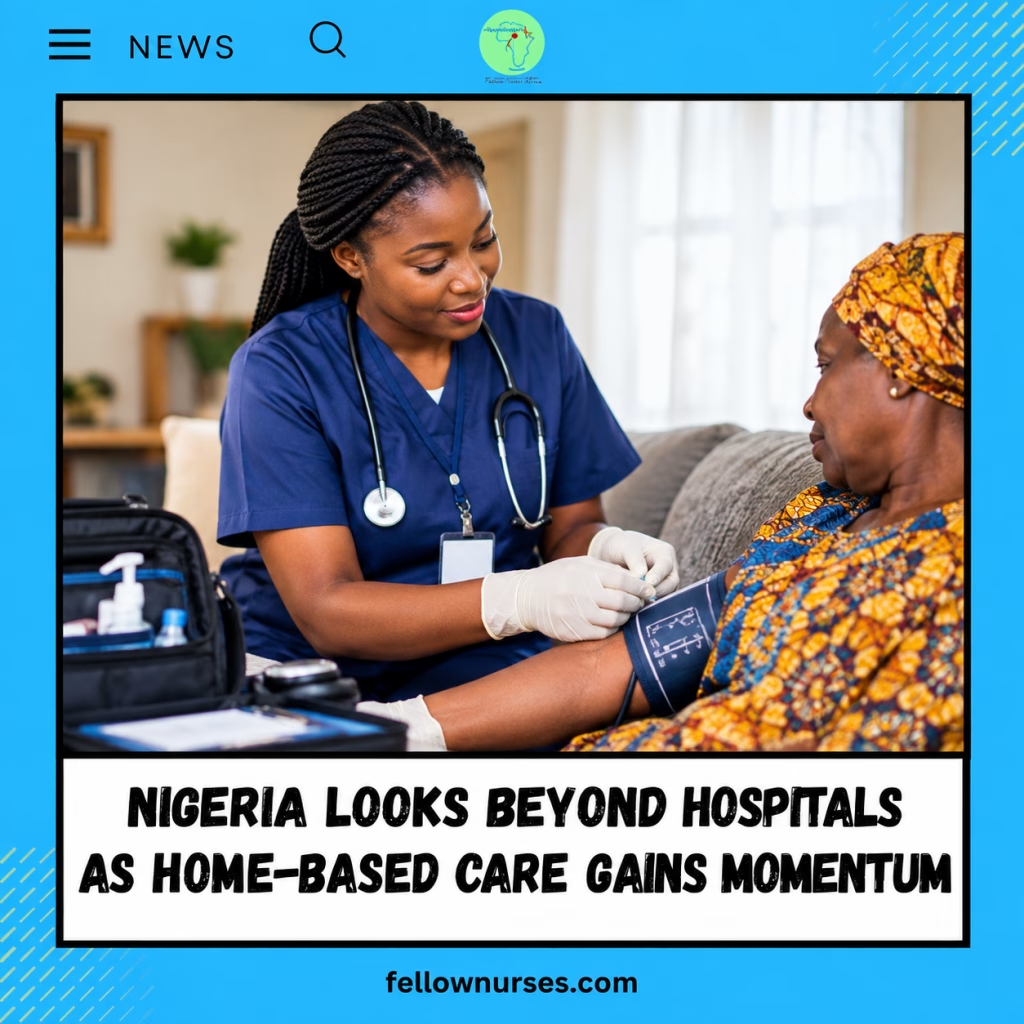
Nigeria Looks Beyond Hospitals as Home-Based Care Gains Momentum
FNA NEWS,LAGOS NIGERIA, 10TH OF SEPTEMBER, 2026
Healthcare stakeholders are calling for wider use of home-based care in Nigeria, saying it could improve access to healthcare, ease pressure on hospitals and create new opportunities for nurses.
👉 Join Fellow Nurses Africa on WhatsApp
Healthcare professionals and other stakeholders are advocating greater adoption of home-based care as Nigeria continues to face challenges around healthcare access and workforce shortages.
The call was made at the Nurse Career Growth Summit 2026, organised by Nexa Nurse in Lagos. The summit brought together nurses, medical practitioners and other healthcare professionals to discuss the changing healthcare landscape and emerging opportunities for nurses. ([Nexa Nurse][1])
Dr Tunji Akintade, Medical Director of Hamaab Medical Centre and former chairman of the Healthcare Providers Association of Nigeria, Lagos State chapter, said home-based care could help patients who find it difficult to visit hospitals.
He noted that some patients receiving routine care, such as prescribed injections, could receive appropriate nursing services within their communities instead of repeatedly travelling to hospitals.
👉 Join Fellow Nurses Africa on WhatsApp
Akintade also pointed to the potential of home-based care to create employment opportunities for nurses who are unable to secure conventional hospital positions. ([Punch Newspapers][2])
At the summit, Nexa Nurse unveiled a digital platform designed to connect patients with qualified and registered nurses for home-based healthcare services.
The company said the platform is intended to bring greater structure and accountability to home healthcare, which has often been provided informally. Its website currently allows users to find verified registered nurses, book services and receive care at their preferred location. ([Nexa Nurse][3])
Safety was also highlighted as an important part of the model. Nexa Nurse said its platform includes an SOS feature designed to support the safety of nurses during home visits and respond to emergencies or security concerns. ([Punch Newspapers][2])
FNA Views
👉 Join Fellow Nurses Africa on WhatsApp
The growing interest in home-based care raises an important question for Nigeria: Can more healthcare be safely delivered outside the hospital?
The answer is yes—but only for the right patients and the right services.
Not every healthcare need requires a hospital visit. Some forms of nursing care, including appropriate wound care, medication administration, monitoring and certain aspects of post-operative care, can be delivered in a patient’s home when there has been proper clinical assessment and a clear plan of care.
For patients who are elderly, living with mobility difficulties or unable to travel easily, this could make healthcare more accessible.
For nurses, it also opens another professional pathway.
Nursing practice is not limited to the hospital ward. Community nursing, home healthcare, public health, education and digital health are among the areas where nurses can contribute beyond traditional hospital employment.
However, home-based care must complement hospital care, not replace it.
Patients who require investigations, emergency intervention, specialist review or continuous monitoring must still have timely access to appropriate health facilities. There must also be clear referral pathways when a patient’s condition changes during a home visit.
Professional standards will therefore be critical. Safe home healthcare requires competent and appropriately registered professionals, proper documentation, infection prevention measures, medication safety, patient confidentiality and systems for escalating emergencies.
The safety of nurses must also remain part of the conversation. Home visits can expose healthcare workers to risks that may not exist within a controlled hospital environment. Any expansion of home-based care should therefore include practical measures for staff security and emergency support.
Nigeria does not simply need to move healthcare from hospitals into people’s homes. It needs a stronger continuum of care in which patients receive the right care, from the right professional, in the right setting.
If properly regulated and integrated into the wider health system, home-based nursing could improve access, support families, create new opportunities for nurses and potentially reduce avoidable pressure on hospitals.
The opportunity is significant—but patient safety and quality of care must remain at the centre of the transition.
👉 Join Fellow Nurses Africa on WhatsApp
Fellow Nurses Africa is the independent voice of African nursing, we educate, inform and support nurses across Africa.

Durowoju Abisola is a registered nurse, nurse writer and On-Air Correspondent at Fellow Nurses Africa (FNA), passionate about nursing leadership, health education and advocacy.
Through journalism, storytelling and content creation, she amplifies important conversations around nursing, healthcare and the experiences of nurses in Nigeria. She is committed to using her voice and professional knowledge to educate the public, challenge misconceptions and inspire the next generation of nurses.