
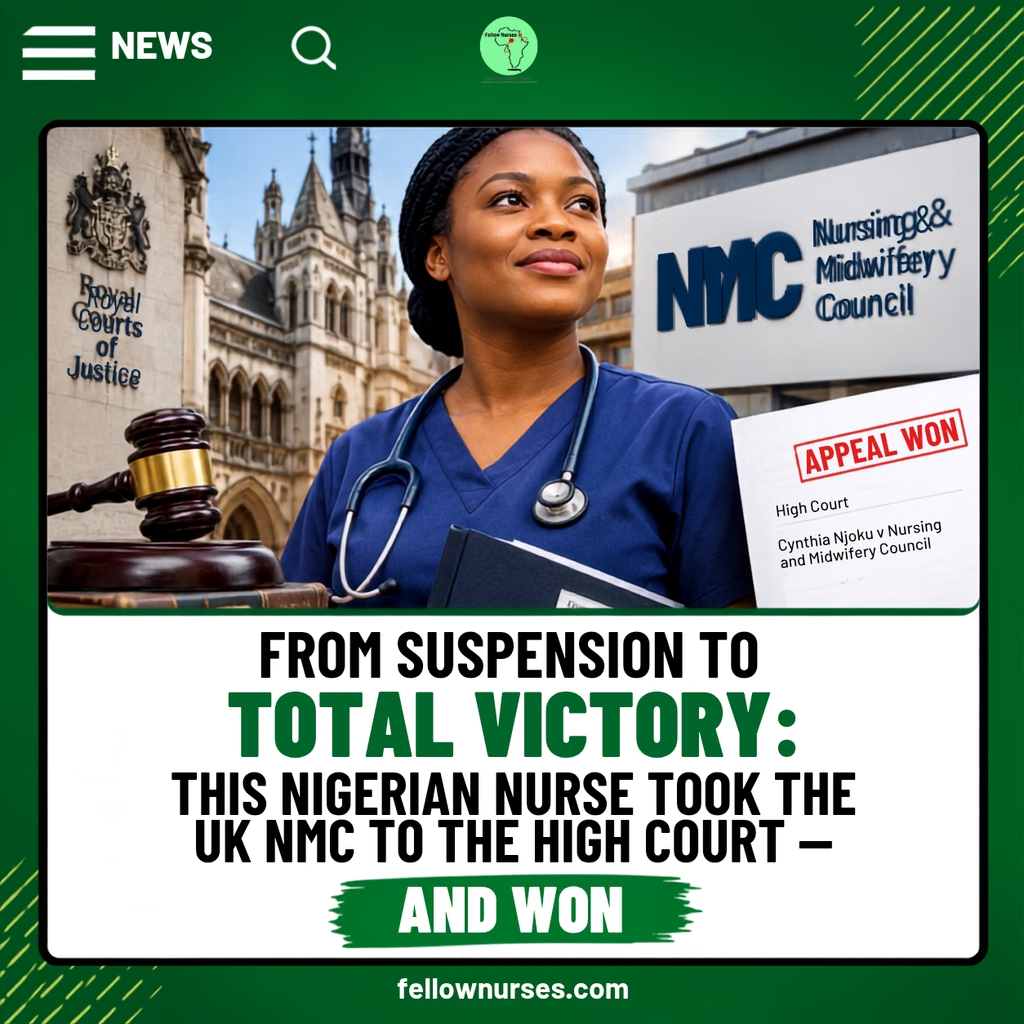
From Suspension to Total Victory: This Nigerian Nurse Took the UK NMC to the High Court and Won
FNA News| Lagos, Nigeria | 9 September 2026
A Nigerian nurse suspended by the UK Nursing and Midwifery Council has won her High Court appeal in full.
The court set aside the findings against her, quashed the 12-month suspension, and refused to send the case back for a new hearing. The NMC cannot now re-prosecute these charges.
Cynthia Njoku is a Band 6 adult nurse who worked on Manvers Ward at St Mary’s Hospital, London. In November 2025 an NMC Fitness to Practise Committee found that she had used racist and ageist language towards a colleague, discriminated on racial grounds and created a hostile environment. It suspended her for 12 months.
On 4 September 2026, Deputy High Court Judge Hugo Keith KC allowed her appeal. He ruled that the panel’s findings were “wrong”. He then went further than many appellants achieve: he declined to remit the case. That is what turns a successful appeal into a closed case.
The suspension
The allegations related to events in 2021. The NMC opened a referral in February 2023 after a complaint from a colleague identified in the judgment only as Person A.
👉 Join Fellow Nurses Africa on WhatsApp
At a hearing from 27 October to 3 November 2025, Njoku faced four charges:
- That she called Person A words to the effect of “Polish cow”, “Polish idiot”, “swine nose”, “stupid old cow” and/or “old woman”.
- That she swore at Person A.
- That the words in charge 1 amounted to racial discrimination.
- That the conduct amounted to bullying.
Njoku denied the remarks. She said she had supervised Person A on only two occasions. She also pointed to an email she sent the ward matron in June 2021, raising her own concerns.
The panel found the swearing charge not proved. It found the other three charges proved on the balance of probabilities. It held that her fitness to practise was impaired on public-interest grounds and imposed a 12-month suspension. An 18-month interim suspension ran during any appeal.
Person A was the only complainant. She is a former registered nurse who had herself been struck off in 2021 for racism in a separate matter. The panel called her evidence consistent and credible and rejected Njoku’s denials.
The High Court fight
Njoku appealed immediately. The High Court heard the case on 9 July 2026. Chuba Nwokedi appeared for her on direct access. Assad Badruddin appeared for the NMC.
The judge did not treat this as a narrow dispute about sanction. He held that the findings of fact on charges 1, 3 and 4 failed the civil appeals test in CPR 52.21(3).
His central conclusion was that the panel did not properly test Person A’s credibility.
The judgment identified these defects:
- Person A’s account shifted on whether the words were said to her or overheard in a group.
- She could not recall dates or locations even in general terms.
- There was no corroboration and no contemporaneous written complaint.
- The panel did not properly consider Person A’s own striking-off for racism, or the risk of animus.
- The panel itself said it lacked enough information for safe conclusions, then found the charges proved anyway.
- It did not weigh Person A’s evidence against other material, including Njoku’s 2021 email.
The judge said the panel’s reasoning “failed to demonstrate that it had carried out a careful and thorough assessment of the reliability and credibility of Person A’s account, both internally and by reference to the other evidence.”
He added that Njoku was “entitled to the benefit of any proper doubt that flowed from a thorough and comprehensive weighing up of the evidence.”
Charges 3 and 4 depended on charge 1. When charge 1 fell, the discrimination finding, the bullying finding, the misconduct finding, the impairment finding and the suspension fell with it.
Why this is a total victory
A successful appeal does not always end the case. Courts often send a matter back to a new panel. That did not happen here.
The judge refused remittal. The alleged events dated from 2021. The referral came in 2023. The hearing was in 2025. By September 2026, Njoku had already been suspended for more than eight months. A further hearing, he said, would not meet the requirements of fairness and justice.
That disposal is the decisive point. These specific allegations are finished.
What happens next
The legal position is now settled.
- The findings that she used racist or ageist language, discriminated and bullied a colleague no longer stand.
- The 12-month suspension is gone.
- The interim suspension falls away with it.
- There is no current finding of impaired fitness to practise arising from this case.
- After the NMC updates its records on receipt of the sealed court order, she is entitled to practise again as a registered adult nurse.
She had worked without restriction between 2021 and the 2025 hearing. The court has now removed the 2025 findings from her regulatory record.
Two limits remain. The High Court judged the panel’s decision legally unsustainable; it did not run a new ward investigation of its own. The effect for these charges is still final. Separate from that, earlier press reports of the original hearing remain online, and some employers run their own checks. The controlling public record is now the High Court judgment.
Analysis
Serious allegations of racism and bullying must be investigated. That duty has not changed.
What the court required is the other half of the same duty. A regulator that makes findings of racism on the word of one witness must show that it tested consistency, motive, corroboration and contrary documents. Calling a witness “credible” is not enough if the reasons do not show why.
👉 Join Fellow Nurses Africa on WhatsApp
The timeline matters. Four years passed from the alleged events to judgment. Njoku then spent more than eight months under suspension before the findings were quashed. For internationally educated nurses in the UK, that pattern is familiar: a long investigation, a thin evidential record, then a sanction later found unsafe.
The case also fits a wider run of High Court criticism of NMC Fitness to Practise reasoning, especially on credibility and uncorroborated evidence. Seriousness of allegation does not lower the standard of proof.
For nurses, one practical lesson is on record-keeping. Njoku’s June 2021 email to the matron became evidence the panel failed to weigh. Dates, emails and written concerns still matter when a case later turns on memory.
The full judgment is Cynthia Njoku v Nursing and Midwifery Council [2026] EWHC 2282 (Admin).
👉 Join Fellow Nurses Africa on WhatsApp
Fellow Nurses Africa is the independent voice of African nursing, we educate, inform and support nurses across Africa.

Kehinde Oluwatosin is one of the many editors here at Fellow Nurses Africa and fellownurses.com.
He is a registered nurse with a Master of Science degree in healthcare leadership from the University of Hull, United Kingdom. Kehinde is passionate about advancing the nursing profession across Africa. As Co-Founder of Fellow Nurses Africa, he plays a key role in shaping editorial direction, ensuring our content educates, informs, and empowers nurses continent-wide.
With expertise in leadership, patient flow, and healthcare operations, Kehinde brings valuable insights to nursing news, career development, and policy discussions. He is committed to amplifying the voice of African nurses and driving positive change in the profession.