Diphtheria Returns to the Spotlight as Katsina Children’s Ward Comes Under Pressure
FNA NEWS, 31st Of August 2026
Katsina’s children’s ward under pressure
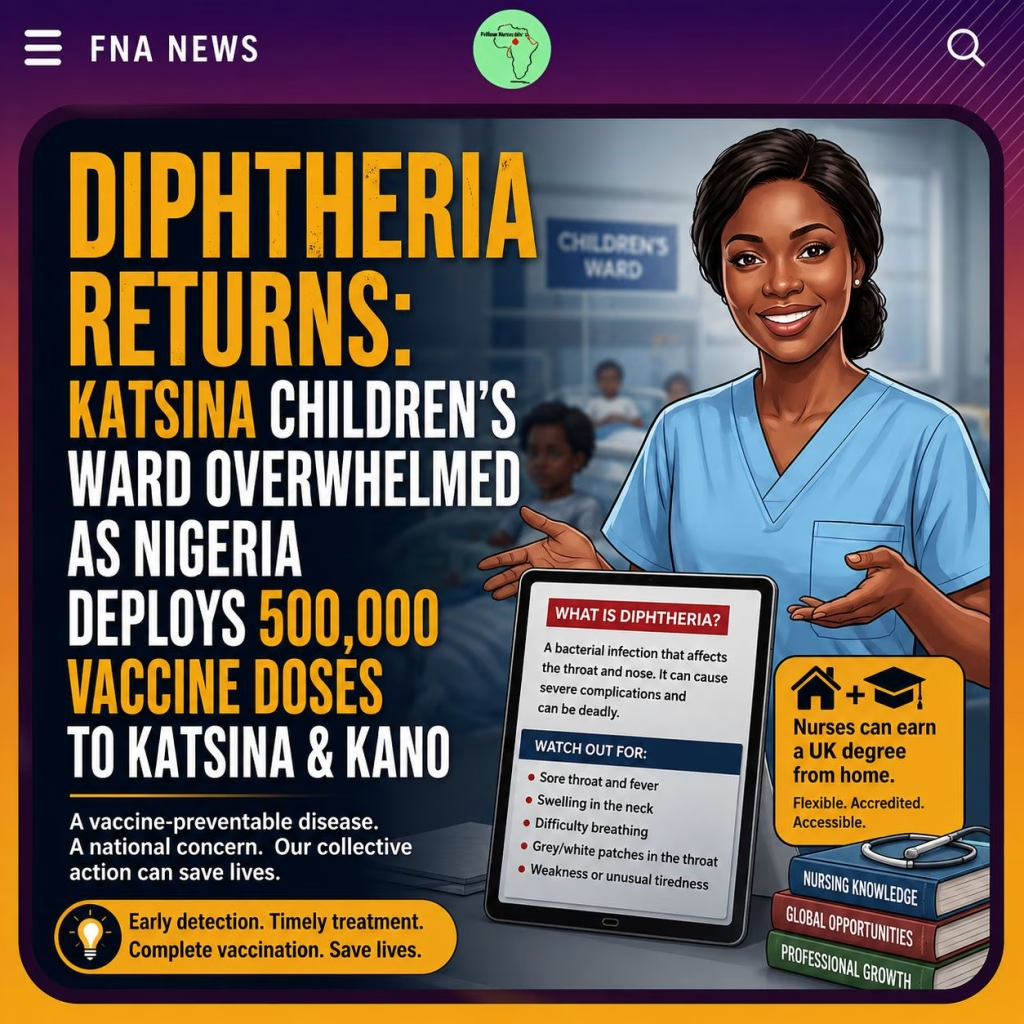
A vaccine-preventable disease is once again placing Nigeria’s health system under pressure, as a surge in diphtheria cases in Katsina State pushes the children’s ward of the Federal Teaching Hospital Katsina beyond its available bed capacity.
👉 Join Fellow Nurses Africa on WhatsApp
The hospital said on Saturday that the continuous influx of patients referred from health facilities across the state had resulted in severe overcrowding, with healthcare workers struggling to manage increasing numbers of critically ill children requiring urgent care.
The development comes as the Federal Government activates an emergency multi-agency task force to contain diphtheria outbreaks affecting parts of Katsina and Kano States.
As part of the immediate response, the National Primary Health Care Development Agency (NPHCDA) has deployed 500,000 doses of diphtheria vaccines to the two states for intensified immunisation of unvaccinated children in affected and high-risk communities.
A disease Nigeria has been battling for years
Diphtheria is not a new threat to Nigeria.
The country has experienced a major resurgence of the disease since 2022, with Kano emerging as one of the worst-affected states. Katsina has also repeatedly appeared among states reporting cases.
According to figures reported in July 2026, Nigeria had recorded 65,759 suspected diphtheria cases and 2,229 deaths since the outbreak began in 2022.
👉 Join Fellow Nurses Africa on WhatsApp
The scale of the outbreak is particularly concerning because diphtheria is vaccine-preventable.
The disease is caused by toxin-producing strains of Corynebacterium diphtheriae and can spread through respiratory droplets and close contact. It can cause severe throat infection, difficulty breathing and complications affecting the heart and nervous system.
For children who are inadequately immunised, delayed diagnosis or delayed treatment can quickly turn a manageable infection into a life-threatening illness.
Why are children still becoming seriously ill?
The current situation raises a bigger question: why is a vaccine-preventable disease continuing to cause serious illness and death among Nigerian children?
One major factor is immunity gaps.
Where children miss routine childhood vaccinations or do not complete recommended doses, communities can develop pockets of people who are vulnerable to infection. Once the disease enters such communities, transmission can increase rapidly.
Late presentation is another concern.
By the time a child with diphtheria reaches a referral hospital, the disease may already be advanced and complications may have developed.
The consequences can be devastating for both families and healthcare workers.
Federal Government expands emergency response
The Federal Ministry of Health and Social Welfare, working with the Nigeria Centre for Disease Control and Prevention (NCDC), NPHCDA, affected state governments and international partners, has constituted a multi-agency task force to coordinate the response.
The task force has been directed to strengthen outbreak investigation and surveillance, intensify community sensitisation and immunise unvaccinated children in affected and at-risk communities.
In Katsina, authorities also plan to establish treatment annexes across the state’s three senatorial districts Katsina, Daura and Funtua to bring treatment closer to affected communities and reduce pressure on the main referral centre.
The Federal Teaching Hospital Katsina is also expected to receive additional support, including Diphtheria Antitoxin (DAT), intravenous antibiotics, additional clinical personnel and personal protective equipment.
What parents should watch for
Early recognition matters.
Parents and caregivers should seek urgent medical attention when a child develops symptoms such as:
- Sore throat and fever
- Difficulty swallowing
- Swelling of the neck
- Difficulty breathing
- Weakness or unusual tiredness
- A thick grey or whitish membrane in the throat
Diphtheria can deteriorate rapidly, and suspected cases should be assessed promptly by qualified healthcare professionals.
Children who have not received their routine vaccinations should also be taken to an appropriate health facility for vaccination assessment.
Vaccination, disease surveillance, early diagnosis, timely treatment, community education and effective referral systems all play a role in preventing outbreaks from overwhelming hospitals.
For healthcare workers, the current situation is equally a reminder of the importance of maintaining a high index of suspicion for vaccine-preventable diseases, particularly when children present with compatible symptoms and a history of incomplete immunisation.
As Katsina works to manage the growing pressure on its health facilities and the Federal Government scales up its response, the central message remains clear:
A disease that can be prevented by vaccination should not be allowed to become a recurring cause of avoidable childhood illness and death.
The response to the current outbreak will therefore need to go beyond emergency treatment. Sustained vaccination, surveillance and community engagement will be essential if Nigeria is to break the cycle of recurrent diphtheria outbreaks.
👉 Join Fellow Nurses Africa on WhatsApp
Fellow Nurses Africa is the independent voice of African nursing, we educate, inform and support nurses across Africa.

Durowoju Abisola is a registered nurse, nurse writer and On-Air Correspondent at Fellow Nurses Africa (FNA), passionate about nursing leadership, health education and advocacy.
Through journalism, storytelling and content creation, she amplifies important conversations around nursing, healthcare and the experiences of nurses in Nigeria. She is committed to using her voice and professional knowledge to educate the public, challenge misconceptions and inspire the next generation of nurses.