
10 Medications Nurses Administer Daily That Could Harm Their Health
Fellow Nurses Africa
22 February 2026
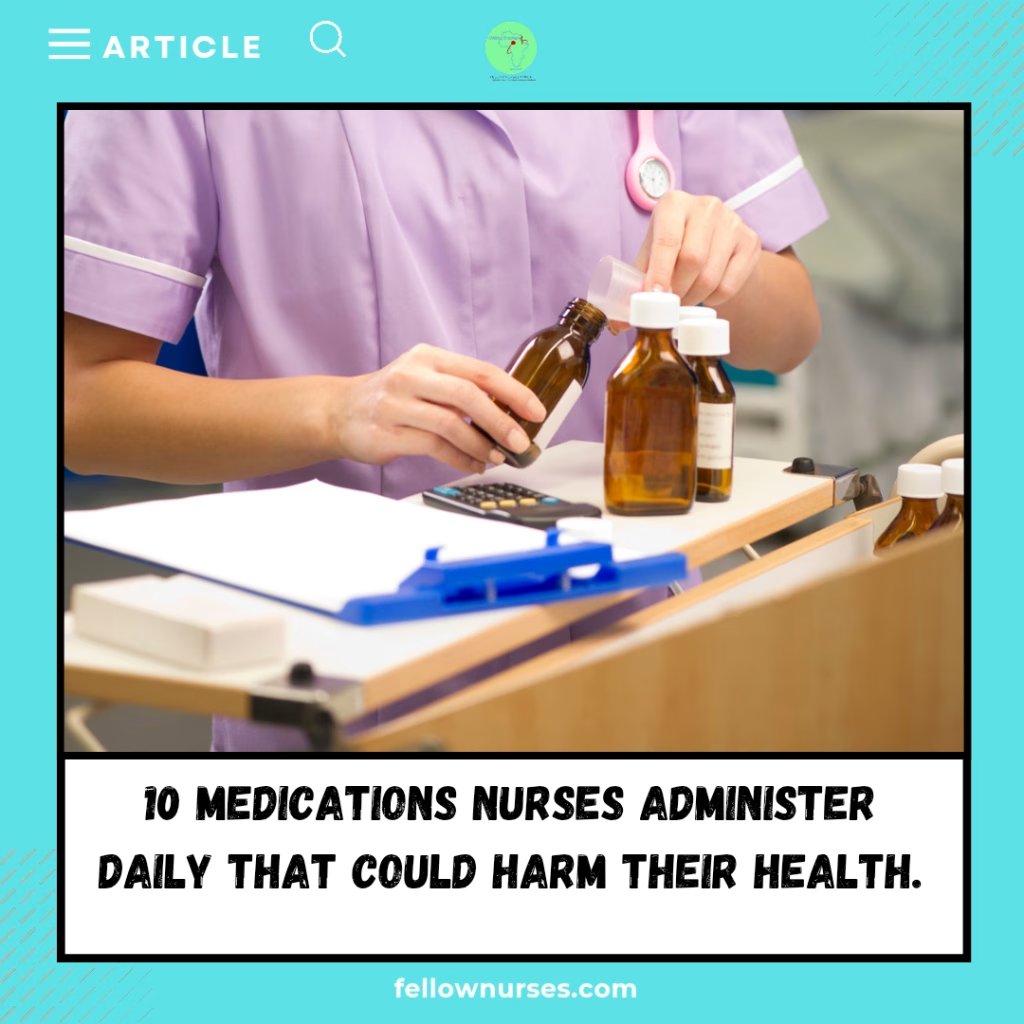
As fellow nurses working across continents, we share the same quiet dedication: delivering life-sustaining medications to our patients while managing the demands of every shift. Many of these routine tablets and capsules on our drug trolleys are essential for managing chronic conditions, preventing rejection after transplants, or controlling autoimmune flares. Yet the very drugs we handle with care each day carry subtle, cumulative risks to our own health through low-level occupational exposure.
The National Institute for Occupational Safety and Health (NIOSH) List of Hazardous Drugs in Healthcare Settings, 2024 (updated December 2024) remains the global benchmark. It identifies drugs that can cause reproductive harm, developmental effects, organ toxicity or genotoxicity with repeated contact. Exposure often occurs through skin absorption of powder or residue, inhalation of dust when crushing tablets, or contact with patient urine and faeces that may contain active drug for days.
👉 Join our Whatsapp channel Here
We know this reality intimately — many of us have paused mid-round, wondering about the long-term impact on our own fertility, pregnancies or future wellbeing. The good news is that simple, consistent precautions, drawn from NIOSH and USP <800> standards, can dramatically reduce these risks.
Here are 10 common medications we administer daily on general wards worldwide, each with its primary risk and practical steps we can take to protect ourselves and our colleagues.
-
Finasteride and dutasteride
Daily for benign prostatic hyperplasia or male-pattern hair loss in older men.
Primary risk: Highly teratogenic powder can cause genital abnormalities in male fetuses.
Precautions we can take: Pregnant or trying-to-conceive nurses should never handle crushed or broken tablets. Use intact tablets whenever possible. Wear chemotherapy-rated gloves for any handling and wash hands plus any exposed skin immediately with soap and water. -
Warfarin
The most widely used oral anticoagulant for atrial fibrillation, deep-vein thrombosis and stroke prevention.
Primary risk: Reproductive toxicity.
Precautions we can take: Always wear chemotherapy-rated gloves when crushing or counting tablets. Use a closed-system pill crusher with a sealed pouch. Opt for liquid formulations when available and wash hands thoroughly after each administration. -
Methotrexate (low-dose oral)
Weekly for rheumatoid arthritis, psoriasis and certain autoimmune conditions, yet handled daily in clinics and wards.
Primary risk: Genotoxic and highly teratogenic.
Precautions we can take: Double chemotherapy-rated gloves for crushing or administering. Never crush in an open container — use a closed system. If pregnant or planning pregnancy, request an immediate risk assessment and consider temporary redeployment. Wipe all surfaces after use. -
Mycophenolate mofetil
Standard daily immunosuppressant following kidney, liver or heart transplants.
Primary risk: One of the most potent teratogens; active drug persists in urine for days.
Precautions we can take: Double gloves and disposable gown when handling or administering. Do not open capsules. Use full PPE when assisting with urine or faeces for at least 72 hours after the last dose. Pregnant colleagues should receive automatic risk assessment and redeployment. -
Azathioprine
Daily maintenance therapy for inflammatory bowel disease, lupus, rheumatoid arthritis and transplant patients.
Primary risk: Carcinogenic with reproductive toxicity.
Precautions we can take: Double chemotherapy gloves for any manipulation or crushing. Employ closed-system tools to contain dust. Perform meticulous hand hygiene after every dose and clean work surfaces promptly. -
Tacrolimus
Daily calcineurin inhibitor to prevent organ rejection, with frequent blood-level monitoring.
Primary risk: Reproductive and organ toxicity on repeated exposure.
Precautions we can take: Double gloves for handling capsules or oral solutions. Avoid crushing when alternatives exist. Use appropriate PPE when managing patient waste for several days post-dose and maintain rigorous hand and surface hygiene. -
Colchicine
Daily prophylaxis or treatment for gout flares, especially common in geriatric and medical wards.
Primary risk: Reproductive toxicity and potential bone-marrow effects.
Precautions we can take: Wear double gloves when crushing or administering. Use closed pill crushers. Prefer liquid forms if available and wash hands immediately after contact. -
Anastrozole and letrozole
Daily hormonal therapy for hormone-receptor-positive breast cancer, often continued long-term on general wards.
Primary risk: Reproductive and developmental hazards.
Precautions we can take: Gloves for handling any tablets, especially if broken. Wash hands after administration. Pregnant or planning nurses should seek a formal risk assessment and limit direct handling where possible. -
Cyclosporine
Daily immunosuppressant for transplant and autoimmune patients.
Primary risk: Reproductive and organ toxicity similar to tacrolimus.
Precautions we can take: Double gloves for capsules or solutions. Avoid unnecessary crushing. Use PPE for any spills or waste handling and clean surfaces thoroughly after each dose. -
Sirolimus
Daily oral agent in selected transplant and autoimmune regimens.
Primary risk: Well-recognised reproductive toxicity.
Precautions we can take: Wear gloves for tablet handling. Administer intact whenever possible. Maintain strict hand hygiene and use containment tools if any manipulation is required.
Additional steps that protect us all
Beyond individual medications, we can adopt these universal practices:
- Wear chemotherapy-rated gloves (double for higher-risk tasks) and impermeable gowns when indicated.
- Always use closed-system pill crushers and avoid crushing unless absolutely necessary — request liquid alternatives from pharmacy.
- Declare pregnancy or family-planning intentions early for a personalised risk assessment and, where needed, temporary redeployment.
- Clean surfaces with appropriate wipes after every administration and use dedicated spill kits promptly.
- Advocate within our teams for updated training, clear labelling and engineering controls that make safe handling the effortless norm.
Caring for our patients is our calling. Protecting our own health is not an afterthought — it is part of the same commitment. By integrating these straightforward precautions into our daily practice, we safeguard our future while continuing to deliver exceptional care.
Further reading
- NIOSH List of Hazardous Drugs in Healthcare Settings, 2024 (cdc.gov/niosh)
- USP General Chapter <800> Hazardous Drugs—Handling in Healthcare Settings
- International guidelines from professional nursing and pharmacy organisations
👉 Join our Whatsapp channel Here
Fellow Nurses Africa is the independent voice of African nursing, we educate, inform and support nurses across Africa

Kehinde Oluwatosin is one of the many editors here at Fellow Nurses Africa and fellownurses.com.
He is a registered nurse with a Master of Science degree in healthcare leadership from the University of Hull, United Kingdom. Kehinde is passionate about advancing the nursing profession across Africa. As Co-Founder of Fellow Nurses Africa, he plays a key role in shaping editorial direction, ensuring our content educates, informs, and empowers nurses continent-wide.
With expertise in leadership, patient flow, and healthcare operations, Kehinde brings valuable insights to nursing news, career development, and policy discussions. He is committed to amplifying the voice of African nurses and driving positive change in the profession.