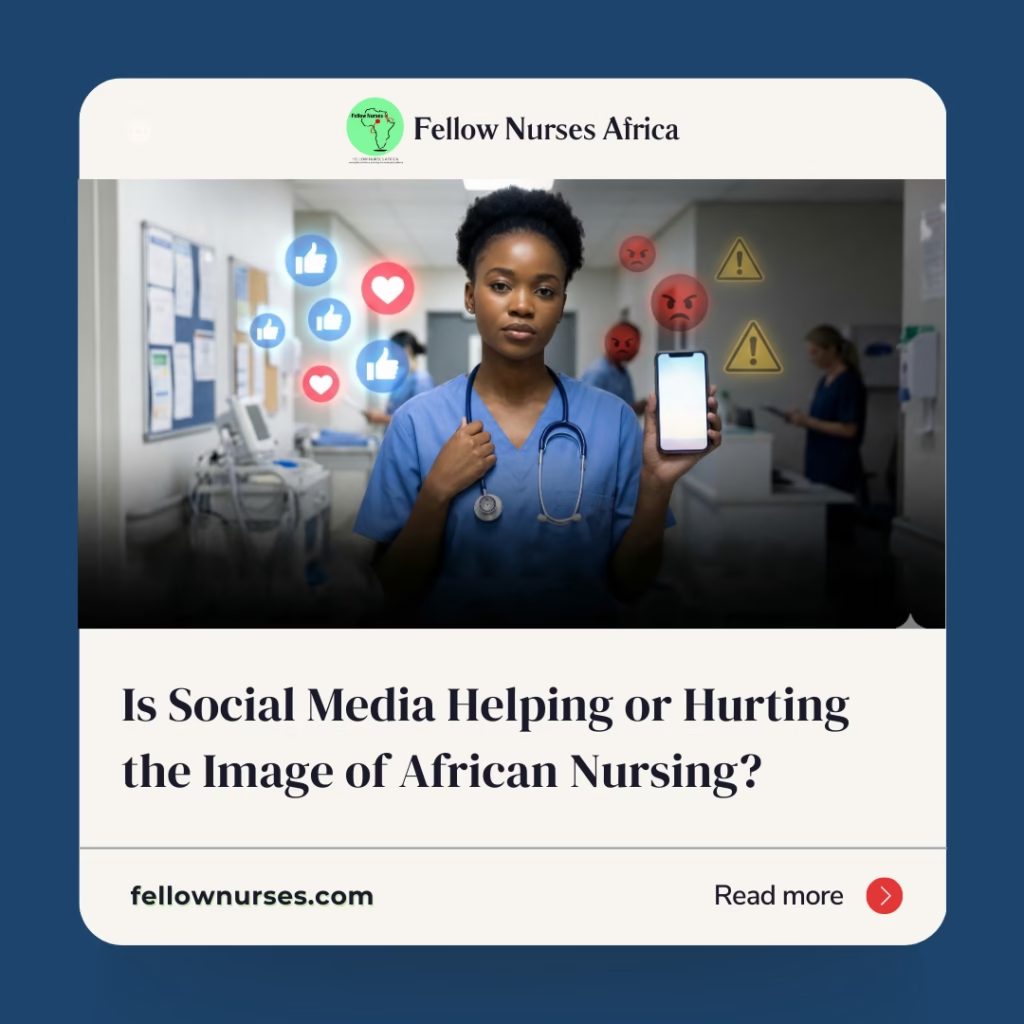
Social media has become a daily part of life for many nurses in Africa.
Platforms like TikTok, Instagram, WhatsApp and Facebook give nurses new ways to connect and share.
Research shows clear benefits.
In Nigeria, a study at a teaching hospital found 94.6 % of nurses used WhatsApp and 92.7 % used Facebook.
Over half rated the professional benefits as high, including better communication with colleagues across distances.
In Ghana, nurses in rural areas use social media for health promotion and professional development.
East African studies recommend nurses increase their online presence to improve public perception of the profession.
Nurses have used social media to advocate for better pay and conditions.
They share educational content on disease prevention and patient care.
They highlight achievements and build networks.
These actions help show nursing as skilled, essential and modern.
But problems exist too.
Unprofessional posts have caused damage.
In Ghana, regulators warned nurses against inappropriate content while in uniform.
In Zambia and Namibia, students were expelled for videos that breached patient privacy or showed misconduct.
Such incidents go viral quickly.
They reinforce negative stereotypes for a wide audience.
Isolated cases of privacy breaches or poor behaviour get amplified online.
This can overshadow the daily good work of thousands of nurses.
Social media spreads information fast – both positive and negative.
The impact depends on how nurses use it.
Responsible posting protects the profession’s image.
Irresponsible posting harms it.
The question remains open: does the good outweigh the bad?
Nurses across Africa are shaping the answer every day they post.
Fellow Nurses Africa is the independent voice of African nursing. We educate, inform and support nurses across Africa.

Charles Wealth is an accomplished healthcare administrator with decades of hands-on experience across various healthcare organizations in Nigeria and beyond. Known for his strategic leadership, operational excellence, and deep commitment to advancing the nursing profession, Charles brings a wealth of expertise to healthcare management, policy, and professional development.
As a co-founder and Editor at Fellow Nurses Africa, he plays a pivotal role in shaping content that educates, inspires, and unites nurses across the continent. His editorial vision focuses on amplifying the voices of nurses, highlighting best practices, addressing contemporary challenges in healthcare, and promoting professional growth within the nursing community.
With a strong background in healthcare administration, Charles is passionate about bridging the gap between clinical practice and effective leadership. He continues to contribute significantly to the development of robust healthcare systems and the empowerment of nurses through knowledge sharing and advocacy.