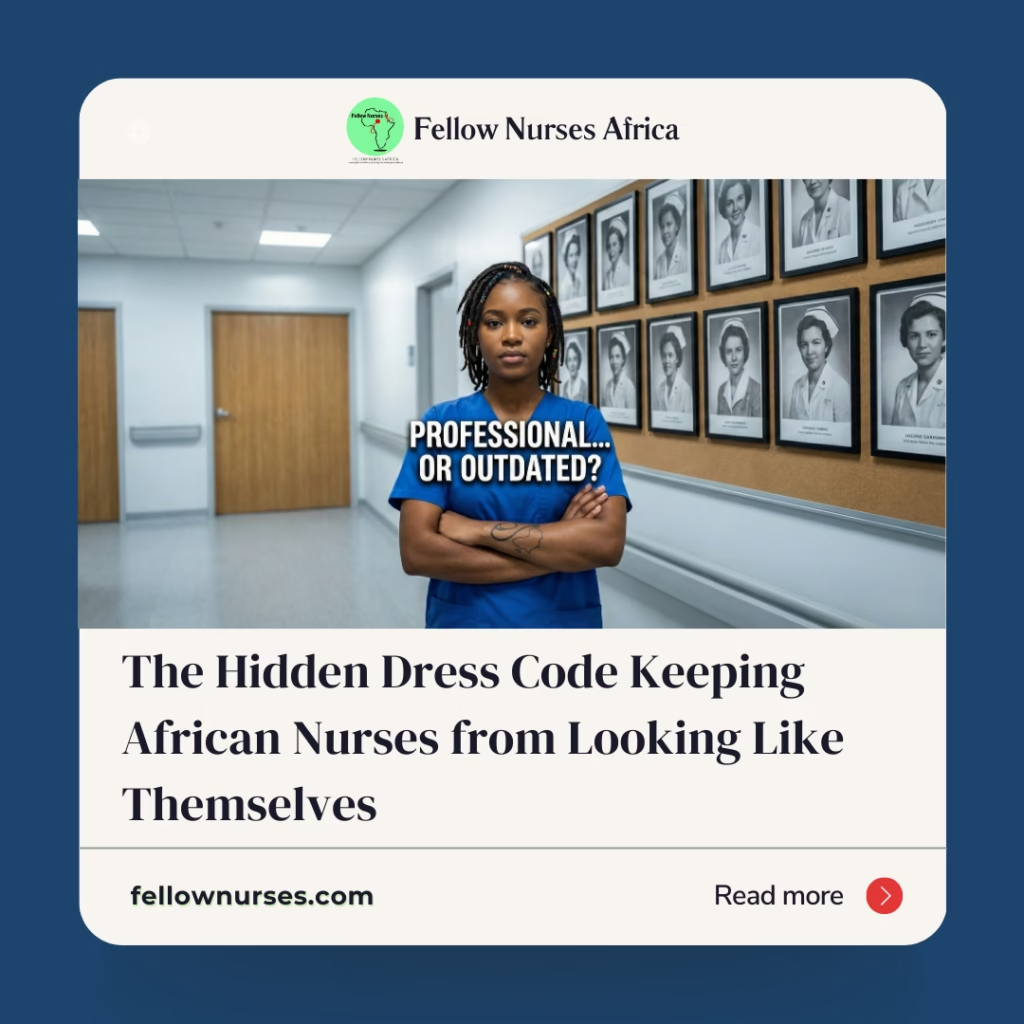
Walk into any major hospital in Nigeria, Kenya, Ghana or South Africa.
You will see nurses in spotless uniforms.
Hair short or neatly covered.
No visible tattoos.
No braids or dreadlocks on men.
No extra piercings.
The rules are strict.
They come from nursing councils and hospital policies across the continent.
In Nigeria, the Nursing and Midwifery Council guidelines discourage “extreme hairstyles” for all nurses.
Male nurses with braids or dreadlocks often face warnings or disciplinary notes.
In Kenya and Uganda, some hospitals ban male nurses from long hair or locks altogether.
In Ghana, public service dress codes limit “unconventional” looks, affecting men with braids.
Visible tattoos are almost always forbidden.
Policies say they must be covered at all times.
Even small, meaningful ones – like a family crest or a memorial date – are seen as unprofessional.
These rules date back to colonial-era codes from Britain and France.
They defined “professional” as plain, conservative and uniform.
But look abroad.
In the UK, NHS trusts allow visible tattoos if they are not offensive.
Male nurses wear braids, dreadlocks or long hair tied back without issue.
In the US, major hospitals like Mayo Clinic and Johns Hopkins permit tattoos and diverse hairstyles for all staff.
Australia and Canada have similar relaxed policies.
Research backs this shift.
A 2023 UK study found 82 % of patients said a nurse’s tattoo or hairstyle did not affect their trust.
Competence and kindness mattered far more.
In Africa, young male nurses now ask why they must cut their braids or hide tattoos to be taken seriously.
They point out that doctors face far fewer appearance rules.
Tattoos carry meaning for many.
A simple design can mark a personal milestone, cultural heritage or faith.
Banning them sends a message: your personal story does not belong here.
The same goes for hair.
Braids and locks are part of identity for millions of African men.
Forcing a haircut to wear the uniform feels like forcing conformity over individuality.
Nursing is hard enough – long shifts, high stress, life-and-death decisions.
Nurses prove their professionalism every day with their skills and care.
When rules focus on appearance instead of performance, they push talented people away.
Young men see the restrictions and choose other careers.
The profession loses diversity.
Patients lose nurses who look like them and understand their lives.
It is time to update the rules.
Let nurses – men and women – bring their whole selves to work.
Competence is in the hands, heart and mind.
Not in the hair or skin.
Africa’s nursing future deserves professionals who feel respected, not restricted.
Your turn – share your view below.
🔗 Join our WhatsApp channel for honest talks on nursing rules, culture and change across Africa
Fellow Nurses Africa is the independent voice of African nursing. We educate, inform and support nurses across Africa.

Charles Wealth is an accomplished healthcare administrator with decades of hands-on experience across various healthcare organizations in Nigeria and beyond. Known for his strategic leadership, operational excellence, and deep commitment to advancing the nursing profession, Charles brings a wealth of expertise to healthcare management, policy, and professional development.
As a co-founder and Editor at Fellow Nurses Africa, he plays a pivotal role in shaping content that educates, inspires, and unites nurses across the continent. His editorial vision focuses on amplifying the voices of nurses, highlighting best practices, addressing contemporary challenges in healthcare, and promoting professional growth within the nursing community.
With a strong background in healthcare administration, Charles is passionate about bridging the gap between clinical practice and effective leadership. He continues to contribute significantly to the development of robust healthcare systems and the empowerment of nurses through knowledge sharing and advocacy.