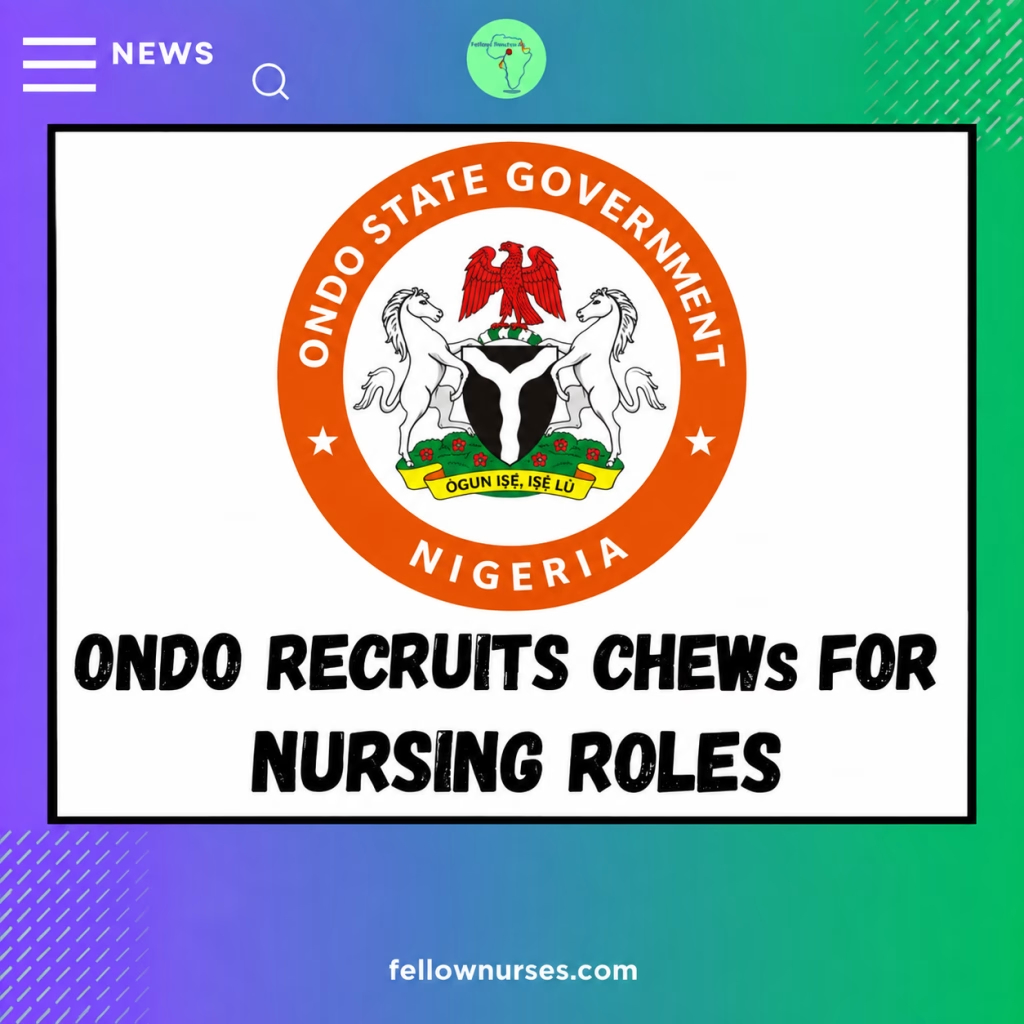
Ondo Recruits CHEWs for Nursing Roles
FNA NEWS, 14th Of September,2026
The recruitment and deployment of Community Health Extension Workers (CHEWs) in Ondo State has sparked concerns among nurses and midwives over the roles some of the workers are allegedly being assigned in secondary healthcare facilities.
👉 Join Fellow Nurses Africa on WhatsApp
The controversy follows a recent recruitment exercise by the Ondo State Government, which included CHEWs among more than 930 health professionals recruited to strengthen healthcare delivery. The exercise also covered nurses, midwives, doctors, laboratory scientists, pharmacy technicians and health information officers. The government said the recruitment was designed primarily to address manpower shortages in primary healthcare facilities across the state’s 18 local government areas. ([Western Post][1])
However, the Ondo State Council of the National Association of Nigeria Nurses and Midwives (NANNM) has raised concerns about the subsequent deployment of some non-nursing personnel to secondary healthcare facilities.
NANNM alleges that some vacancies intended for nurses and midwives were not openly advertised, while recruitment positions were allocated to other cadres on the basis that nurses had not applied. The association has questioned that explanation, pointing to the availability of qualified nurses and midwives, including Registered Nurses, Registered Midwives and Bachelor of Nursing Science graduates. ([WestNG][2])
The association has stressed that its objection is not against CHEWs or other healthcare professionals. Rather, it says the concern is about role substitution and whether healthcare workers are being deployed to positions outside their professional scope.
NANNM specifically alleges that some non-nursing personnel have been posted to secondary healthcare facilities to perform duties it considers the statutory responsibilities of registered nurses and midwives. The association says such deployment could affect safe staffing, emergency response, maternal and newborn care, medication administration, infection prevention and continuity of patient care. ([WestNG][2])
Why the distinction matters
CHEWs are an established cadre within Nigeria’s healthcare system. Their training and role are particularly associated with primary healthcare and community-based services.
This is important because being a healthcare professional does not mean that every healthcare worker can perform every clinical role.
Healthcare delivery depends on different cadres working together, with each professional operating within the limits of their education, training, regulation and scope of practice.
NANNM says the problem arises when deployment arrangements blur those professional boundaries or result in a non-nursing cadre being used as a replacement for a nurse or midwife.
The association has therefore called for the withdrawal of non-nursing personnel allegedly occupying nursing duty posts, transparent recruitment of qualified nurses and midwives, and a review of the recent recruitment and posting exercise. It has also requested a meeting between the government and relevant stakeholders to harmonise recruitment and deployment policies. ([WestNG][2])
A wider healthcare workforce question
The disagreement comes as Ondo State is simultaneously expanding its healthcare infrastructure and workforce.
Earlier in September, the acting chairman of the Ondo State Hospitals Management Board, Dr O.N. Akeredolu, said the administration had employed more than 3,000 health workers as part of efforts to address manpower shortages and strengthen healthcare delivery. The government has also highlighted investments in hospital infrastructure and maternal and newborn health services. ([TheNiche][3])
The recruitment of more healthcare workers is therefore a positive step in principle. But recruitment numbers alone do not determine whether a health system is adequately staffed.
The right professional in the right role is equally important.
👉 Join Fellow Nurses Africa on WhatsApp
For patients, particularly those requiring emergency, surgical, maternity and newborn care, the question is not simply whether a facility has enough people on its payroll. It is whether it has the appropriate professionals, with the appropriate competencies, available in the appropriate clinical roles.
That is ultimately the issue at the centre of the Ondo dispute.
NANNM has described the matter as a patient-safety issue rather than a conflict between healthcare cadres. It has called for the approved scopes of practice of different professions to be respected while maintaining that nurses and midwives should be recruited where nursing and midwifery vacancies exist. ([WestNG][2])
The Ondo controversy therefore raises a broader question for Nigeria’s health system: as governments work to address healthcare worker shortages, how can recruitment and deployment expand the workforce without creating professional role substitution?
Fellow Nurses Africa will continue to follow developments and the response of the Ondo State Government and Hospitals Management Board.
👉 Join Fellow Nurses Africa on WhatsApp
Fellow Nurses Africa is the independent voice of African nursing, we educate, inform and support nurses across Africa.

Durowoju Abisola is a registered nurse, nurse writer and On-Air Correspondent at Fellow Nurses Africa (FNA), passionate about nursing leadership, health education and advocacy.
Through journalism, storytelling and content creation, she amplifies important conversations around nursing, healthcare and the experiences of nurses in Nigeria. She is committed to using her voice and professional knowledge to educate the public, challenge misconceptions and inspire the next generation of nurses.