

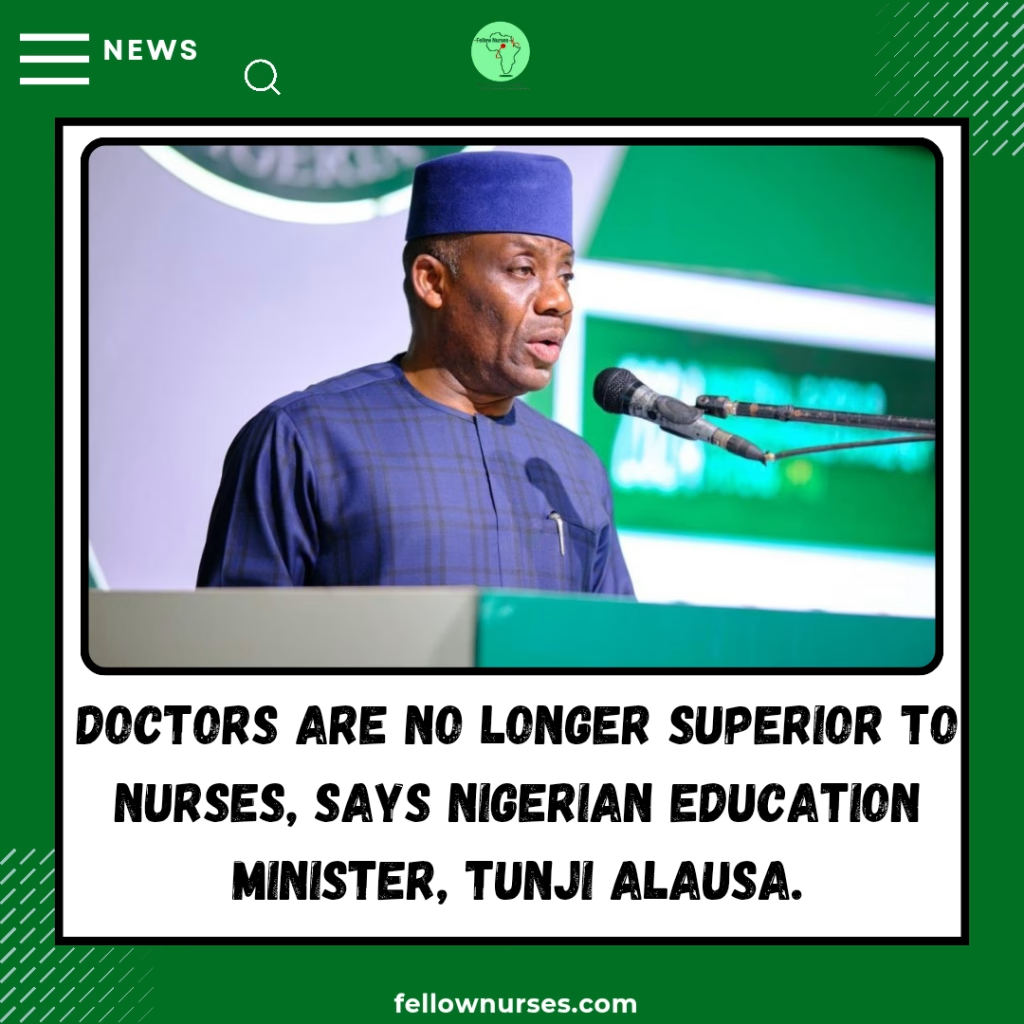
Doctors Are No Longer Superior to Nurses, Says Nigerian Education Minister Tunji Alausa
By FNA News, 27th July, 2026
Nigeria’s Minister of Education, Dr. Tunji Alausa, has said that doctors are no longer superior to nurses, stressing that modern healthcare depends on collaboration rather than professional hierarchy. He also noted that gaining admission into nursing school is now as competitive as gaining admission into medical school, underscoring the growing recognition and demand for the nursing profession in Nigeria.
Dr. Alausa made the remarks during a public engagement over the weekend. The minister, a consultant nephrologist and former Minister of State for Health and Social Welfare, spoke as the Federal Government continues reforms aimed at expanding healthcare education and addressing the country’s shortage of health professionals.
His comments come at a time when Nigeria is seeking to strengthen its health workforce amid the continued migration of thousands of nurses and doctors to countries offering better pay, improved working conditions and greater career opportunities.
“Doctors are no longer superior to nurses,” Dr. Alausa said.
He added that nursing education has become highly competitive, saying admission into nursing schools is now as difficult as securing a place to study medicine.
👉 Join our Whatsapp channel Here
“It is as competitive to get into nursing school as it is to get into medical school,” he said.
Nursing’s Growing Status
The minister’s remarks reflect the changing nature of healthcare delivery across the world, where patient care is increasingly provided through multidisciplinary teams rather than profession-based hierarchies.
Healthcare experts agree that modern clinical practice relies on the combined expertise of doctors, nurses, pharmacists, physiotherapists, laboratory scientists, radiographers and other healthcare professionals, each contributing specialised knowledge to improve patient outcomes.
In recent years, the nursing profession has undergone significant transformation. Nurses today play critical roles in emergency care, intensive care, public health, primary healthcare, specialist services, education, research, digital health and healthcare leadership.
Globally, many healthcare systems have also expanded the responsibilities of advanced practice nurses and nurse practitioners, recognising their ability to deliver high-quality care within regulated clinical frameworks.
Dr. Alausa’s observation that nursing school admission is now as competitive as medical school admission reflects this growing recognition of nursing as a highly skilled and rewarding profession.
Increasing international demand for nurses, broader career opportunities and improved professional mobility have contributed to a surge in applications to nursing programmes across Nigeria.
Expansion of Health Education
The minister’s comments also align with the Federal Government’s recent expansion of admissions into health-related programmes.
According to Dr. Alausa, annual admissions into nursing schools have increased from approximately 20,000 to 50,000 students, while enrolment into medicine, pharmacy and dentistry has also been significantly expanded.
The government says the initiative is part of a broader strategy to strengthen Nigeria’s health workforce while supporting President Bola Tinubu’s ambition of building a $1 trillion economy through investments in education and human capital development.
Officials believe increasing the number of trained healthcare professionals will help address longstanding workforce shortages while positioning Nigeria as a global supplier of skilled health workers.
Addressing Nigeria’s Workforce Challenge
Nigeria continues to face a significant shortage of healthcare professionals, driven by years of limited training capacity, population growth and the migration of skilled workers overseas.
The “Japa” phenomenon has seen thousands of Nigerian-trained nurses and doctors relocate to countries including the United Kingdom, the United States, Canada, Australia and the Gulf states in search of better remuneration and career progression.
The resulting workforce gaps have placed additional pressure on hospitals and primary healthcare facilities across the country.
By expanding admissions into nursing and other health programmes, the Federal Government hopes to increase the pipeline of qualified professionals entering the health sector over the coming years.
However, healthcare stakeholders have consistently argued that increasing student numbers must be matched with greater investment in educational infrastructure, clinical training facilities, academic staff, professional regulation and workforce retention.
👉 Join our Whatsapp channel Here
Fellow Nurses Africa is the independent voice of African nursing, we educate, inform and support nurses across Africa.

Kehinde Oluwatosin is one of the many editors here at Fellow Nurses Africa and fellownurses.com.
He is a registered nurse with a Master of Science degree in healthcare leadership from the University of Hull, United Kingdom. Kehinde is passionate about advancing the nursing profession across Africa. As Co-Founder of Fellow Nurses Africa, he plays a key role in shaping editorial direction, ensuring our content educates, informs, and empowers nurses continent-wide.
With expertise in leadership, patient flow, and healthcare operations, Kehinde brings valuable insights to nursing news, career development, and policy discussions. He is committed to amplifying the voice of African nurses and driving positive change in the profession.






Yes, it is time that Nigeria should matched reality between Nursing and Medicine because the rate at which college of Nursing sciences are increasing is very alarming,there is a serious competitive in Nursing than Medicine, so why is the rivalry and troubles in the health sector, it is time for every medical personnels should work incollaboration to achieve a common goals in patients safety, leave position aside and let face reality.