
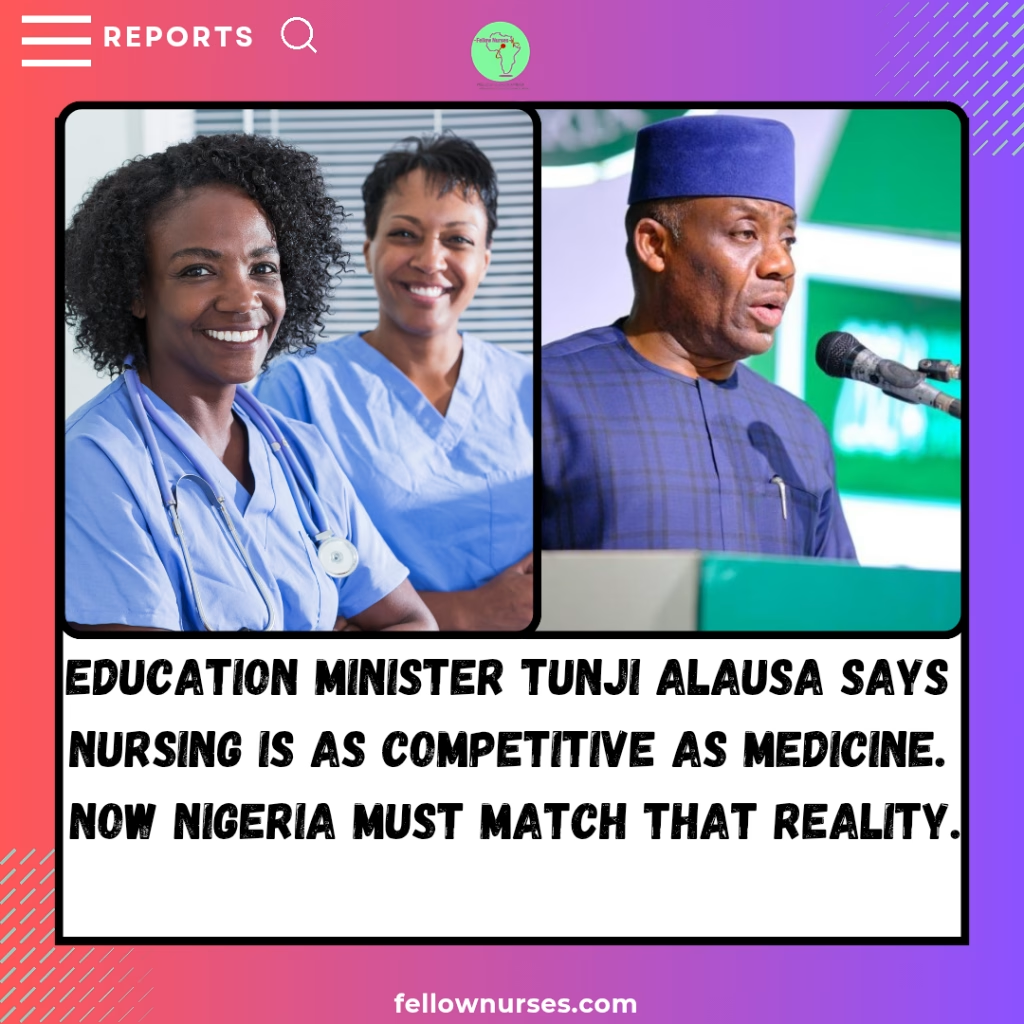
Education Minister Tunji Alausa Says Nursing Is as Competitive as Medicine. Now Nigeria Must Match That Reality.
By FNA Editorial Board, Lagos, Nigeria. 28th July, 2026
Nigeria’s Minister of Education, Dr. Tunji Alausa, has made two remarks that could reshape the national conversation about nursing.
First, he stated that “doctors are no longer superior to nurses,” signalling a shift away from traditional professional hierarchies towards collaborative healthcare. He then made another observation that deserves equal attention: admission into nursing school is now as competitive as admission into medical school.
Taken together, the two statements acknowledge what many within the profession have known for years—nursing in Nigeria has evolved. The question now is whether the country’s healthcare policies, career structures and clinical practice have evolved with it.
A Profession That Has Changed
For decades, medicine was widely regarded as the most competitive healthcare programme in Nigeria. Nursing was often viewed as a secondary option.
That perception has changed dramatically.
👉 Join our Whatsapp channel Here
Across the country, nursing schools now receive far more qualified applicants than they can admit. Competition for admission has intensified as thousands of young Nigerians pursue nursing as a first-choice career.
Several factors explain this shift. The profession offers opportunities in clinical practice, education, research, leadership and public health. It also provides access to an increasingly global labour market, where Nigerian-trained nurses are recognised for their competence and resilience.
Dr. Alausa’s statement reflects this changing reality.
Nursing is no longer a profession people simply “fall into.” It is a highly sought-after career requiring academic ability, commitment and resilience.
Nursing Education Is Rigorous
Despite persistent stereotypes, nursing education is one of the most demanding professional programmes in the health sciences.
Students undergo intensive academic and clinical training in anatomy, physiology, pharmacology, microbiology, pathology, psychology, public health, research, ethics, leadership and evidence-based practice.
They also complete extensive supervised clinical placements across medical, surgical, paediatric, obstetric, psychiatric, emergency and community healthcare settings before qualifying for professional registration.
Throughout their training, student nurses are expected to develop critical thinking, clinical reasoning, communication, leadership and decision-making skills while learning to care for patients with increasingly complex health needs.
The profession requires scientific knowledge, technical competence and emotional resilience.
Yet public understanding of nursing has often failed to keep pace with the realities of modern practice.
Recognition Must Lead to Reform
Recognition, however, is only the beginning.
If nursing is now as competitive as medicine, then the opportunities available to nurses should reflect that reality.
Unfortunately, many Nigerian nurses continue to face significant barriers throughout their careers.
Despite obtaining bachelor’s degrees, specialist qualifications, master’s degrees and doctorates, many find themselves working within systems that offer limited clinical autonomy, constrained career progression and few structured pathways into advanced practice.
This mismatch between education and opportunity has become one of the profession’s greatest frustrations.
Practising Below Their Competence
One of the most pressing concerns raised by nurses across Nigeria is that many are not permitted to practise to the full extent of their education and competence.
While professional regulation and patient safety must always remain paramount, healthcare systems should also ensure that qualified professionals are enabled to use the knowledge and skills for which they have been educated and licensed.
👉 Join our Whatsapp channel Here
In several high-income countries, experienced nurses work as Advanced Practice Nurses, Nurse Practitioners, Clinical Nurse Specialists and Nurse Consultants. Within clearly defined legal and regulatory frameworks, these clinicians assess patients, manage long-term conditions, lead specialist services, prescribe medicines where authorised and contribute significantly to improving access to healthcare.
Nigeria has made progress in specialist nursing education, but comparable advanced clinical pathways remain limited in many settings.
As a result, the health system may not be making full use of one of its most valuable professional resources.
The Need for Advanced Nursing Practice
Expanding Advanced Practice Nursing should not be viewed as competition with medicine.
Rather, it should be seen as a strategy to strengthen healthcare delivery.
Countries that have successfully integrated advanced nursing roles have demonstrated improvements in access to care, patient satisfaction and health system efficiency, particularly in primary care, chronic disease management, mental health and rural healthcare.
Nigeria faces similar challenges.
Developing nationally recognised frameworks for Advanced Practice Nurses and Nurse Consultants could help address workforce shortages while improving access to quality healthcare.
Such reforms would require collaboration among government, professional regulators, educational institutions and healthcare employers.
Addressing Professional Gatekeeping
Another issue that deserves careful consideration is professional gatekeeping.
Many nurses believe that attempts to expand nursing responsibilities have historically encountered resistance within parts of the healthcare system. While professional bodies have legitimate responsibilities to uphold standards and patient safety, reforms should ultimately be guided by evidence, workforce needs and the public interest rather than professional boundaries alone.
Healthcare works best when every profession is empowered to contribute fully within its recognised scope of practice.
Doctors and nurses possess different education, different competencies and different responsibilities.
Those differences should foster collaboration, not hierarchy.
Beyond Admissions
The Federal Government’s decision to increase annual nursing school admissions from approximately 20,000 to 50,000 students is a welcome investment in the future health workforce.
However, increasing admissions alone will not resolve Nigeria’s nursing challenges.
Without better remuneration, safer staffing levels, improved working conditions, expanded postgraduate opportunities, stronger leadership pathways and modern clinical career structures, many newly trained nurses may continue to seek opportunities abroad.
The country cannot afford to educate highly skilled professionals only to lose them to health systems that offer greater recognition and opportunity.
Fellow Nurses Africa View
Dr. Tunji Alausa has started an important national conversation.
His recognition that nursing is now as competitive as medicine should prompt more than public debate.
It should prompt policy reform.
Nigeria’s nurses have demonstrated their value in hospitals, primary healthcare centres, emergency departments, specialist units, rural communities and public health programmes across the country.
They have continued to provide care despite workforce shortages, increasing patient demand and difficult working conditions.
Recognising that reality means moving beyond symbolic statements.
It means creating a healthcare system where nursing education is matched by meaningful career progression, where advanced practice is supported through clear regulatory frameworks, where clinical expertise is fully utilised and where talented nurses are encouraged to build long-term careers within Nigeria.
If nursing has become one of the country’s most competitive professions, then the healthcare system must evolve to reflect that reality.
The future of Nigerian healthcare depends not only on training more nurses, but on trusting them, empowering them and enabling them to practise to the full extent of their education for the benefit of every patient.
👉 Join our Whatsapp channel Here
Fellow Nurses Africa is the independent voice of African nursing, we educate, inform and support nurses across Africa.

Kehinde Oluwatosin is one of the many editors here at Fellow Nurses Africa and fellownurses.com.
He is a registered nurse with a Master of Science degree in healthcare leadership from the University of Hull, United Kingdom. Kehinde is passionate about advancing the nursing profession across Africa. As Co-Founder of Fellow Nurses Africa, he plays a key role in shaping editorial direction, ensuring our content educates, informs, and empowers nurses continent-wide.
With expertise in leadership, patient flow, and healthcare operations, Kehinde brings valuable insights to nursing news, career development, and policy discussions. He is committed to amplifying the voice of African nurses and driving positive change in the profession.