
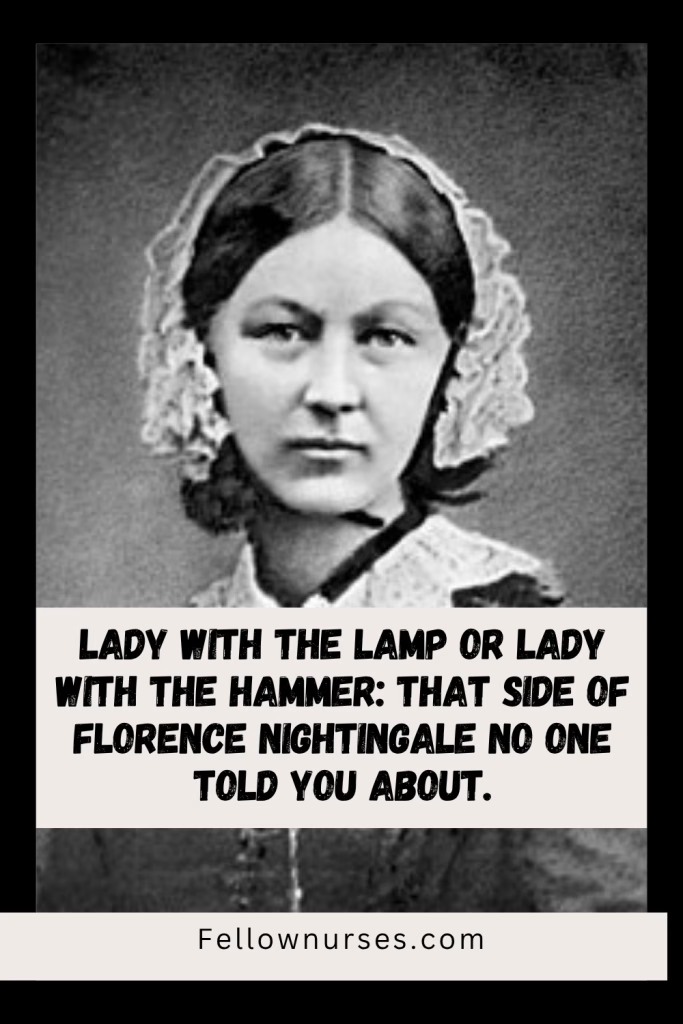
Lady with the Lamp or Lady with the Hammer: That Side of Florence Nightingale No One Told You About
Kenny Oluwatosin, RN MSc.
For Fellow Nurses Africa, 13th June, 2026.
For more than a century, Florence Nightingale has been immortalised as the serene Victorian figure gliding through hospital wards with a lantern in hand. It’s a comforting image,gentle, saintly, almost angelic. But it is also incomplete.
Long before she became the “Lady with the Lamp,” the soldiers she cared for had another name for her,one that captured her true character far better:
“The Lady with the Hammer.”
Not a metaphor. Not a polite exaggeration.
They meant it literally.
When bureaucracy blocked access to essential medical supplies, Nightingale picked up a hammer, smashed open locked storerooms and took what her patients needed. She defied commanders who tried to stop her. She refused to let red tape cost lives. And the troops adored her for it.
👉 Join our Whatsapp channel Here
This is the Florence Nightingale no one told you about and the one nurse leaders should be teaching today.
The Crisis She Walked Into
When Nightingale arrived at the British Army hospital in Scutari in 1854, she found a humanitarian catastrophe. The wards were overcrowded, the water contaminated, the sanitation appalling. Soldiers were dying not from their wounds but from preventable infections.
Mortality soared to levels that would be unthinkable today.
Nightingale quickly realised that compassion alone could not save lives. What the situation demanded was leadership ,assertive, informed and unafraid to confront authority.
The Hammer Moment That Defined Her
The military hierarchy resented her presence. Supplies were locked away. Requests were ignored. Bureaucracy ruled.
But Nightingale refused to accept it.
Soldiers later recounted how she took a hammer, broke open locked storage rooms and seized medicines, blankets and equipment that had been withheld. She confronted officers who tried to block her and pushed through resistance with a determination that stunned the men around her.
To the troops, she wasn’t just a nurse.
She was their champion cutting through red tape with force when lives were on the line.
This is the Nightingale history softened.
This is the Nightingale nursing desperately needs today.
The Statistician Who Forced a Nation to Listen
After the war, Nightingale did something even more revolutionary: she turned to data.
Her pioneering polar area diagram ,a bold, circular visualisation showed that most deaths in Crimea were caused by preventable disease. It was a turning point in public health. Her evidence forced the British government to reform military hospitals, sanitation systems and public health policy.
Nightingale understood something that remains true today:
nursing is not just a profession of care: it is a profession of advocacy, analysis and influence.
The Personality Behind the Legend
Nightingale was not the meek, endlessly patient figure of popular imagination. She was described as determined, exacting, intellectually formidable and, at times, uncompromising. She held her nurses to high standards and expected the same from the institutions around her.
She rejected Victorian expectations that women should be quiet, agreeable and obedient. She chose purpose over politeness, impact over approval.
This is the Nightingale who built modern nursing, not the softened, ornamental version often presented in textbooks.
Why This Matters for Nursing Today
Modern healthcare is complex, political and under immense pressure. Nurses are expected to deliver safe, high-quality care while navigating systems that are often under-resourced and overstretched.
Yet too often, nurse education still rewards:
- compliance over courage
- silence over advocacy
- routine over critical thinking
Nightingale would not recognise this culture and she certainly would not accept it.
If nurse leaders and educators want to honour her legacy, they must stop training timid, hesitant nurses. They must cultivate:
- Bold communicators who speak up for patient safety
- Critical thinkers who challenge outdated practices
- Data-literate professionals who use evidence to drive change
- Advocates who confront systems that fail patients
- Leaders who refuse to accept mediocrity
Nightingale didn’t transform healthcare by being agreeable. She did it by being effective.
The Lamp and the Leadership Lesson
The lamp is a powerful symbol of care. But the real legacy of Florence Nightingale is not the light she carried, it is the systems she changed.
She showed that nursing is not merely a vocation. It is a force for reform.
If today’s nursing profession wants to prepare the next generation for the realities of modern healthcare, it must teach Nightingale’s full story. Not the myth. Not the softened legend.
Teach the strategist.
Teach the reformer.
Teach the advocate.
Teach the leader.
Teach the woman the soldiers called “the Lady with the Hammer.”
Because the future of healthcare will not be shaped by timid nurses.
It will be shaped by those who, like Nightingale, are willing to challenge, innovate and lead.
👉 Join our Whatsapp channel Here
Fellow Nurses Africa is the independent voice of African nursing, we educate, inform and support nurses across Africa.

Kehinde Oluwatosin is one of the many editors here at Fellow Nurses Africa and fellownurses.com.
He is a registered nurse with a Master of Science degree in healthcare leadership from the University of Hull, United Kingdom. Kehinde is passionate about advancing the nursing profession across Africa. As Co-Founder of Fellow Nurses Africa, he plays a key role in shaping editorial direction, ensuring our content educates, informs, and empowers nurses continent-wide.
With expertise in leadership, patient flow, and healthcare operations, Kehinde brings valuable insights to nursing news, career development, and policy discussions. He is committed to amplifying the voice of African nurses and driving positive change in the profession.