
Becoming a Nurse Educator in 2026: A Step-by-Step Guide
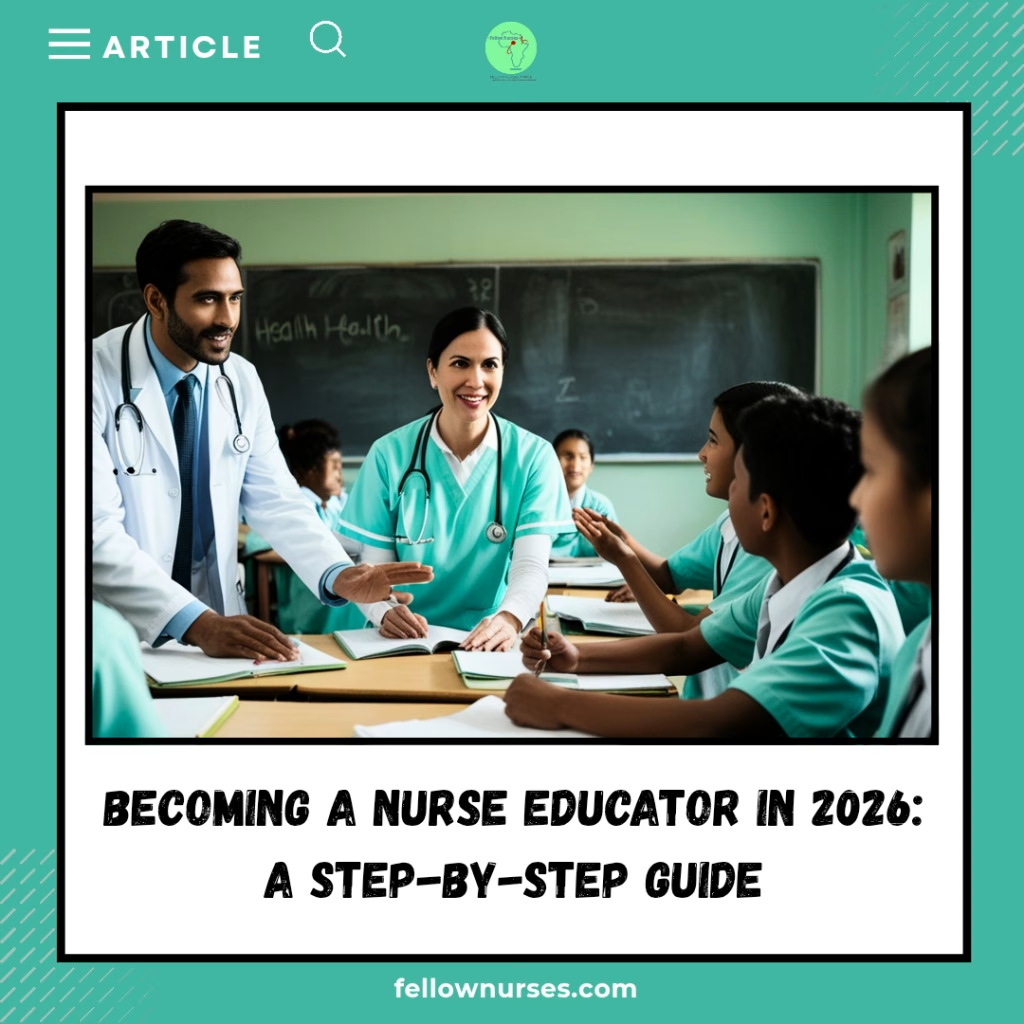
Nurse educators play a vital role in training the next generation of nurses at a time when healthcare systems worldwide face growing demand and staff shortages. In 2026, the path to this rewarding career remains clear and accessible for registered nurses who want to move from clinical practice into teaching, curriculum design and student mentoring.
👉 Join our Whatsapp channel Here
Whether you aim to work in universities, colleges, hospitals or online programmes, the requirements follow a consistent global framework backed by the National League for Nursing (NLN), the World Health Organization (WHO) and national regulators. This step-by-step guide explains exactly what you need to do, based on current 2026 standards.
Step 1: Become a Registered Nurse
All nurse educator roles start with solid clinical foundations.
- Earn a Bachelor of Science in Nursing (BSN) or equivalent (three to four years in most countries).
- Pass your national licensing examination (for example, NCLEX-RN in the US and Canada, NMC Test of Competence in the UK, or equivalent elsewhere).
- Obtain and maintain an active, unencumbered RN licence in your country of residence.
A BSN is now the preferred entry point in most regions, though some countries still accept associate degrees or diplomas initially before requiring a top-up.
Step 2: Gain Clinical Experience
Practical experience builds the credibility you need in the classroom.
Most employers and certification bodies expect one to five years of hands-on nursing practice. Many successful educators begin by working as staff nurses and then volunteer as preceptors or clinical instructors.
This experience allows you to bring real-world examples into lectures and simulations, and it often counts towards advanced programme entry requirements.
Step 3: Earn an Advanced Nursing Degree
The minimum qualification for most educator positions in 2026 is a master’s degree.
- Choose an MSN (Master of Science in Nursing) with a focus on nursing education, or a general MSN plus additional education coursework.
- For senior academic or leadership roles, consider a Doctor of Nursing Practice (DNP) or PhD in Nursing.
Programmes typically take 18–36 months and cover curriculum design, teaching strategies, assessment, simulation technology and adult learning theory. Many are now offered online or in hybrid formats, making them accessible globally.
Step 4: Add Teaching Credentials and Certification
Formal teaching preparation sets you apart.
- In many countries, complete a postgraduate certificate in higher education or teaching (such as PGCE or PGCert).
- Pursue the globally recognised Certified Nurse Educator (CNE®) credential from the NLN.
Current CNE® eligibility (2026) requires:
- A valid RN licence in your country of residence, and
- Either a master’s or doctoral degree in nursing with a major emphasis in nursing education (or a post-master’s certificate, or nine or more graduate credits in education topics), or
- A master’s or doctoral degree in nursing plus two years of full-time academic teaching experience in the past five years.
The exam tests core competencies in facilitating learning, curriculum design, evaluation and scholarship. A novice version (CNE®n) is available for those with less than three years of teaching experience.
This certification is portable and respected internationally.
Step 5: Meet Registration and Licensure Requirements
Registration varies by country but is straightforward once you have the right qualifications.
- In some nations, you register as a nurse educator with the national nursing board (for example, through post-basic categories or teacher licensing bodies).
- In the US, UK, Australia and many other countries, your RN licence plus advanced credentials usually suffice for academic or clinical educator roles.
- Always check your local regulator’s website for any additional state or provincial approvals needed for clinical teaching.
Step 6: Launch Your Career and Choose Your Path
With qualifications in place, you can apply for positions in:
- Universities and colleges (academic lecturer or professor track)
- Hospital staff development and clinical education teams
- Simulation centres and online learning platforms
- International organisations such as WHO or non-governmental health projects
Entry-level roles often start as clinical instructors or assistant lecturers. Advancement to senior lecturer, programme director or professor usually requires a doctoral degree and a strong record of research and publication.
Step 7: Commit to Lifelong Learning
Continuing professional development is mandatory.
Renew your CNE® every five years (75 renewal credits required from 2026) and keep your RN licence current through mandatory continuing education hours. Stay current with simulation technology, digital teaching tools and evolving healthcare needs.
Global Variations in 2026
While the core steps are consistent, details differ slightly:
- United States and Canada: MSN or DNP plus CNE® strongly preferred.
- United Kingdom: NMC-registered RN plus postgraduate teaching qualification.
- Australia: AHPRA registration with a relevant master’s degree.
- Other regions: Many countries accept the NLN CNE® alongside local requirements.
The WHO Nurse Educator Core Competencies (still the international benchmark) emphasise eight key areas, including curriculum design, assessment and scholarship.
Career Outlook
Demand for nurse educators remains strong in 2026 because of expanding nursing programmes and an ageing workforce. Salaries vary by country and experience but are generally competitive with senior clinical roles, with additional benefits in academic settings such as research funding and flexible hours.
How to Start Today
- Confirm your RN licence is active.
- Research accredited MSN programmes with a nursing education focus.
- Review CNE® eligibility on the NLN website.
- Consider volunteering as a preceptor to gain early teaching experience.
Becoming a nurse educator in 2026 offers the chance to influence healthcare far beyond the bedside. With structured steps, recognised qualifications and growing global demand, the path is open to any registered nurse with passion and commitment.
👉 Join our Whatsapp channel Here
Fellow Nurses Africa is the independent voice of African nursing, we educate, inform and support nurses across Africa

Kehinde Oluwatosin is one of the many editors here at Fellow Nurses Africa and fellownurses.com.
He is a registered nurse with a Master of Science degree in healthcare leadership from the University of Hull, United Kingdom. Kehinde is passionate about advancing the nursing profession across Africa. As Co-Founder of Fellow Nurses Africa, he plays a key role in shaping editorial direction, ensuring our content educates, informs, and empowers nurses continent-wide.
With expertise in leadership, patient flow, and healthcare operations, Kehinde brings valuable insights to nursing news, career development, and policy discussions. He is committed to amplifying the voice of African nurses and driving positive change in the profession.