
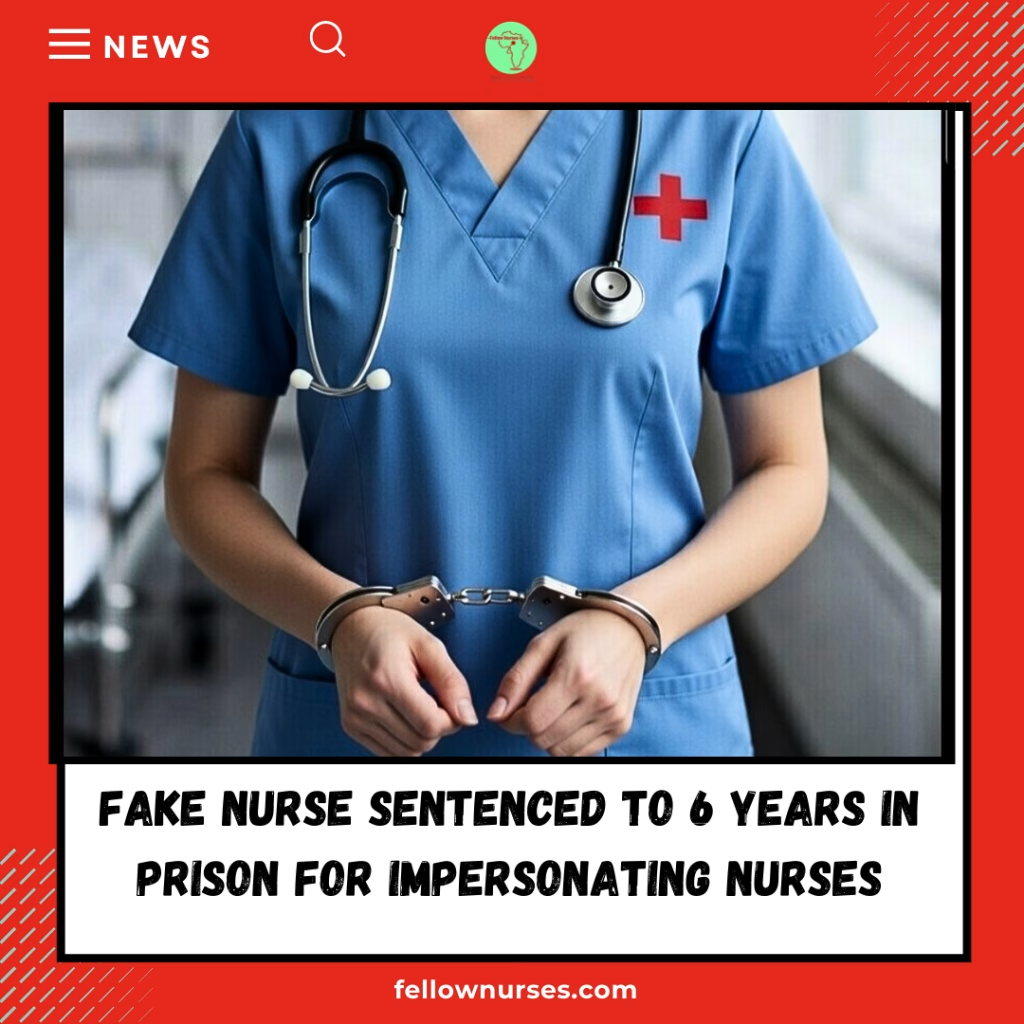
Fake Nurse Sentenced to 6 Years in Prison for Impersonating Nurses
Fellow Nurses Africa — A 51-year-old woman has been jailed for 75 months, more than six years after she repeatedly posed as a qualified registered nurse, forged official documents and worked in patient care without any medical training.
Leticia Gallarzo, formerly of Wayland, Michigan, received the sentence on 27 January 2026 from US District Judge Paul L. Maloney in the Western District of Michigan. She was also ordered to pay more than $81,000 in restitution and will serve three years of supervised release.
👉 Join our Whatsapp channel Here
How the fraud unfolded
Between August 2022 and May 2023, Gallarzo used the identity of a real licensed nurse to secure a job at a nursing home and hospice facility in the Grand Rapids area. She created fake nursing licences, diplomas, identification papers and medical records to convince employers she was properly qualified.
Once employed, she carried out full nursing duties: assessing patients, giving medications, starting intravenous lines and later being promoted to unit manager, where she supervised other staff. Her deception only came to light when another prospective employer carried out proper checks.
After pleading guilty in October 2023, Gallarzo fled the state. She was later arrested near Los Angeles and admitted continuing the same fraud working as both a physician assistant and registered nurse in Illinois and California.
Third conviction for the same crime
This is the third time Gallarzo has been convicted for impersonating a nurse. She was found guilty in Michigan state court in 2016 and by a federal court in Texas in 2017.
Strong words from prosecutors
U.S. Attorney Timothy VerHey said the case went far beyond simple fraud:
“Nurses make life and death decisions for the people under their care, and everyone has the right to expect that their health is being attended to by a person with extensive medical training.”
He added:
“It is shocking that Gallarzo would repeatedly put herself in such a position, without any of the necessary training, just because she wanted money… Our investigation has not disclosed anyone physically harmed by Gallarzo’s conduct, but that is just a happy accident and not because of anything she did.”
Why this matters for nurses everywhere
This high-profile case exposes dangerous gaps in healthcare hiring and verification systems. When fake qualifications go undetected, patients are put at real risk even if, in this instance, no one was physically hurt.
Fellow Nurses Africa analysis: In many African countries, rapid migration of qualified nurses (often called “Japa”) has increased pressure on licensing bodies. Employers sometimes rush checks, especially for private facilities or overseas opportunities. This American case is a clear warning: weak verification can allow unqualified people to slip through with potentially tragic results. In many African countries, greedy hospital owners also use quacks and nursing assistants to carry out the roles of registered nurses. We call on the government agency and the nursing regulator to as a matter of urgency put measures in place to combat this in the interest of patients safety.
What African nursing leaders must do now
Regulatory councils across the continent — including Nigeria’s NMCN, Ghana’s NMC, Kenya’s Nursing Council and South Africa’s SANC — already have digital verification portals, yet quackery still persists. The lesson from Michigan is clear: every regulatory body must be proactive and put necessary measures in place to protect patients.
Our advocacy position
Fellow Nurses Africa calls on:
- Hospitals and nursing homes to make primary-source verification mandatory before any nurse starts work.
- Governments to invest in real-time, blockchain-backed licensing databases.
- Individual nurses to protect their own licences and report any suspected impersonation or quackery immediately.
Patient safety depends on trust. That trust is built on verified qualifications — nothing less.
👉 Join our Whatsapp channel Here
Fellow Nurses Africa is the independent voice of African nursing, we educate, inform and support nurses across Africa

Kehinde Oluwatosin is one of the many editors here at Fellow Nurses Africa and fellownurses.com.
He is a registered nurse with a Master of Science degree in healthcare leadership from the University of Hull, United Kingdom. Kehinde is passionate about advancing the nursing profession across Africa. As Co-Founder of Fellow Nurses Africa, he plays a key role in shaping editorial direction, ensuring our content educates, informs, and empowers nurses continent-wide.
With expertise in leadership, patient flow, and healthcare operations, Kehinde brings valuable insights to nursing news, career development, and policy discussions. He is committed to amplifying the voice of African nurses and driving positive change in the profession.