

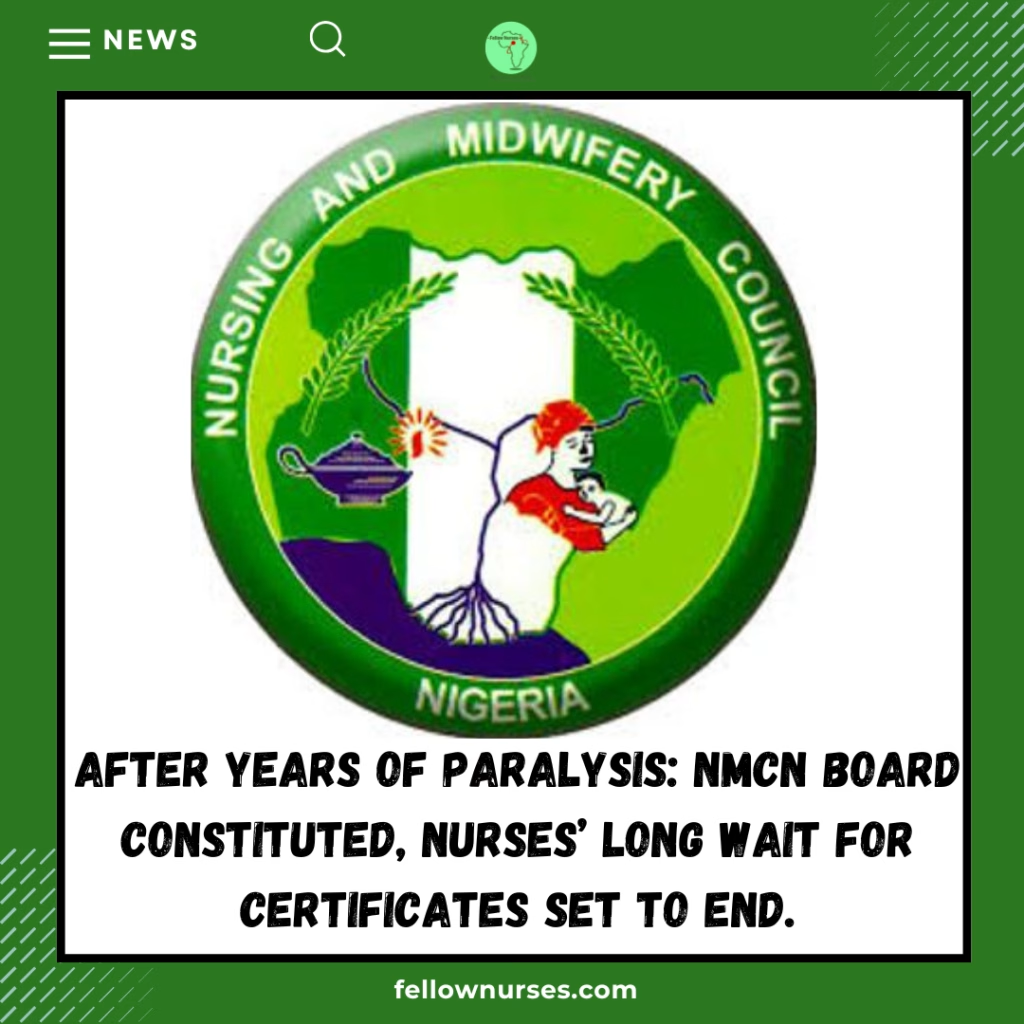
After Years of Paralysis: NMCN Governing Board Constituted, Nurses’ Long Wait for Certificates Set to End
Abuja, Nigeria – 12 April 2026
There are strong indications that the Federal Government has constituted the new Governing Board of the Nursing and Midwifery Council of Nigeria (NMCN), ending a three-year regulatory vacuum that has left thousands of qualified nurses unable to collect their certificates of registration.
Sources at NMCN headquarters in Abuja have told Fellow Nurses Africa (FNA) News, on condition of anonymity, that the board is now in place and that plans for its formal inauguration are at an advanced stage. “The board is ready,” the source said. “All processes have been completed and inauguration will soon be done.”
👉 Join our Whatsapp channel Here
The development brings cautious relief to Nigeria’s nursing community after 33 months of uncertainty that began when President Bola Ahmed Tinubu dissolved several federal agency boards in June 2023.
Three Years of Regulatory Paralysis
The NMCN, established by Decree No. 89 of 1979 and codified in Cap. N143 of the Laws of the Federation of Nigeria 2004, is the sole statutory body responsible for regulating nursing and midwifery education, training, registration, licensing and professional discipline.
The Governing Board is required by law to approve training institutions, conduct examinations and authorise the issuance of certificates. Without a substantive board, the council has been unable to perform this core statutory function since mid-2023.
Protests, Backlogs and Shattered Careers
The absence of a board triggered widespread frustration. Graduates from the November 2023 cohort through to early 2026 completed their training and passed professional examinations, yet could not obtain signed certificates.
Many nurses took to social media within the last week to protest this delay with pressure mounting and plans underway for physical protests to the NMCN office in Abuja.
The questions these nurses are asking is the same
“We trained, we passed, where are our certificates?”
The protests highlighted not only administrative delays but the real human cost: thousands of professionals stuck in limbo, unable to secure employment or advance their careers.
Lost International Opportunities and Scholarships
The impact extended far beyond Nigeria’s borders. Without council-endorsed certificates, nurses could not complete verification processes required by the United Kingdom, United States, Canada and Gulf countries. Lucrative job offers lapsed, visa applications stalled and postgraduate scholarships were forfeited.
Families who invested heavily in nursing education watched years of sacrifice yield no returns. The backlog also worsened Nigeria’s already acute healthcare workforce shortages.
The “Japa” Perception: Was the Delay Deliberate?
Within the profession, a widely held view emerged that the prolonged failure to reconstitute the board was not mere bureaucracy but a deliberate strategy to slow the “japa” exodus of nurses seeking greener pastures abroad.
👉 Join our Whatsapp channel Here
While no official source has confirmed such intent, the perception has deepened mistrust. Many nurses believe the regulatory bottleneck was used indirectly to retain talent in a country losing thousands of healthcare professionals annually.
A New Dawn for Nigerian Nursing?
The reconstitution of the board coincides with the rollout of Nigeria’s National Strategic Directions for Nursing and Midwifery (2025–2030), developed with the World Health Organization and international partners. Stakeholders expect the incoming board to clear the certificate backlog swiftly, streamline registration processes and restore full regulatory oversight.
FNA News understands that the Federal Ministry of Health will soon announce the board’s exact composition and inauguration date.
What Happens Next
This remains a developing story. Fellow Nurses Africa is waiting for the NMCN for official confirmation and details of the board’s membership.
Nigeria’s nurses have waited long enough. Swift action on the backlog will determine whether the announcement truly marks the end of three years of paralysis or merely another chapter in a longer struggle for professional dignity.
Fellow Nurses Africa will continue to monitor developments and provide timely, accurate updates to the nursing community.
👉 Join our Whatsapp channel Here
Fellow Nurses Africa is the independent voice of African nursing, we educate, inform and support nurses across Africa

Kehinde Oluwatosin is one of the many editors here at Fellow Nurses Africa and fellownurses.com.
He is a registered nurse with a Master of Science degree in healthcare leadership from the University of Hull, United Kingdom. Kehinde is passionate about advancing the nursing profession across Africa. As Co-Founder of Fellow Nurses Africa, he plays a key role in shaping editorial direction, ensuring our content educates, informs, and empowers nurses continent-wide.
With expertise in leadership, patient flow, and healthcare operations, Kehinde brings valuable insights to nursing news, career development, and policy discussions. He is committed to amplifying the voice of African nurses and driving positive change in the profession.




Nursing profession must move forward.