

NANNM Tells Tinubu: “We Will Never Disappoint You” as Government Expands Nurse Training to 110,000
Abuja, Nigeria — 22 April 2026
Nigeria has dramatically increased its nursing and midwifery training capacity from 28,000 places in 2023 to more than 110,000 in the 2024–2025 academic cycle, the Federal Government announced on Tuesday.
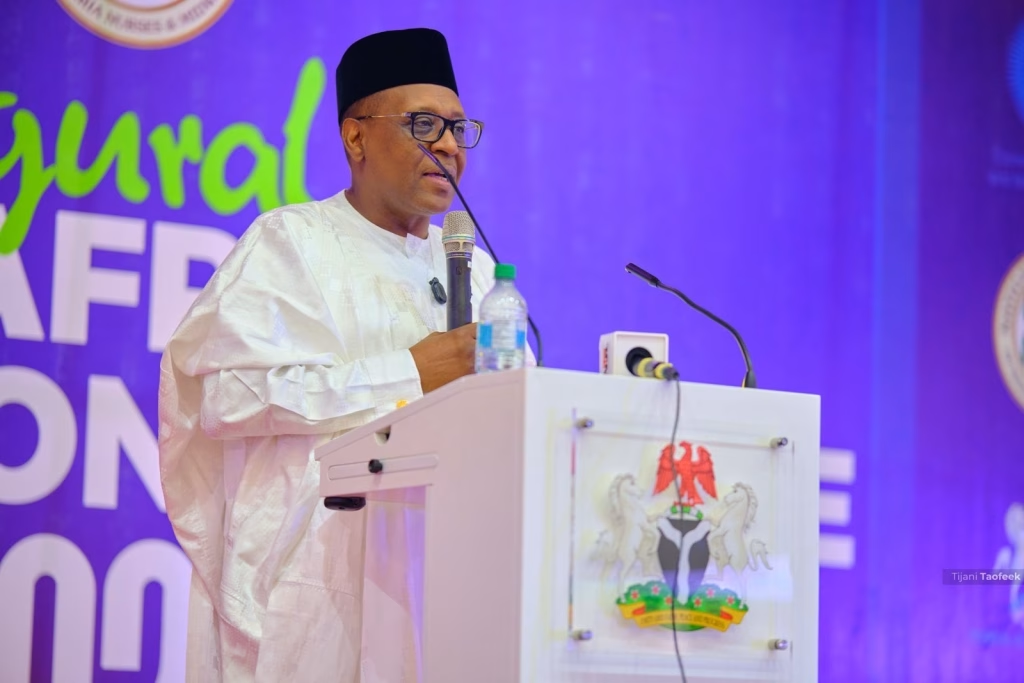
The expansion was revealed at the opening of the 2026 Commonwealth Nurses and Midwives Federation (CNMF) Conference in Abuja, where the Coordinating Minister of Health and Social Welfare delivered a message on behalf of President Bola Ahmed Tinubu.
President Tinubu’s message to nurses
Speaking on the President’s behalf, the minister described nurses and midwives as
“the very potent force, one of the key ingredients of the Nigerian healthcare system.”
He added:
“Nurses change the world,” and stressed that “healthcare is a team sport”
in which doctors, nurses, pharmacists and other professionals must work together to deliver quality care for all Nigerians.
👉 Join our Whatsapp channel Here
Nigeria currently has 433,000 registered nurses and midwives, making them the largest single group of health professionals in the country.
Major reforms already delivering results
The training expansion forms a central part of the Health Sector Renewal Investment Initiative under President Tinubu’s Renewed Hope Agenda. It is designed to close long-standing workforce gaps and improve access to primary healthcare nationwide.
Supporting measures already implemented include:
- Retraining of more than 70,000 frontline health workers across the country
- Recruitment of over 20,000 additional health professionals into federal institutions in the past 24 months
- Stronger coordination between federal, state and local governments through the Sector-Wide Approach
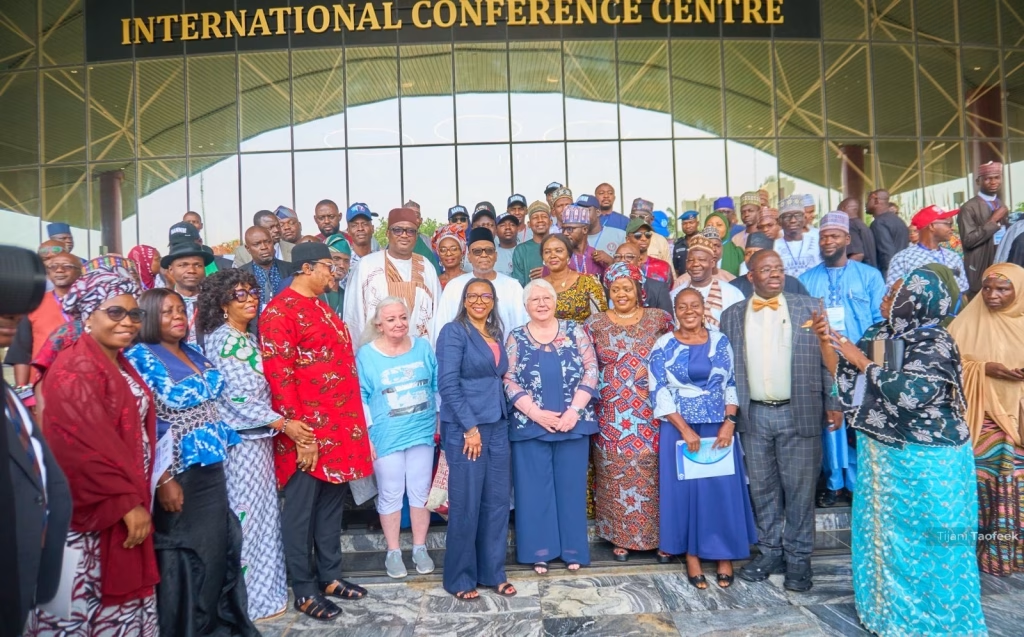
The government has also introduced the Best Practice Spotlight Organization (BPSO) model in partnership with the Registered Nurses’ Association of Ontario to raise clinical standards, particularly in maternal and newborn health. A new National Strategic Plan for Nursing and Midwifery now guides training, leadership development and service delivery.
👉 Join our Whatsapp channel Here
These steps are already showing impact. Millions of Nigerians are accessing primary healthcare services every quarter, while national health insurance coverage has grown from 16 million to nearly 22 million enrollees.

NANNM’s pledge of support
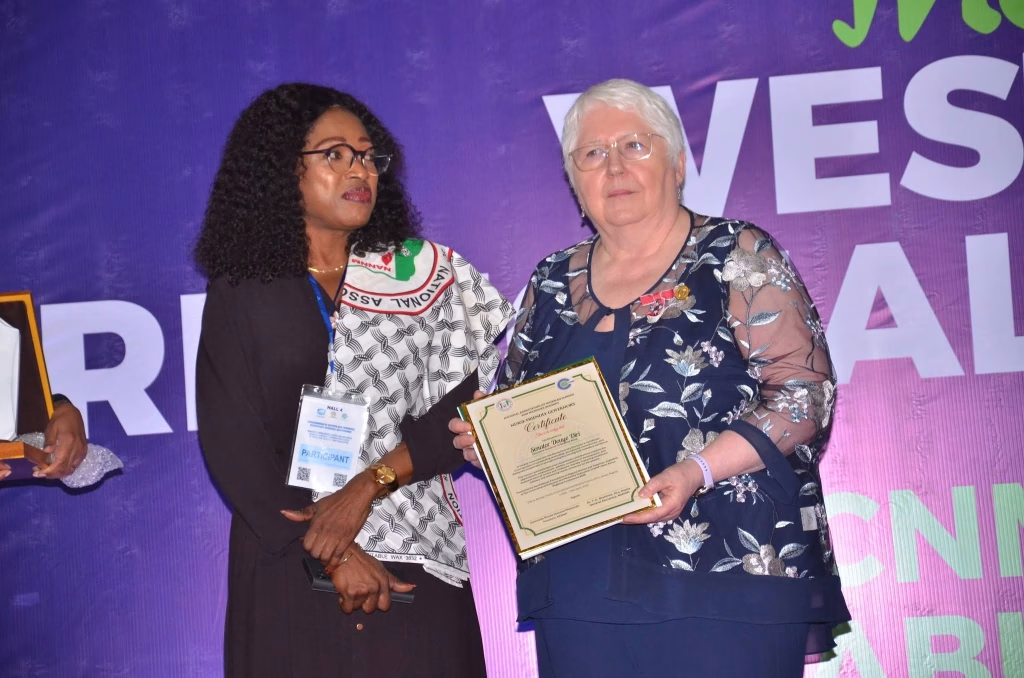
In a direct response to the government’s announcement, the President of the National Association of Nigerian Nurses and Midwives (NANNM) told the Tinubu administration:
“We’re behind you and will never ever disappoint you.”
The statement reflects strong backing from the nursing profession for the current reforms and signals continued collaboration between the government and frontline health workers.
👉 Join our Whatsapp channel Here
Nigeria has long faced a shortage of skilled health workers, especially in rural and underserved areas. The sharp rise in training capacity addresses this gap while helping to reduce pressure from migration of nurses to higher-paying countries abroad.
Experts say a stronger nursing workforce is essential for achieving universal health coverage, lowering maternal and child mortality rates, and building a more resilient health system capable of responding to future outbreaks and emergencies.
Hosting the 2026 CNMF Conference gives Nigeria an international platform to showcase these reforms and to learn from best practices across the Commonwealth.
The conference continues in Abuja this week, with Nigerian nurses and midwives playing a prominent role in discussions on workforce development and quality improvement.
This is a developing story. Further updates from the ongoing Commonwealth Nurses and Midwives Federation Conference will be provided as they emerge.
👉 Join our Whatsapp channel Here
Fellow Nurses Africa is the independent voice of African nursing, we educate, inform and support nurses across Africa

Kehinde Oluwatosin is one of the many editors here at Fellow Nurses Africa and fellownurses.com.
He is a registered nurse with a Master of Science degree in healthcare leadership from the University of Hull, United Kingdom. Kehinde is passionate about advancing the nursing profession across Africa. As Co-Founder of Fellow Nurses Africa, he plays a key role in shaping editorial direction, ensuring our content educates, informs, and empowers nurses continent-wide.
With expertise in leadership, patient flow, and healthcare operations, Kehinde brings valuable insights to nursing news, career development, and policy discussions. He is committed to amplifying the voice of African nurses and driving positive change in the profession.