
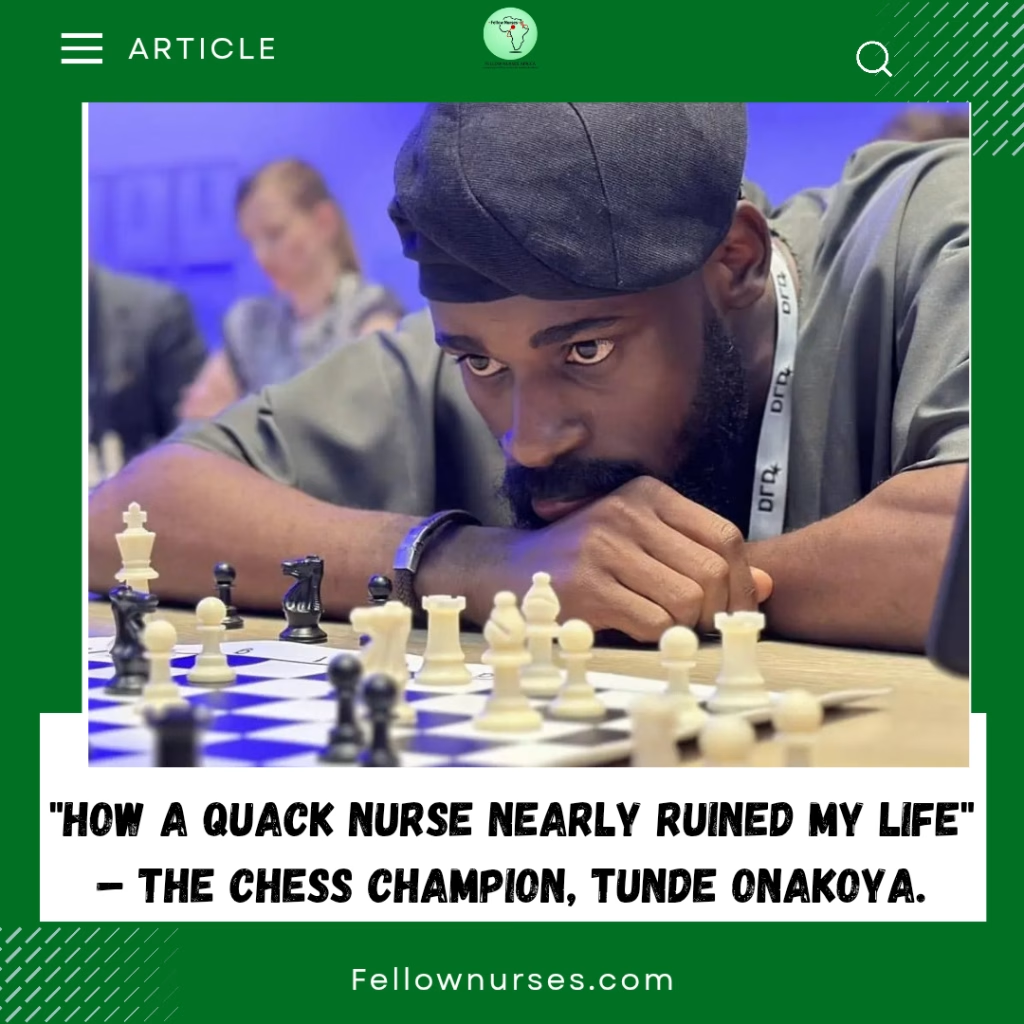
Tunde Onakoya: “How a quack nurse nearly ruined my life” – The chess champion’s story of childhood tragedy and the urgent fight against nursing quackery in Nigeria
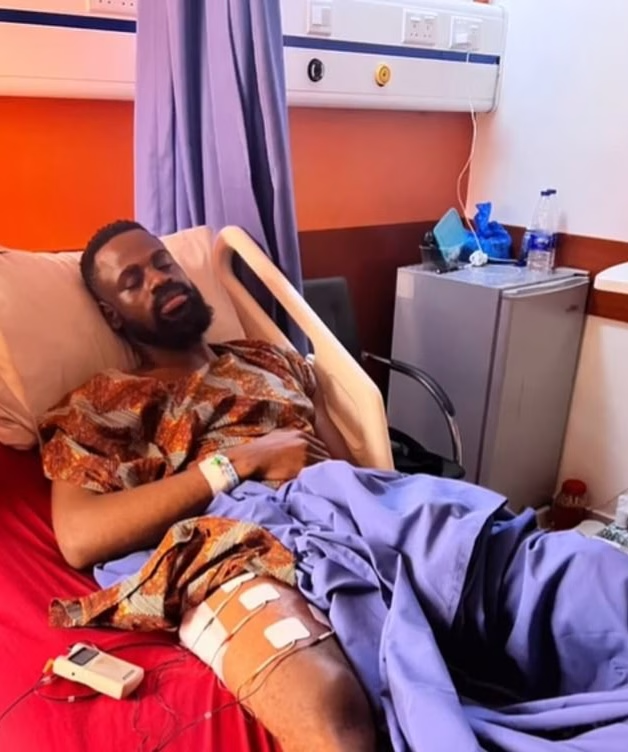
A single wrong injection when he was just nine months old changed Tunde Onakoya’s life forever. The Nigerian National Chess Master and founder of Chess in Slums Africa has spoken candidly about the moment an unqualified local “nurse” treated his measles in the slums of Lagos. The injection triggered avascular necrosis – a condition that cuts off blood supply to bone tissue in his right hip. The lively toddler who had just started walking could no longer stand. His right leg stopped growing properly, leaving a five-centimetre discrepancy, chronic pain, scoliosis and arthritis that defined his childhood and young adulthood.
Onakoya has described the experience in his own words: “How a quack nurse nearly ruined my life.” Growing up in extreme poverty, his family could not afford hospital care. His mother turned to the only option within reach – an unlicensed practitioner. The consequences lasted decades. “I could only communicate through chess,” he has said. The game, discovered in a modest barbershop, became his voice when his body failed him. It required no physical strength, only strategy and focus, and carried him from the streets of Lagos to global recognition.
Today, Onakoya is a celebrated chess champion who has broken marathon records in New York’s Times Square and represented Nigeria on the world stage. In 2018 he founded Chess in Slums Africa, a non-profit that uses chess to teach critical thinking, discipline and life skills to thousands of children in Nigeria’s poorest communities. The organisation has delivered scholarships, mentorship and real opportunities to hundreds of young people, transforming personal hardship into collective hope.
In 2023 Onakoya underwent total hip replacement surgery. Nearly three years later, titanium implants have given him a new lease of life. He walks without the constant pain that once defined him and continues to travel, compete and expand his work. Yet his response to the original error remains one of remarkable grace. He has publicly forgiven the unqualified nurse, noting she likely never realised the harm she caused.
“Bearing that burden of hate would do me more harm than good,” he reflected. “Without this, I don’t think I would’ve ever travelled this path.”
The hidden cost of nursing quackery in Nigeria
Onakoya’s story is not unique. Nursing quackery, unqualified individuals posing as nurses or health workers remains a persistent threat, particularly in low-income areas where poverty drives families toward cheap, unlicensed care. In nursing, the issue is especially damaging. Untrained “auxiliary nurses” or apprentices often administer injections, perform procedures and manage care without registration or proper supervision from the Nursing and Midwifery Council of Nigeria (NMCN).
The results are tragically predictable: avoidable disabilities like Onakoya’s, infections, complications from wrong medication, and in some cases, loss of life. These incidents erode public trust in the entire health system and place enormous pressure on qualified professionals who must later manage the fallout. As nurses, we see this daily in clinical practice. Quackery does not just harm individual patients, it undermines the credibility of the nursing profession, drains scarce health resources and hits the most vulnerable hardest.
Stronger enforcement of licensing laws, public education on checking credentials, better funding for primary healthcare and continuous professional development for legitimate practitioners are essential. The NMCN has made progress in shutting down illegal training centres, but sustained collaboration between regulators, government and communities is needed to close the gaps.

A story that demands change
Tunde Onakoya turned profound personal pain into purpose. Through chess and his work with Chess in Slums Africa, he has shown that even the deepest setbacks can spark extraordinary change. His journey is a powerful reminder that no family should face lifelong consequences because they sought care in desperation.
Nigeria must act decisively. By strengthening regulation, investing in accessible quality healthcare and championing qualified nurses and midwives, the country can prevent similar tragedies. Onakoya’s courage and forgiveness continue to inspire millions,but his story also calls for systemic reform so that fewer children ever pay such a preventable price.
Fellow Nurses Africa is the independent voice of African nursing, we educate, inform and support nurses across Africa.

Kehinde Oluwatosin is one of the many editors here at Fellow Nurses Africa and fellownurses.com.
He is a registered nurse with a Master of Science degree in healthcare leadership from the University of Hull, United Kingdom. Kehinde is passionate about advancing the nursing profession across Africa. As Co-Founder of Fellow Nurses Africa, he plays a key role in shaping editorial direction, ensuring our content educates, informs, and empowers nurses continent-wide.
With expertise in leadership, patient flow, and healthcare operations, Kehinde brings valuable insights to nursing news, career development, and policy discussions. He is committed to amplifying the voice of African nurses and driving positive change in the profession.