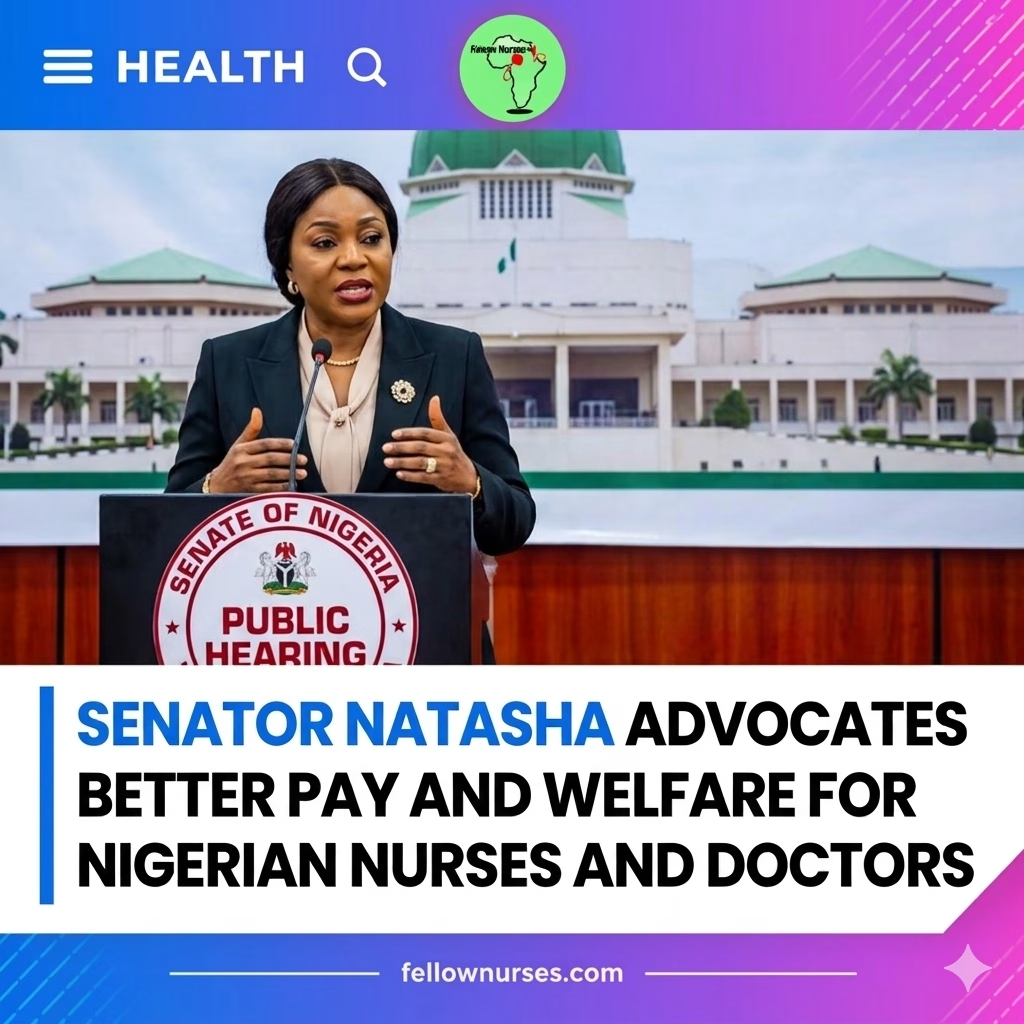
Senator Natasha Advocates Better Pay, Welfare for Nigerian Nurses and Doctors
FNA NEWS, 30th of September, 2026
Senator Natasha Akpoti-Uduaghan, representing Kogi Central Senatorial District, has called for improved remuneration, working conditions and welfare packages for Nigerian nurses, doctors, midwives and other healthcare professionals, particularly those serving in rural and underserved communities.
👉 Join Fellow Nurses Africa on WhatsApp
She made the call on Monday, September 28, 2026, while speaking at the “Unfinished” event organised by Ward-C in collaboration with the National Human Rights Commission. The event featured discussions on maternal health, women’s rights and reproductive choices.
Akpoti-Uduaghan said improving healthcare delivery requires attention not only to hospitals and medical equipment but also to the professionals responsible for providing care.
“Healthcare infrastructure could not function effectively without the human capital required to operate and sustain it.”
Senator links healthcare worker welfare to rural healthcare
The senator said healthcare professionals need adequate remuneration, functional equipment, essential medicines, reliable electricity, conducive working environments and opportunities for professional development.
She particularly highlighted the challenges faced by health workers in rural communities, where healthcare facilities may have limited personnel and resources to manage complicated pregnancies and neonatal emergencies.
According to her, improving conditions of service could help encourage healthcare professionals to remain in underserved communities.
The issue is also reflected in broader health workforce evidence. A 2025 Nigeria Health System and Services Profile published through the Africa Health Observatory Platform identified shortages, uneven distribution and poor remuneration and working conditions as challenges affecting Nigeria’s health workforce. It also noted movement of health professionals from rural to urban areas and outside the country in search of better opportunities.
Maternal health requires more than medical equipment
👉 Join Fellow Nurses Africa on WhatsApp
Akpoti-Uduaghan connected the welfare of healthcare workers to the wider challenge of maternal mortality in Nigeria.
She questioned whether some rural facilities have enough qualified personnel and functioning equipment to respond to emergencies involving pregnant women and newborns.
The senator also raised concerns about whether equipment such as incubators can operate effectively in communities with unreliable electricity.
“Is there electricity? Is there enough electricity in the rural areas to sustain the incubators wherever they are?”
She argued that simply providing equipment would not resolve the problem if healthcare facilities lacked trained professionals capable of operating the equipment and delivering appropriate care.
She therefore called for stronger referral systems connecting primary healthcare centres with general and specialist hospitals, especially for women experiencing complicated pregnancies or other emergencies.
Nurses and midwives remain central to Nigeria’s health system
The call comes as Nigeria continues efforts to strengthen its nursing and midwifery workforce.
In October 2025, the Federal Ministry of Health and Social Welfare, with technical support from the World Health Organization, launched the Nigeria Strategic Directions for Nursing and Midwifery 2025–2030.
The strategy includes priorities around nursing education, workforce planning, deployment, retention, regulation, leadership and professional development. WHO reported that nurses and midwives account for more than half of Nigeria’s health workforce and play a major role in primary healthcare, maternal and newborn health, emergency response and community outreach.
The World Health Organization also identifies working conditions as an important factor in retaining nurses and midwives and maintaining quality healthcare. Its current nursing guidance highlights remuneration, safety, social protection and supportive working environments among issues that affect the nursing workforce.
For rural communities, workforce distribution is particularly important. WHO’s regional framework recommends policies that attract and retain nurses and midwives in remote and rural areas through measures such as incentives, safe working environments and career opportunities.
Calls for stronger rural referral systems
Beyond healthcare worker welfare, Akpoti-Uduaghan said rural maternal healthcare requires a functioning network of services.
She identified laboratories, adequate blood supplies, neonatal facilities, emergency transportation, electricity and water as important components of an effective healthcare system. She also called for stronger links between primary healthcare centres and higher-level hospitals.
👉 Join Fellow Nurses Africa on WhatsApp
She questioned whether official maternal mortality figures fully capture the situation in rural communities, suggesting that some deaths may not be reflected in available data.
“I don’t think that data is really reflective of the situation in the rural communities. It will probably double up,” she said.
The statement was made in the context of her broader argument that maternal health discussions should consider the realities faced by women, children and healthcare professionals at the point of care.
What better welfare could mean for healthcare delivery
For nurses and other health professionals, the discussion goes beyond salary alone.
Workforce retention is also linked to the availability of safe working environments, professional development, adequate staffing and opportunities for career progression.
Nigeria’s existing nursing and midwifery strategy recognises workforce deployment and retention as key areas requiring coordinated action. WHO has also identified equitable distribution and retention of health workers as important to strengthening access to healthcare.
Akpoti-Uduaghan’s remarks therefore place healthcare worker welfare within the wider conversation about Nigeria’s health system, particularly the ability of rural facilities to attract and retain skilled professionals.
She also disclosed that her concerns about maternal healthcare in underserved communities influenced her decision to build a maternity centre.
The senator urged stakeholders to continue discussions around maternal health and women’s rights while increasing investment in healthcare infrastructure and the professionals responsible for delivering care.
For Nigeria’s rural health system, the central challenge remains connecting people, equipment, medicines, infrastructure and referral services in a way that allows healthcare professionals to provide timely and effective care.
👉 Join Fellow Nurses Africa on WhatsApp
Fellow Nurses Africa is the independent voice of African nursing, we educate, inform and support nurses across Africa.

Durowoju Abisola is a registered nurse, nurse writer and On-Air Correspondent at Fellow Nurses Africa (FNA), passionate about nursing leadership, health education and advocacy.
Through journalism, storytelling and content creation, she amplifies important conversations around nursing, healthcare and the experiences of nurses in Nigeria. She is committed to using her voice and professional knowledge to educate the public, challenge misconceptions and inspire the next generation of nurses.