
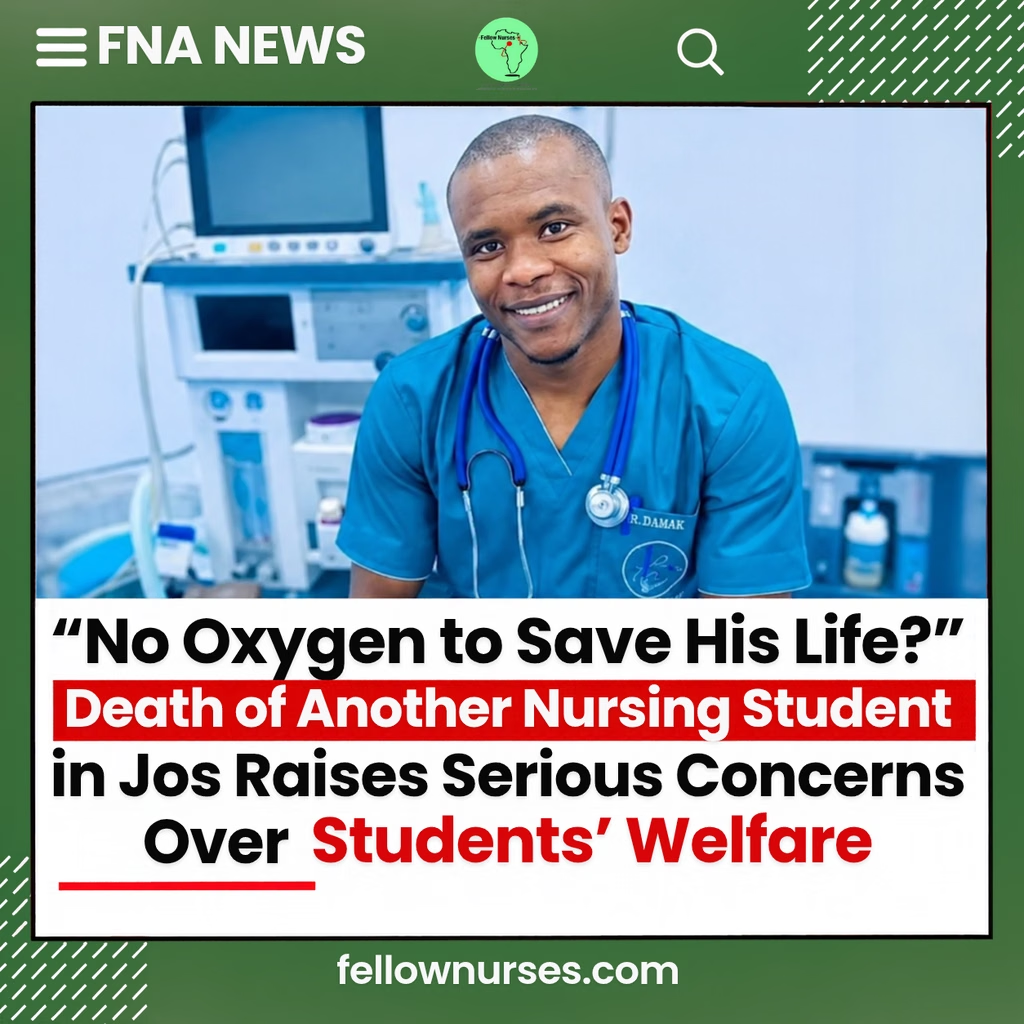
FNA NEWS | BREAKING NEWS | PLATEAU STATE, NIGERIA
“No Oxygen to Save His Life?” Death of Another Nursing Student in Jos Raises Serious Concerns Over Students’ Welfare
By FNA News Desk | 16 November 2026
Another tragedy has struck Nigeria’s nursing community following the reported death of Nurse Raphael Damak, a Post-Basic Anaesthesia Nursing student at the Jos University Teaching Hospital (JUTH), who collapsed during a farewell football match just days after completing his professional examinations.
According to reports made available to Fellow Nurses Africa (FNA), Damak collapsed at approximately 5pm on Monday, 16 November 2026, while playing football with colleagues who had recently completed their Nursing and Midwifery Council of Nigeria (NMCN) examinations.
What began as a celebration of academic achievement ended in tragedy, with allegations that oxygen was unavailable at the hospital where he was first taken for emergency treatment.
His death comes amid growing concerns over nursing students’ welfare and emergency healthcare in Nigeria, following two other tragedies in Ogun and Kogi states.
Football celebration ends in tragedy
Damak and his colleagues had reportedly organised a farewell football match to celebrate the completion of their Post-Basic Anaesthesia Nursing examinations.
During the match, he suddenly became unwell and collapsed.
According to the account received by FNA, his colleagues rushed him to the National Orthopaedic Hospital, Jos, where oxygen was reportedly unavailable.
He was subsequently transferred to Jos University Teaching Hospital, where he was pronounced dead, according to the report.
The allegation has raised questions about the availability of essential emergency medical supplies and the response provided to Damak following his collapse.
👉 Join Fellow Nurses Africa on WhatsApp
The source also raised concerns about the nursing school’s first-aid arrangements, questioning whether adequate facilities existed to respond to emergencies involving students.
The cause of Damak’s collapse has not been established. Although the reported oxygen shortage is a serious concern, whether it contributed to his death can only be determined through an examination of the emergency care he received.
From Aro to Kogi and now Jos
Damak’s death follows two other tragedies involving nursing students that have raised serious questions about their safety.
On 16 October 2026, Nurse Taiwo Godwin Ayodeji, a Post-Basic Psychiatric Nursing student at the Federal Neuropsychiatric Hospital, Aro, Abeokuta, Ogun State, died after experiencing a severe asthma attack during a football match.
An exclusive investigation by Fellow Nurses Africa documented allegations of delayed emergency treatment, difficulties administering oxygen and questions surrounding the initial declaration of his death.
The incident triggered student protests, demands for accountability and the suspension of academic activities at the institution.
Read FNA’s exclusive investigation into Nurse Taiwo Godwin Ayodeji’s death
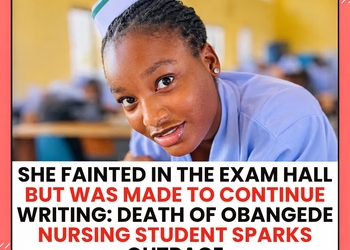
Barely a month later, the nursing community was confronted with the death of Adewumi Ayomide Elizabeth, a 20-year-old student at the Kogi State College of Nursing Sciences, Obangede.
According to an investigation published by FNA on 16 November, Elizabeth became seriously ill before her examinations and reportedly fainted during an examination but was made to continue writing.
Her colleagues also raised concerns about inadequate medical supplies at the school’s sick bay.
She was later referred to the Federal Medical Centre, Lokoja, where she was reportedly diagnosed with malaria and sepsis before her death.
Read FNA’s report on the death of Adewumi Ayomide Elizabeth in Kogi
Although the three deaths occurred under different circumstances, the allegations surrounding them point to a common concern: how adequately are nursing students protected when they become medical emergencies themselves?
FNA calls for urgent investigation and stronger student protection
The reported circumstances surrounding Damak’s death demand answers, particularly concerning the availability of oxygen, the emergency care provided at the first hospital and the decisions leading to his transfer.
A sudden collapse during physical activity requires immediate assessment and appropriate emergency intervention. Depending on the patient’s condition, this may include cardiopulmonary resuscitation, defibrillation, respiratory support and urgent transfer.
For nursing institutions, emergency preparedness must extend beyond teaching students how to save lives. It must also include protecting the students themselves.
Fellow Nurses Africa calls on the Nursing and Midwifery Council of Nigeria, the Federal Ministry of Health and Social Welfare, relevant hospital authorities and nursing education providers to examine the circumstances surrounding these incidents and strengthen emergency response arrangements across training institutions.
The concerns extend to the availability of resuscitation equipment, functional sick bays, emergency medications, trained first responders and effective referral systems.
Where investigations establish failures, corrective action and accountability must follow.
Three young nursing professionals. Three different institutions. Three families left grieving.
Their deaths should prompt more than condolences.
Nigeria’s nursing students deserve safe learning environments, timely medical attention and institutions that practise the same principles of patient safety and compassion they are expected to uphold.
For Raphael Damak, a football match meant to celebrate the completion of his examinations has ended in mourning.
Fellow Nurses Africa extends its condolences to his family, friends, classmates and the entire JUTH nursing community.
A profession that teaches its students to save lives must also ensure that their own lives are valued and protected.
FNA News will continue to follow developments surrounding the incident, including any response from the hospitals concerned.
👉 Join Fellow Nurses Africa on WhatsApp
Fellow Nurses Africa is the independent voice of African nursing, we educate, inform and support nurses across Africa.

Kehinde Oluwatosin is one of the many editors here at Fellow Nurses Africa and fellownurses.com.
He is a registered nurse with a Master of Science degree in healthcare leadership from the University of Hull, United Kingdom. Kehinde is passionate about advancing the nursing profession across Africa. As Co-Founder of Fellow Nurses Africa, he plays a key role in shaping editorial direction, ensuring our content educates, informs, and empowers nurses continent-wide.
With expertise in leadership, patient flow, and healthcare operations, Kehinde brings valuable insights to nursing news, career development, and policy discussions. He is committed to amplifying the voice of African nurses and driving positive change in the profession.
 ✓
Did you know that we're the accredited ReMar NCLEX Training Centre in Nigeria with Prof. Regina Callion?
Prepare and pass your NCLEX-RN / NCLEX-PN with official ReMar Review curriculum, Regina Callion video lectures, Quick Facts, and dedicated clinical mentorship right here in Nigeria.