
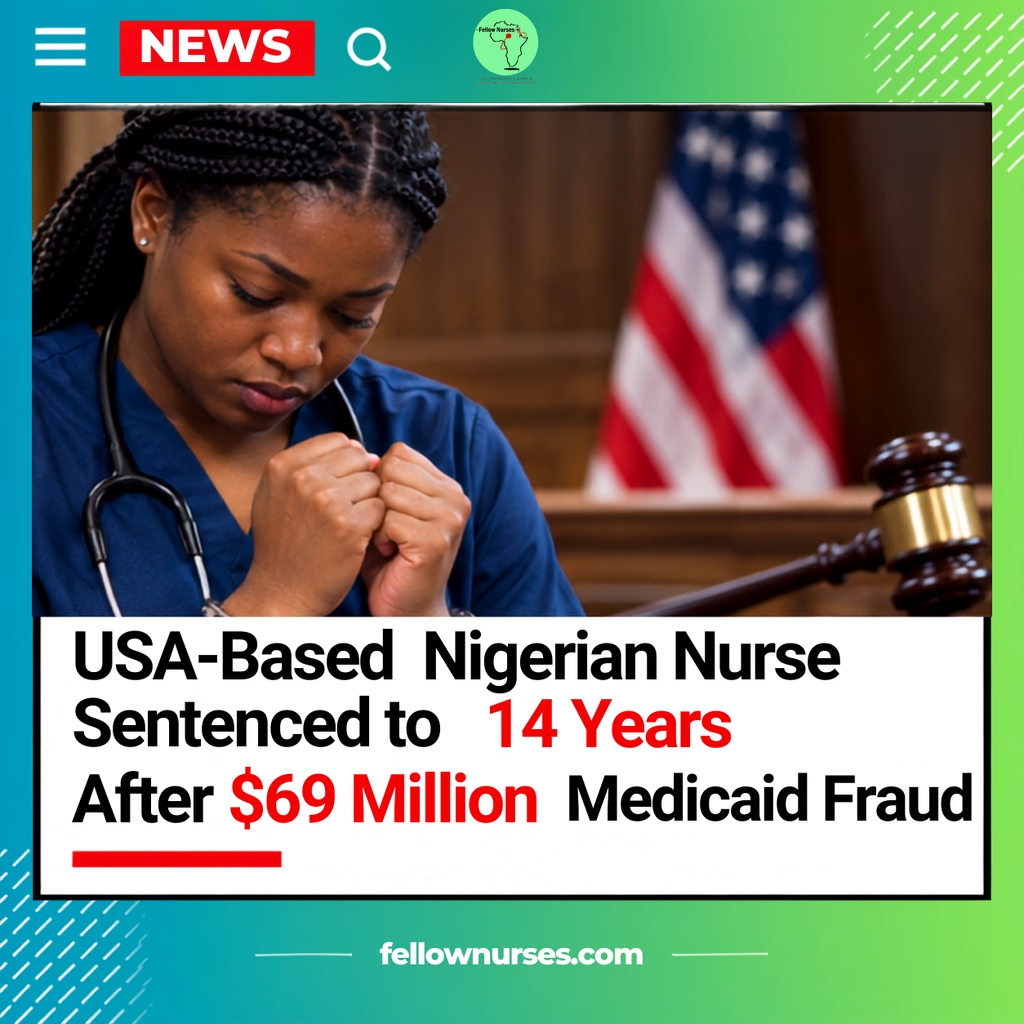
USA-Based Nurse Practitioner Sentenced to 14 Years After $69 Million Medicaid Fraud
FNA News | 19 September 2026
A US nurse practitioner has been sentenced to 14 years in federal prison after her addiction treatment clinic was found to have fraudulently billed Arizona’s Medicaid programme more than $69 million in less than a year.
Rita Ntusa Anagho, 54, of San Tan Valley, Arizona, was sentenced after pleading guilty to conspiracy to commit health care fraud and wire fraud.
👉 Join Fellow Nurses Africa on WhatsApp
She owned and operated Tusa Integrated Clinic, an addiction treatment centre that submitted more than $69 million in claims to the Arizona Health Care Cost Containment System (AHCCCS) between May 2022 and March 2023.
According to the US Department of Justice (DOJ), AHCCCS paid approximately $54.9 million on the fraudulent claims.
How the Medicaid fraud scheme worked
Federal prosecutors said Anagho’s clinic targeted vulnerable patients receiving substance-use treatment through AHCCCS.
A significant part of the scheme involved patients covered by the American Indian Health Program (AIHP), a Medicaid programme that reimbursed certain services at higher rates than other AHCCCS plans.
Investigators said Anagho and her co-conspirators submitted claims for addiction treatment services that were either never provided or were not delivered as billed.
The scheme also involved illegal payments to owners of sober living homes in exchange for patient referrals.
Treatment records and clinical notes were falsified to make it appear that services had been provided.
The case escalated further when investigators began examining the clinic’s records. According to prosecutors, after Tusa received a subpoena, Anagho instructed former employees to create false medical records. Prosecutors also said proceeds from the fraud were laundered.
$55 million restitution ordered
The financial penalties were substantial.
Alongside the 14-year prison sentence, the court ordered Anagho to pay almost $55 million in restitution.
Federal authorities also forfeited almost $9.5 million in fraud proceeds seized from seven bank accounts under her control, as well as nearly $7 million in real estate properties.
Anagho pleaded guilty in May 2025 to conspiracy to commit health care fraud and wire fraud.
Nursing licence revoked
The case has also had serious professional consequences.
Anagho’s nursing licence was revoked by the Arizona State Board of Nursing in 2025.
Separately, the Arizona Attorney General’s Office announced in May 2026 that Anagho had received a three-and-a-half-year state sentence in connection with another behavioural-health fraud case.
State investigators said that case involved fraudulent billing for behavioural-health services and the exploitation of vulnerable Native American patients. The Arizona Attorney General’s Office also reported a major reduction in billing for behavioural-health codes targeted in its wider fraud crackdown.
Why this case matters to nurses
The case goes beyond the size of the financial loss.
For nurses and nurse practitioners working in independent practice, behavioural health and addiction services, it highlights the professional responsibility attached to clinical documentation, patient referrals and healthcare billing.
Accurate records are not simply an administrative requirement. They form part of the evidence that a patient received appropriate care and that a healthcare provider can legitimately claim public or private insurance reimbursement.
The case also illustrates the consequences when clinical documentation, referral arrangements and financial incentives become entangled.
Healthcare professionals involved in billing therefore have a responsibility to understand the rules governing the services they provide, document care accurately and avoid financial arrangements that could compromise professional or legal obligations.
Protecting vulnerable patients and public funds
AHCCCS provides healthcare coverage to eligible people in Arizona, including services delivered through programmes serving vulnerable populations.
Federal prosecutors said Anagho’s scheme exploited patients who needed addiction treatment while diverting millions of dollars from a publicly funded healthcare programme.
US Attorney Timothy Courchaine said the scheme manipulated a programme intended to help Native Americans and described the 14-year sentence as an indication of the seriousness of healthcare fraud.
The Department of Justice said the case was investigated by the FBI and the US Department of Health and Human Services Office of Inspector General, with assistance from the AHCCCS Office of Inspector General.
A warning for healthcare professionals
The Anagho case demonstrates how allegations involving healthcare fraud can extend beyond financial penalties.
For regulated professionals, misconduct involving fraudulent claims can also trigger disciplinary proceedings, loss of professional registration and criminal prosecution.
For nurses working internationally, the case is a reminder that professional accountability does not end with clinical care. Documentation, ethical decision-making, referral practices and financial integrity can all have significant consequences for a professional’s career.
The wider lesson is clear: trust is central to healthcare, and the systems designed to protect patients and public funds depend on accurate records, ethical practice and professional accountability.
FNA News will continue to report on cases that affect nursing standards, professional accountability and the reputation of nurses and healthcare professionals working across Africa and internationally.
👉 Join Fellow Nurses Africa on WhatsApp
Fellow Nurses Africa is the independent voice of African nursing, we educate, inform and support nurses across Africa.

Kehinde Oluwatosin is one of the many editors here at Fellow Nurses Africa and fellownurses.com.
He is a registered nurse with a Master of Science degree in healthcare leadership from the University of Hull, United Kingdom. Kehinde is passionate about advancing the nursing profession across Africa. As Co-Founder of Fellow Nurses Africa, he plays a key role in shaping editorial direction, ensuring our content educates, informs, and empowers nurses continent-wide.
With expertise in leadership, patient flow, and healthcare operations, Kehinde brings valuable insights to nursing news, career development, and policy discussions. He is committed to amplifying the voice of African nurses and driving positive change in the profession.