
FNA News, Lagos Nigeria. 4th November, 2026.
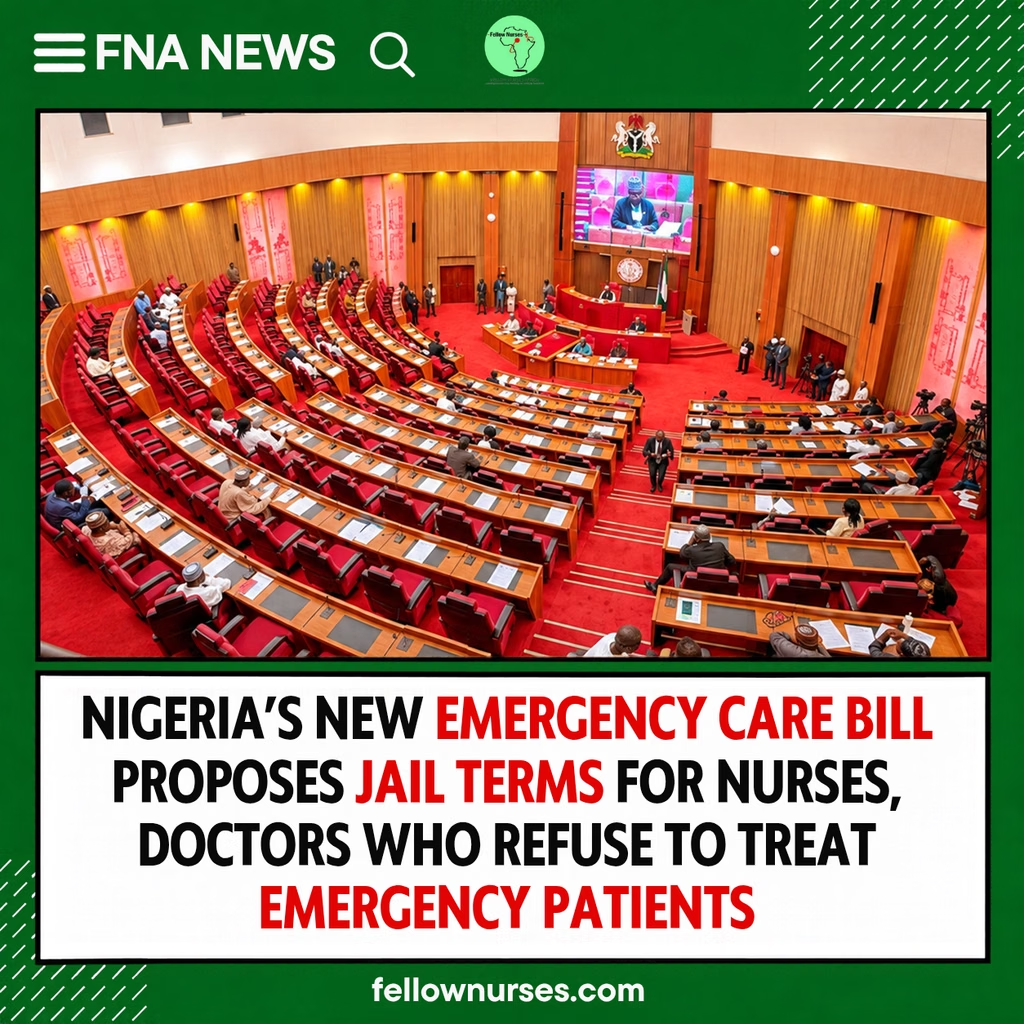
Nigeria’s New Emergency Care Bill Proposes Jail Terms for Nurses, Doctors Who Refuse to Treat Emergency Patients.
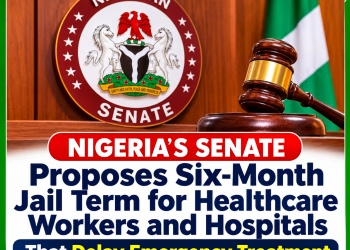
Nigeria’s Senate has advanced a bill proposing stricter penalties for nurses, doctors and healthcare facilities that refuse or delay emergency medical treatment, as lawmakers seek to address preventable deaths and improve emergency healthcare services across the country.
Under the proposed legislation, healthcare professionals and facilities found guilty of violating emergency treatment requirements could face up to six months in prison, a fine of ₦300,000, or both.
The National Health Act (Amendment) Bill, sponsored by Senator Abdulaziz Musa Yar’Adua, who represents Katsina Central, passed its second reading in the Senate on Wednesday, 4 November 2026.
The proposed amendment seeks to introduce mandatory emergency response timelines, regular professional training and stricter referral procedures for public and private hospitals.
Presenting the bill during plenary, Senator Yar’Adua said the legislation was intended to close gaps in Nigeria’s healthcare system and ensure that patients receive timely, life-saving treatment regardless of their financial circumstances, social status or location.
👉 Join Fellow Nurses Africa on WhatsApp
However, the proposal has also raised questions about the responsibility of healthcare workers when hospitals lack adequate staffing, essential equipment and other resources needed to provide emergency treatment.
Hospitals Must Begin Emergency Assessment Within 15 Minutes
One of the major provisions of the bill is the introduction of specific deadlines for attending to emergency patients.
Under the proposal, hospitals licensed to provide emergency medical services would be required to begin triage and initial assessment within 15 minutes of a patient’s arrival.
Basic stabilisation procedures, including oxygen therapy, intravenous fluids, pain relief and preliminary investigations, would be expected to commence within 30 minutes.
Where a life-threatening condition is identified, interventions such as cardiopulmonary resuscitation, airway management and bleeding control must begin immediately.
For patients requiring admission, hospitals would be expected to provide a bed within two hours, subject to availability.
Facilities without available beds would be required to stabilise patients and initiate appropriate referral arrangements.
The proposal also sets timelines for arranging emergency transport and completing transfers to other healthcare facilities, with exceptions for circumstances beyond a facility’s control.
These requirements are intended to reduce treatment delays that can worsen patients’ conditions or contribute to preventable deaths.
Nurses Permitted to Conduct Emergency Triage When Doctors Are Unavailable
The proposed amendment also contains provisions directly affecting nursing practice.
According to the reported provisions, a trained and certified nurse may undertake initial emergency triage where a licensed medical doctor is unavailable.
The measure could help reduce delays in facilities where doctors are not immediately available.
However, it also raises questions about how nursing competence is recognised within the proposed legislation.
Triage is an established component of emergency nursing practice. Appropriately trained nurses assess patients, identify urgent clinical needs and prioritise treatment according to the severity of their conditions.
The reported provision does not necessarily prevent nurses from conducting triage when doctors are present. Nevertheless, its wording invites closer examination.
If nurses are appropriately trained and certified to undertake emergency triage, should their authority depend on whether a doctor is available?
Clearer recognition of professional competence could help prevent confusion over the responsibilities of nurses and doctors in emergency departments.
The bill further proposes mandatory emergency care training and certification for healthcare professionals at intervals not exceeding 18 months.
The Nursing and Midwifery Council of Nigeria (NMCN) and the Medical and Dental Council of Nigeria (MDCN) would jointly develop a standardised national emergency care curriculum.
Six-Month Jail Term Is Already Part of Existing Law
Although the proposed penalties have attracted attention, the possibility of imprisonment for refusing emergency medical treatment is not entirely new.
Section 20 of Nigeria’s National Health Act, 2014, already prohibits healthcare providers, health workers and health establishments from refusing emergency medical treatment.
The existing law provides for a fine of ₦100,000, imprisonment for up to six months, or both, upon conviction.
The proposed amendment seeks to increase the maximum fine to ₦300,000 while retaining the six-month imprisonment provision and introducing more detailed emergency treatment requirements.
This means the legislation would strengthen an existing legal framework rather than introduce the obligation to provide emergency treatment for the first time.
Who Takes Responsibility When Hospitals Lack Oxygen and Essential Equipment?
While the proposed measures aim to protect patients, their implementation could present challenges for healthcare professionals working in poorly resourced facilities.
Nurses and doctors are responsible for providing appropriate emergency care within their professional competence.
However, their ability to deliver that care often depends on the availability of oxygen, medicines, emergency equipment, hospital beds, functioning ambulances and adequate staffing.
A nurse may recognise a critically ill patient’s need for oxygen, for example, but be unable to administer it if the hospital has no functioning oxygen supply.
Similarly, a doctor attending to several emergencies in an understaffed facility may be unable to meet every treatment deadline.
Such situations raise an important distinction between deliberate refusal of care and delays arising from institutional failures.
The proposed amendment reportedly includes safeguards for healthcare professionals who cannot meet the stipulated requirements because of genuine resource limitations, provided they document the circumstances and follow appropriate referral and reporting procedures.
The effectiveness of these protections will depend on their precise wording and implementation.
Senator Warns Against Criminalising Healthcare Workers
During the Senate debate, Senator Francis Faduyile, representing Ondo South, warned against imposing criminal penalties on healthcare professionals without addressing the challenges affecting hospitals.
Faduyile, a medical professional, argued that inadequate staffing, equipment shortages and insufficient funding could make it difficult for healthcare workers to comply with the proposed timelines.
He questioned whether individual professionals should be held responsible for delays caused by circumstances beyond their control.
The senator also called for stronger enforcement of existing healthcare standards, arguing that criminal penalties alone would not resolve the problems affecting Nigeria’s health system.
However, Senate Whip Mohammed Monguno, representing Borno North, supported the legislation, saying stronger accountability was needed to address avoidable deaths resulting from emergency treatment delays.
He highlighted road accidents and maternal emergencies among situations in which prompt intervention could save lives.
The debate reflects the challenge facing lawmakers: protecting patients from neglect while ensuring healthcare professionals are not unfairly penalised for systemic shortcomings.
Stronger Patient Protection Must Be Matched by Better Hospital Resources
For Nigeria’s nursing profession, the proposal highlights the relationship between professional accountability, institutional responsibility and patient safety.
Nurses are frequently among the first healthcare professionals to receive emergency patients. Their responsibilities may include initial assessment, recognition of deterioration, early intervention, monitoring and escalation.
However, nurses do not necessarily control hospital budgets, staffing decisions, equipment procurement or ambulance availability.
👉 Join Fellow Nurses Africa on WhatsApp
Effective emergency healthcare legislation must therefore provide clear accountability for both individual conduct and institutional failures.
It must also recognise the professional competence of appropriately trained nurses and ensure that compulsory training requirements are supported by accessible programmes and adequate funding.
Stronger legal protection for patients remains essential. No patient should be deliberately denied life-saving treatment or exposed to avoidable harm through neglect.
At the same time, criminal penalties must be applied fairly, with appropriate consideration of the clinical circumstances and resources available to healthcare workers.
A law demanding immediate life-saving treatment must be supported by a healthcare system capable of delivering it.
What Happens Next?
Following its second reading, the Senate referred the proposed amendment to its Committee on Health (Secondary and Tertiary) for further consideration.
The committee was given four weeks to report back.
The bill must complete the remaining legislative stages and receive presidential assent before its new provisions can become law.
For nurses, doctors, hospital administrators and patients, the proposed legislation represents an important opportunity to strengthen emergency healthcare delivery in Nigeria.
Its success, however, will depend not only on tougher penalties but also on the resources, training, professional clarity and institutional accountability required to make timely emergency treatment possible.
👉 Join Fellow Nurses Africa on WhatsApp
Fellow Nurses Africa is the independent voice of African nursing, we educate, inform and support nurses across Africa.

Kehinde Oluwatosin is one of the many editors here at Fellow Nurses Africa and fellownurses.com.
He is a registered nurse with a Master of Science degree in healthcare leadership from the University of Hull, United Kingdom. Kehinde is passionate about advancing the nursing profession across Africa. As Co-Founder of Fellow Nurses Africa, he plays a key role in shaping editorial direction, ensuring our content educates, informs, and empowers nurses continent-wide.
With expertise in leadership, patient flow, and healthcare operations, Kehinde brings valuable insights to nursing news, career development, and policy discussions. He is committed to amplifying the voice of African nurses and driving positive change in the profession.
 ✓
Did you know that we're the accredited ReMar NCLEX Training Centre in Nigeria with Prof. Regina Callion?
Prepare and pass your NCLEX-RN / NCLEX-PN with official ReMar Review curriculum, Regina Callion video lectures, Quick Facts, and dedicated clinical mentorship right here in Nigeria.