
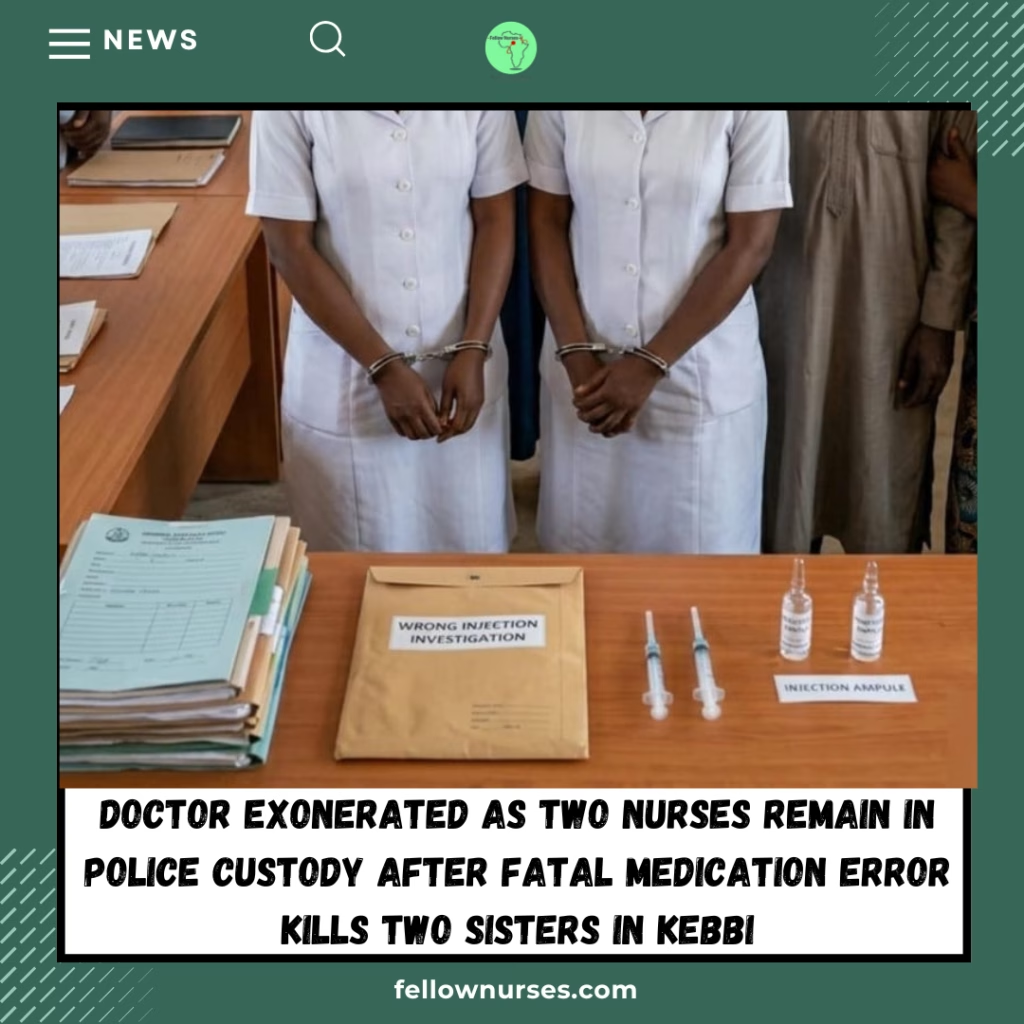
Doctor Exonerated as Two Nurses Remain in Police Custody After Fatal Medication Error Kills Two Sisters in Kebbi
Zuru, Kebbi State – A doctor has been cleared of responsibility in the tragic deaths of two young sisters at Zuru General Hospital, while two nurses continue to be held in police custody following a suspected medication error.
The girls, aged six and three, died on 18 March 2026 after allegedly receiving incorrect injections during treatment. The incident has sparked widespread concern about patient safety, staff communication, and accountability in Nigeria’s public healthcare system.
Latest Developments in the Investigation
According to updates from the ongoing probe, the prescribing doctor was exonerated by the nine-member investigative panel after presenting proper documentation that clearly outlined the intended medication and instructions. The panel, chaired by Commissioner for Information and Culture Alhaji Yakubu Ahmed, has been taking testimonies from hospital staff, including senior doctors and nurses on duty.
👉 Join our Whatsapp channel Here
The Director of Nursing Services and the Chairman of the National Association of Nigerian Nurses and Midwives (NANNM) in Kebbi State participated in the panel proceedings. Their involvement helped clarify roles in the chain of medication administration, leading to the prescriber’s release from suspicion due to adequate record-keeping.
However, the two nurses who administered the injections remain in police custody in Birnin Kebbi as investigations continue to determine the exact cause of the fatalities and any lapses in execution.
Nurses’ Reaction and Allegations of Bias
Some nurses have rallied in support of their colleagues, accusing the investigative panel of bias. They argue that the focus on the administering nurses overlooks broader systemic issues, such as workload pressures, inadequate staffing, and communication gaps that can contribute to errors in busy hospital settings.
This reaction highlights ongoing tensions in healthcare teams when accountability is assigned, and it underscores the need for fair, transparent processes that examine both individual actions and institutional weaknesses.
Government Support and Official Statements
The Kebbi State Government has provided the bereaved family with ₦10 million as immediate support. Commissioner Ahmed emphasised during a condolence visit: “No amount of money can bring back the lives that were lost, but we hope this gesture shows the family they are not alone.”
The Emir of Zuru, Alhaji Mohammed Sanusi Mikailu Sami, urged the family to exercise patience while warning all health workers that negligence endangering human lives is unacceptable and must be prevented through strict adherence to professional standards.
The children’s father, Ibrahim Abdullahi Shuni, and the family’s lawyer, Barrister Garba Shehu, have engaged with the panel, with the lawyer commending the government for ensuring a thorough inquiry.
Insights on Medication Safety and Systemic Reform
Medication errors, particularly involving injectable drugs, are a recognised global patient safety issue, but they are especially concerning in resource-constrained settings. Proper prescribing documentation is only one layer safe administration requires clear verification at the point of delivery, double-checks, and effective teamwork.
This case illustrates how breakdowns in communication between prescribers and administrators can have devastating consequences, especially for vulnerable paediatric patients. Experts advocate for stronger protocols, including standardised checklists, better training on high-risk drugs (such as those like quinine sometimes linked in early reports), and a just culture that encourages reporting of near-misses without fear.
The panel’s findings are expected to recommend not only disciplinary actions where warranted but also practical reforms to strengthen hospital systems in Kebbi State and serve as a lesson for wider improvements in Nigeria’s public health facilities.
What Happens Next
Investigations remain active, with authorities assuring the public that justice will be served based on evidence. The outcome could influence future policies on staff training, supervision, and accountability mechanisms.
This tragedy reinforces the critical importance of investing in healthcare infrastructure, continuous professional development, and robust safety systems to protect patients particularly children from preventable harm.
How can Nigeria’s health sector better balance individual accountability with systemic improvements to prevent such incidents? Constructive views on patient safety reforms are welcome in the comments.
👉 Join our Whatsapp channel Here
Fellow Nurses Africa is the independent voice of African nursing, we educate, inform and support nurses across Africa

Charles Wealth is an accomplished healthcare administrator with decades of hands-on experience across various healthcare organizations in Nigeria and beyond. Known for his strategic leadership, operational excellence, and deep commitment to advancing the nursing profession, Charles brings a wealth of expertise to healthcare management, policy, and professional development.
As a co-founder and Editor at Fellow Nurses Africa, he plays a pivotal role in shaping content that educates, inspires, and unites nurses across the continent. His editorial vision focuses on amplifying the voices of nurses, highlighting best practices, addressing contemporary challenges in healthcare, and promoting professional growth within the nursing community.
With a strong background in healthcare administration, Charles is passionate about bridging the gap between clinical practice and effective leadership. He continues to contribute significantly to the development of robust healthcare systems and the empowerment of nurses through knowledge sharing and advocacy.








The doctor was exonerated because he “presented proper documentation that clearly outlined the intended medication and instructions.”
Now, my question is, will they exonerate the nurses if they had administered a wrongly prescribed drug from the doctor or she go still chop from the punishment?