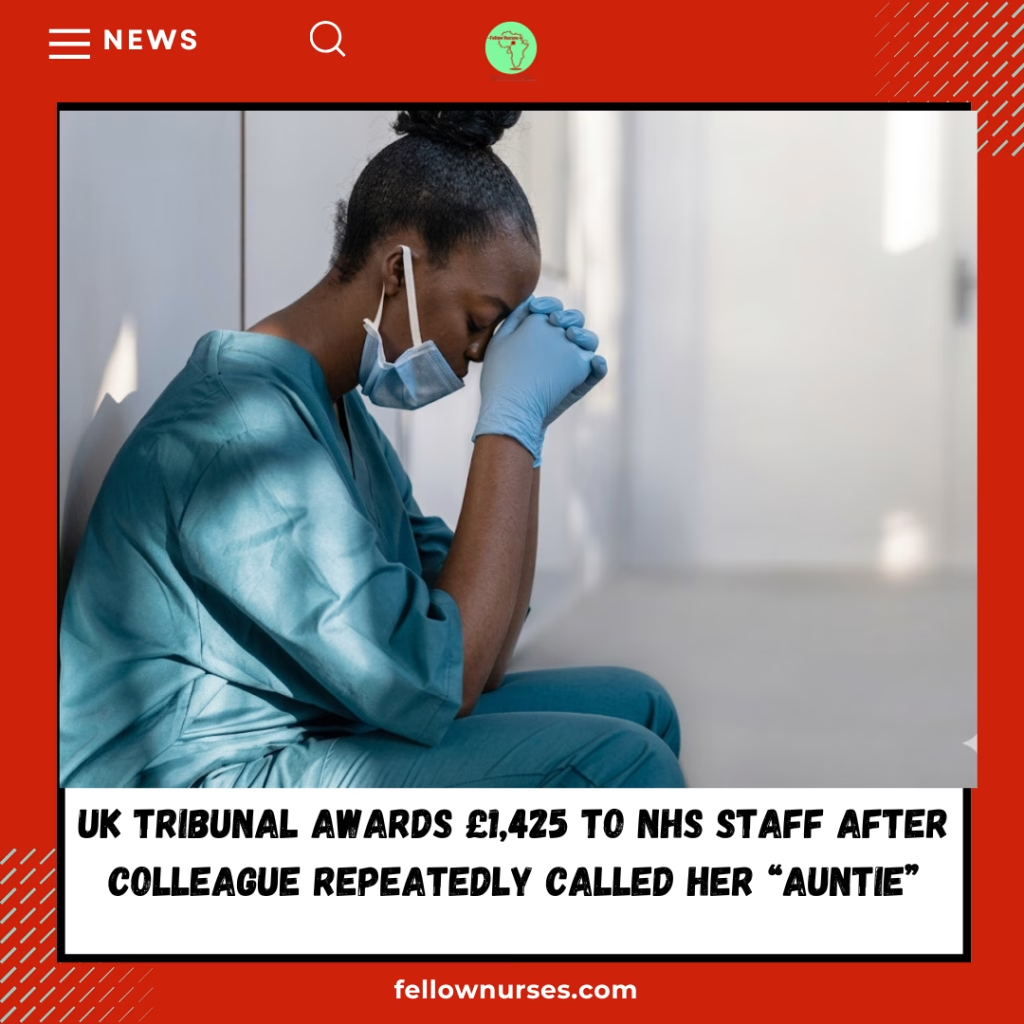
UK Tribunal Awards £1,425 to NHS Healthcare Assistant After Colleague Repeatedly Called Her “Auntie”
By Fellow Nurses Africa Editorial Team
Published: 26 March 2026
A UK employment tribunal has ordered an NHS trust to pay £1,425 in compensation to a healthcare assistant after ruling that she was subjected to harassment related to her age and sex.
The case centred on the repeated use of the term “Auntie” by a Ghanaian colleague, despite the claimant making clear that she found it unwelcome.
What Happened
Ilda Esteves, a 61-year-old healthcare assistant, worked at West London NHS Trust, including at St Bernard’s Hospital in London.
She told the tribunal that staff nurse Charles Oppong, originally from Ghana, repeatedly addressed her as “Auntie”. Ms Esteves said she objected on several occasions and asked him to use her name instead.
👉 Join our Whatsapp channel Here
The tribunal heard that Mr Oppong also made comments about her appearance and suggested she would be a “good match” for an older male colleague.
Ms Esteves argued that the persistent use of “Auntie”, combined with these remarks, created an offensive working environment.
The Tribunal’s Ruling
The employment tribunal found that continuing to call her “Auntie” after her objections amounted to harassment related to age and/or sex under the Equality Act 2010.
Tribunal judges noted that the conduct had the effect of violating her dignity and creating a hostile environment for her, even if that was not the intention.
Mr Oppong defended the term as a cultural sign of respect. In many Ghanaian and broader African communities, “Auntie” (or similar terms) is commonly used as a polite, affectionate way to address older women.
However, the tribunal emphasised that once a colleague clearly expresses discomfort, continuing the behaviour can cross into unwanted conduct under UK workplace law. The focus is on the impact on the recipient rather than solely on the speaker’s cultural intent.
Insights for Nurses Working Internationally
This case highlights the challenges of operating in highly diverse environments like the NHS, which employs thousands of nurses and healthcare workers from Africa and around the world.
Key takeaways for African nurses abroad:
- Clear communication matters: If a colleague objects to a form of address or behaviour, it is safest to stop immediately, regardless of cultural norms.
- Professional boundaries: UK equality law protects individuals from unwanted conduct that relates to protected characteristics such as age and sex.
- Mutual cultural awareness: Employers have a duty to support staff through induction and training on British workplace expectations, while migrant staff benefit from understanding local norms without erasing their own cultural identity.
- Documentation: Keeping records of objections and incidents can be important if issues escalate.
Employment law experts note that such cases are relatively rare but serve as reminders that “respect” is interpreted differently across cultures. In multicultural teams, proactive dialogue and sensitivity training can prevent misunderstandings from reaching tribunal level.
Broader Context
The NHS relies heavily on international recruitment to fill staffing gaps. African-trained nurses form a vital part of the workforce, bringing valuable skills and experience.
Cases like this underscore the need for better cultural competence programmes that work both ways helping UK-born staff understand diverse expressions of respect, and supporting overseas staff in adapting to local professional standards.
Fellow Nurses Africa advocates for fair treatment, professional development, and mutual respect for all nurses, wherever they practise. We encourage members working in the UK and other countries to familiarise themselves with local employment laws while proudly maintaining their cultural values where they do not conflict with professional duties.
What Do You Think?
Have you experienced similar cultural differences in address or greetings while working abroad? How do you navigate respect and boundaries in diverse teams?
Share your experiences respectfully in the comments below.
👉 Join our Whatsapp channel Here
Fellow Nurses Africa is the independent voice of African nursing, we educate, inform and support nurses across Africa.

Charles Wealth is an accomplished healthcare administrator with decades of hands-on experience across various healthcare organizations in Nigeria and beyond. Known for his strategic leadership, operational excellence, and deep commitment to advancing the nursing profession, Charles brings a wealth of expertise to healthcare management, policy, and professional development.
As a co-founder and Editor at Fellow Nurses Africa, he plays a pivotal role in shaping content that educates, inspires, and unites nurses across the continent. His editorial vision focuses on amplifying the voices of nurses, highlighting best practices, addressing contemporary challenges in healthcare, and promoting professional growth within the nursing community.
With a strong background in healthcare administration, Charles is passionate about bridging the gap between clinical practice and effective leadership. He continues to contribute significantly to the development of robust healthcare systems and the empowerment of nurses through knowledge sharing and advocacy.