
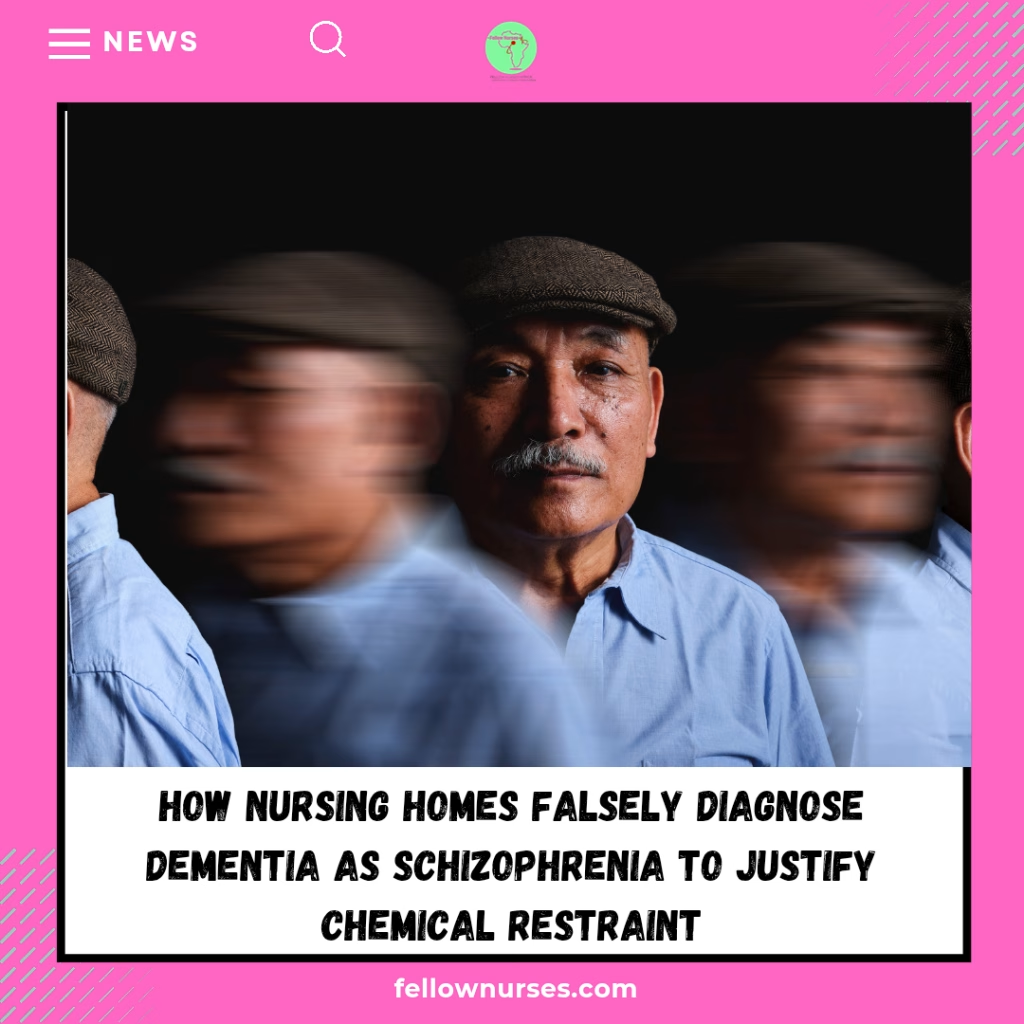
How US Nursing Homes Falsely Diagnose Dementia as Schizophrenia to Justify Chemical Restraint
Fellow Nurses Africa News
Lagos – 23 March 2026
A US government watchdog has uncovered evidence that some nursing homes are inappropriately diagnosing residents with dementia as having schizophrenia — a practice that allows continued use of powerful antipsychotic drugs to control behaviour, despite serious health risks.
👉 Join our Whatsapp channel Here
Two reports published on 19 March 2026 by the Office of Inspector General (OIG) at the US Department of Health and Human Services reveal a pattern of misuse based on a detailed review of 40 focused inspections carried out by the Centers for Medicare & Medicaid Services (CMS) between 2018 and 2021.
The Mechanism of Misuse
Antipsychotic medications carry a black-box warning from the US Food and Drug Administration (FDA) stating they increase the risk of death in elderly patients with dementia-related psychosis. The drugs are not approved for treating common dementia behaviours such as agitation, wandering or verbal outbursts.
Federal rules penalise nursing homes that prescribe antipsychotics at high rates to residents with dementia, affecting public quality ratings — known as star ratings and potentially leading to regulatory action. Residents diagnosed with schizophrenia, however, are excluded from these measures.
The OIG found that some facilities exploit this exemption by assigning inappropriate schizophrenia diagnoses to dementia patients. This allows staff to prescribe antipsychotics without triggering penalties, while artificially improving the home’s star rating and avoiding scrutiny.
In documented cases, medical directors made the diagnoses themselves to justify prescribing, and facilities later submitted “correction requests” to CMS claiming earlier records contained data-entry errors when the changes were deliberate.
The reports describe the practice as a form of chemical restraint: using sedation primarily for staff convenience rather than resident wellbeing, in under-resourced environments where non-drug approaches are underused.
Key Findings from the OIG Reports
- Nursing homes administered antipsychotics to dementia residents to manage behaviour “for the benefit of staff”, despite known risks including death, stroke and falls.
- Required safeguards — such as attempting non-pharmacological interventions first, gradual dose reduction, close monitoring for side effects, and informed consent — were frequently ignored.
- Medical directors and pharmacists often failed to intervene or recommend alternatives.
- In one inspection, a psychiatrist noted the drugs were “more [for the] benefit of [the] staff”; a director of nursing reportedly said medication was “fastest and easiest”.
Broader Implications
The findings highlight systemic pressures in long-term care: chronic understaffing, inadequate training in person-centred dementia care, and weak oversight. While the reports focus on the United States, similar challenges exist in ageing populations worldwide, including across Africa, where dementia prevalence is rising and regulation of psychotropic prescribing can vary.
As frontline nurses witness daily the delicate balance between safety and dignity, these revelations serve as a stark reminder that chemical restraint undermines ethical care and informed consent.
Recommendations and Next Steps
The OIG has urged CMS to strengthen oversight, improve transparency around diagnoses, hold medical directors and pharmacists more accountable, and refine quality metrics to close loopholes.
Nursing leaders and regulators in Africa can draw lessons now: prioritise non-drug strategies (reality orientation, music therapy, environmental adjustments), enforce robust consent processes, advocate for better staffing, and monitor sudden or unexplained schizophrenia diagnoses in long-term dementia cases.
Fellow Nurses Africa calls on professional bodies, care providers and policymakers to use this moment to reinforce safeguards for vulnerable elders everywhere.
👉 Join our Whatsapp channel Here
Fellow Nurses Africa is the independent voice of African nursing, we educate, inform and support nurses across Africa

Kehinde Oluwatosin is one of the many editors here at Fellow Nurses Africa and fellownurses.com.
He is a registered nurse with a Master of Science degree in healthcare leadership from the University of Hull, United Kingdom. Kehinde is passionate about advancing the nursing profession across Africa. As Co-Founder of Fellow Nurses Africa, he plays a key role in shaping editorial direction, ensuring our content educates, informs, and empowers nurses continent-wide.
With expertise in leadership, patient flow, and healthcare operations, Kehinde brings valuable insights to nursing news, career development, and policy discussions. He is committed to amplifying the voice of African nurses and driving positive change in the profession.