
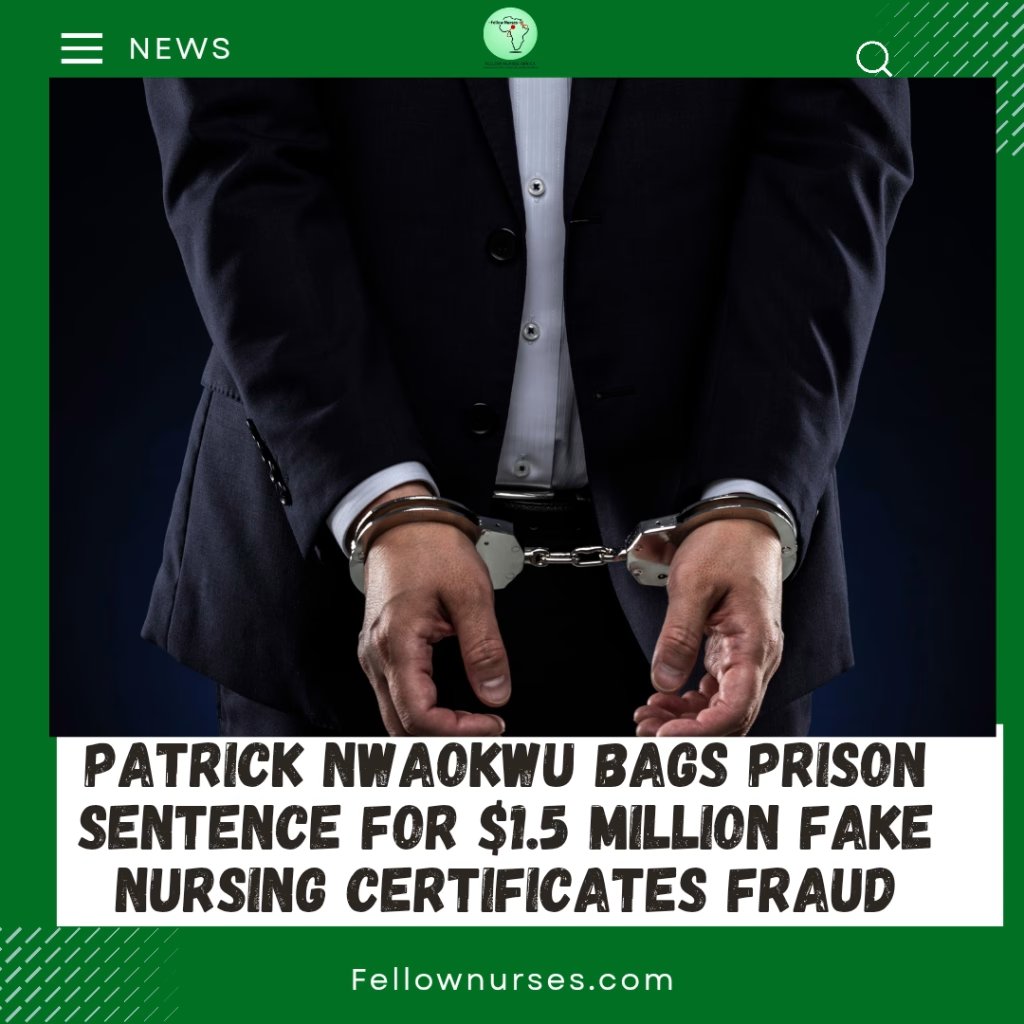
Patrick Nwaokwu Bags Prison sentence for $1.5 Million Fake Nursing Certificates Fraud
Fellow Nurses Africa
Monday, 28 April 2026
A US federal court has sentenced Patrick Nwaokwu, a 55-year-old man from Laurel, Maryland, to 21 months in prison followed by two years of supervised release for his role in a major nursing credentials fraud scheme.
The sentence was handed down on 24 April 2026 by US District Judge Deborah L. Boardman in Greenbelt, Maryland. Nwaokwu pleaded guilty to wire fraud after conspiring to sell fake nursing diplomas, transcripts and licences that allowed unqualified individuals to enter the healthcare workforce. The scheme caused more than $1.5 million in losses.
Details of the Fraud Scheme
According to the US Department of Justice, Nwaokwu worked with several co-conspirators between 2018 and at least July 2021. The operation involved two main fake institutions:
- Nursing School 1 in Virginia (no longer licensed). Nwaokwu and co-conspirator Musa Bangura sold backdated documents falsely showing that buyers had completed required courses and clinical training.
- Palm Beach School of Nursing in Florida. Nwaokwu, together with Johanah Napoleon and Geralda Adrien, sold fake registered nurse (RN) degrees for $17,000 and licensed practical nurse (LPN) degrees for $6,000–$10,000.
Buyers were instructed to list the fake schools on their NCLEX licensing exam applications while leaving graduation dates blank so the documents could be backdated. These fraudulent papers helped individuals obtain nursing licences — including from the Maryland Board of Nursing — and secure healthcare jobs.
Musa Bangura has already served a 13-month prison sentence for his part in the scam.
Patient Safety at Risk
US Attorney Kelly O. Hayes stated that the scheme “consciously and recklessly exposed Maryland patients to potential harm, risk of death, and serious bodily injury.” By enabling unqualified people to practise as nurses, the fraud undermined the rigorous standards that protect patients everywhere.
Why This Matters to African Nurses
At Fellow Nurses Africa, we have long advocated for the highest standards of professional integrity in nursing. Cases like this highlight a global problem: diploma mills prey on aspiring nurses, including many from Africa seeking opportunities abroad.
When fake credentials flood the system, they erode public trust in the entire profession and make legitimate migration pathways more difficult for qualified African nurses. Patient safety must remain non-negotiable.
Key takeaways for every nurse and student in Africa:
- Verify every school and credential through official regulatory bodies before paying or enrolling.
- Genuine nursing education requires proper clinical hours and examination, there are no legitimate shortcuts.
- Report suspicious “fast-track” diploma offers to your national nursing council or international authorities.
- Protect your licence and your reputation by choosing only accredited programmes.
The FBI Baltimore Field Office and the US Department of Health and Human Services Office of Inspector General (HHS-OIG) investigated the case. Assistant US Attorney Megan S. McKoy prosecuted it.
This sentencing forms part of the wider Operation Nightingale crackdown on fraudulent nursing qualifications. Fellow Nurses Africa will continue to monitor these developments and provide guidance to our members.
We urge all African nurses to stay vigilant. True excellence in nursing is built on real education, ethical practice and patient-first values, not forged papers.
Fellow Nurses Africa is the independent voice of African nursing, we educate, inform and support nurses across Africa.

Kehinde Oluwatosin is one of the many editors here at Fellow Nurses Africa and fellownurses.com.
He is a registered nurse with a Master of Science degree in healthcare leadership from the University of Hull, United Kingdom. Kehinde is passionate about advancing the nursing profession across Africa. As Co-Founder of Fellow Nurses Africa, he plays a key role in shaping editorial direction, ensuring our content educates, informs, and empowers nurses continent-wide.
With expertise in leadership, patient flow, and healthcare operations, Kehinde brings valuable insights to nursing news, career development, and policy discussions. He is committed to amplifying the voice of African nurses and driving positive change in the profession.