
US Nurse Fights Licence Suspension Over Trump-Related Social Media Post
Fellow Nurses Africa, 26th February 2026
A former labour and delivery nurse in Florida is challenging an emergency suspension of her professional licence in the state’s appeals court, arguing that off-duty political comments on social media are protected under the First Amendment.
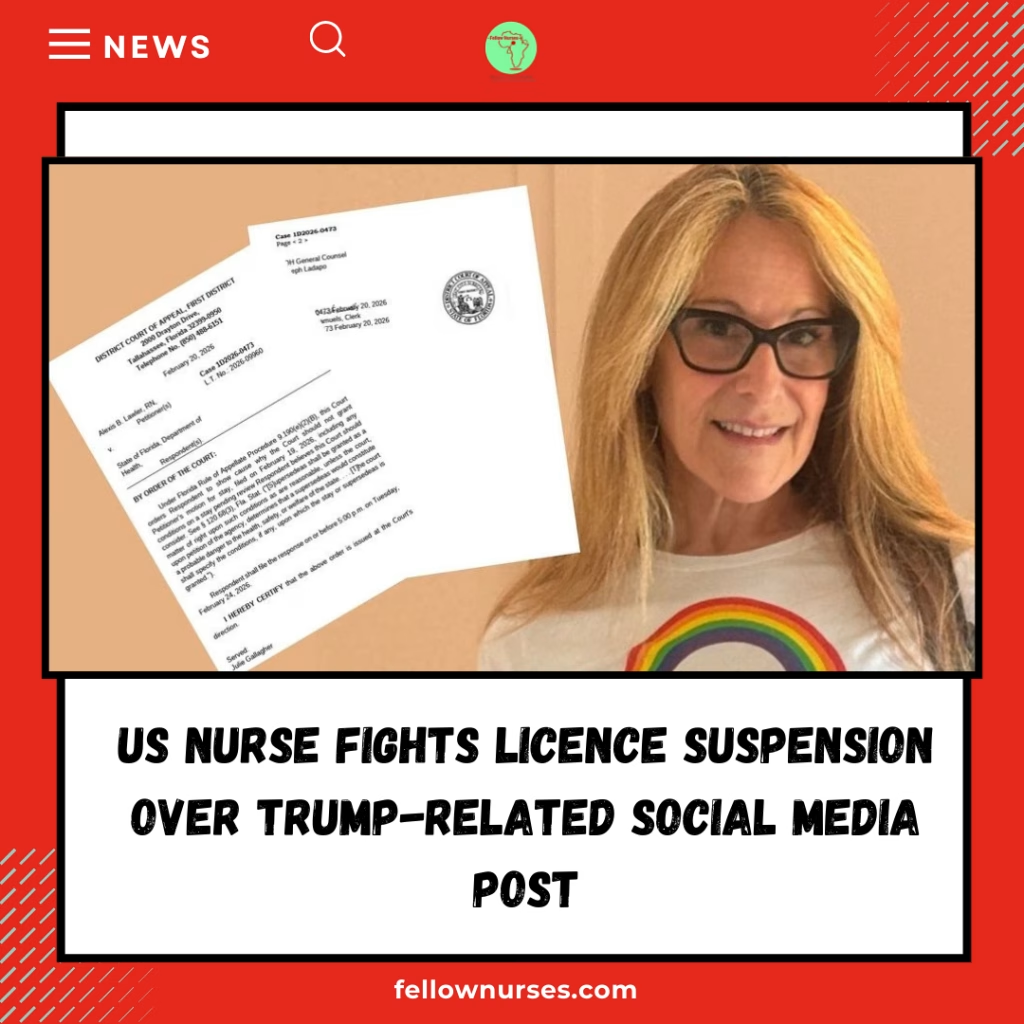
Alexis “Lexie” Lawler, who worked at Baptist Health Boca Raton Regional Hospital, was dismissed from her position and had her nursing licence suspended after a viral TikTok video surfaced in late January 2026.
In the clip, posted around 22 January, she made graphic and profane remarks wishing severe childbirth complications including a fourth-degree tear on Karoline Leavitt, President Donald Trump’s White House Press Secretary, who is pregnant. Florida Attorney General James Uthmeier publicly called for the revocation, describing the comments as an ethical breach that undermined public trust in healthcare professionals’ impartiality.
On 28 January 2026, the Florida Department of Health issued an emergency suspension order, immediately barring Ms Lawler from practising nursing anywhere in the state. In a petition filed with Florida’s First District Court of Appeal on 19 February 2026, Ms Lawler represented by attorney Julie Gallagher contends the suspension is disproportionate and unlawful.
She maintains the remarks were made outside work hours, targeted a public figure, and involved no patient harm, bias in care, or workplace incident. The filing seeks to vacate the order entirely or restrict it to labour and delivery roles, allowing her to continue in other nursing capacities pending resolution. Court documents from the Department of Health defend the action, characterising the statements as displaying “hatred so extreme” that they pose an immediate risk to public safety and professional standards.
Following the initial petition, the appeals court issued an order on 20 February directing the department to explain by 24 February why a stay should not be granted. The case highlights ongoing tensions between free speech protections and the ethical obligations of regulated professions such as nursing, where impartiality and non-maleficence are core principles under codes like those of the American Nurses Association and international equivalents. No final ruling has been issued, and the matter remains before the court. The outcome could set precedents for how licensing boards address off-duty social media conduct in healthcare.
Fellow Nurses Africa is the independent voice of African nursing, we educate, inform and support nurses across Africa

Kehinde Oluwatosin is one of the many editors here at Fellow Nurses Africa and fellownurses.com.
He is a registered nurse with a Master of Science degree in healthcare leadership from the University of Hull, United Kingdom. Kehinde is passionate about advancing the nursing profession across Africa. As Co-Founder of Fellow Nurses Africa, he plays a key role in shaping editorial direction, ensuring our content educates, informs, and empowers nurses continent-wide.
With expertise in leadership, patient flow, and healthcare operations, Kehinde brings valuable insights to nursing news, career development, and policy discussions. He is committed to amplifying the voice of African nurses and driving positive change in the profession.