
Fellow Nurses Africa | Lagos, Nigeria | 14 January, 2026
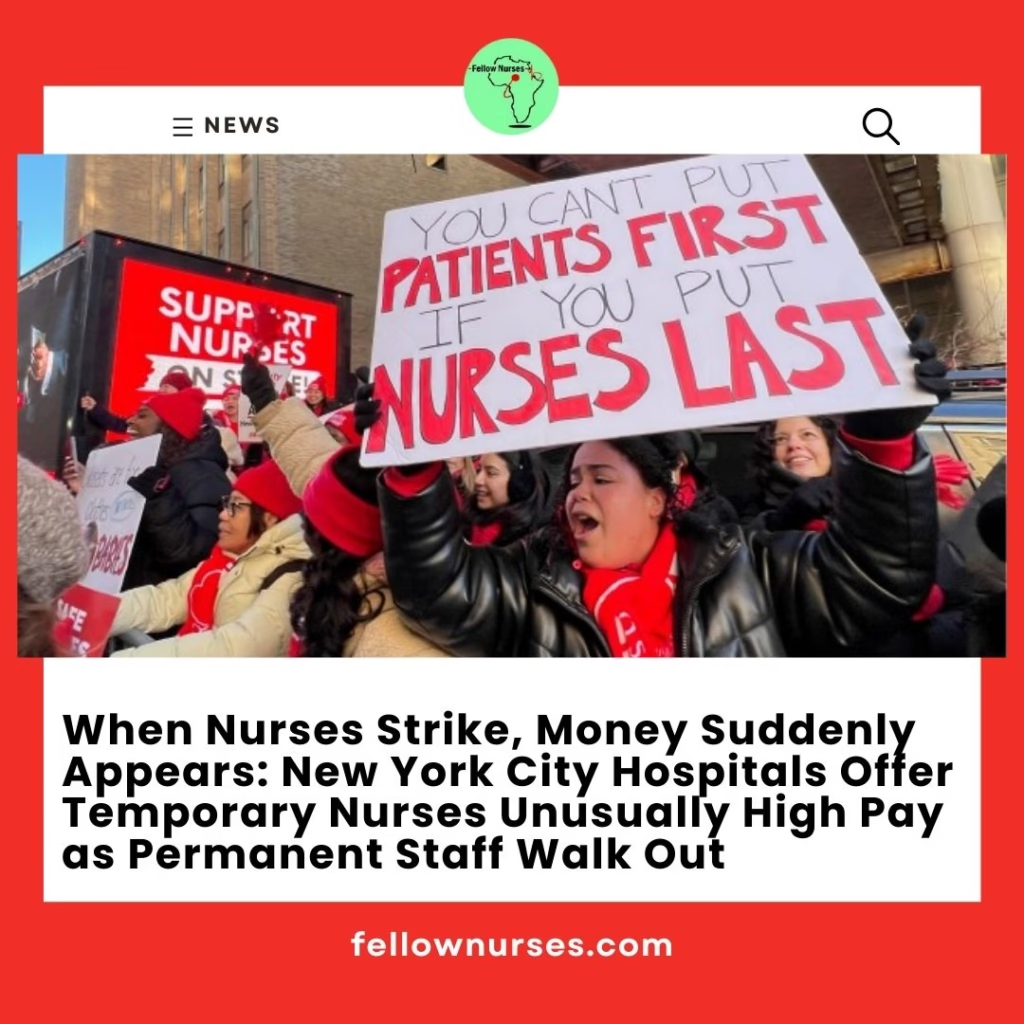
As thousands of nurses walk off the job across New York City, hospitals have moved swiftly to keep services running, contracting temporary and agency nurses at unusually high pay rates, according to industry listings and workforce analysts.
For many permanent nurses, the response has sharpened a long-standing frustration: Why does funding seem unavailable during negotiations, but suddenly accessible during a crisis?
What’s happening in New York City
Nearly 15,000 nurses at major New York City hospital systems, including facilities within the Mount Sinai and Montefiore networks, began strike action over concerns ranging from unsafe staffing ratios to burnout and compensation.
To maintain operations, hospitals have turned to temporary and agency nurses, a common practice during labor actions. While hospitals have not publicly disclosed exact figures, short-term contracts during strikes are widely known to command premium compensation compared to standard staff wages.
Why nurses are pushing back
Nurses say the issue goes beyond pay alone, it’s about priorities and consistency.
For years, permanent staff have been told that hospitals could not afford:
-
Improved nurse-to-patient ratios
-
Competitive base pay increases
-
Retention incentives
-
Long-term workforce investments
Yet during the New York City strike, hospitals have rapidly mobilized funds to secure short-term staffing solutions.
To many nurses, this reinforces a painful perception: the money exists, but only when the system is under immediate threat.
This isn’t about blaming temporary nurses
Nursing unions and workforce advocates stress that the conversation should not target temporary or agency nurses.
These nurses often step into unfamiliar, high-pressure environments with minimal orientation, increased patient acuity, and significant professional risk. Accepting short-term contracts during a strike is a personal and economic decision not the root of the problem.
The larger concern lies in system-level financial decision-making.
A familiar pattern in U.S. healthcare
Healthcare analysts note that what is unfolding in New York City reflects a broader national trend.
During strikes, hospitals often:
-
Pay elevated rates for emergency staffing
-
Absorb short-term financial strain
-
Return to cost-containment once disputes are resolved
This reactive approach worsens long-term staffing shortages, accelerates burnout, and undermines retention, ultimately affecting patient care.
What this means for patients
Experts caution that while temporary staffing can reduce immediate disruptions, it is not a sustainable substitute for stable, experienced teams.
Continuity of care, teamwork, and institutional knowledge, all critical to patient safety are harder to maintain when hospitals rely heavily on short-term labor.
The question New York City now faces
As negotiations continue, the New York City nurses’ strike has forced a difficult but necessary question into public view:
If hospitals can afford unusually high pay during emergencies, why does it take a strike for nurses’ concerns to be financially acknowledged?
For many healthcare workers, the strike has made one thing unmistakably clear: The debate is no longer about whether money exists but when it is deemed worth spending, and on who.

Kehinde Oluwatosin is one of the many editors here at Fellow Nurses Africa and fellownurses.com.
He is a registered nurse with a Master of Science degree in healthcare leadership from the University of Hull, United Kingdom. Kehinde is passionate about advancing the nursing profession across Africa. As Co-Founder of Fellow Nurses Africa, he plays a key role in shaping editorial direction, ensuring our content educates, informs, and empowers nurses continent-wide.
With expertise in leadership, patient flow, and healthcare operations, Kehinde brings valuable insights to nursing news, career development, and policy discussions. He is committed to amplifying the voice of African nurses and driving positive change in the profession.