
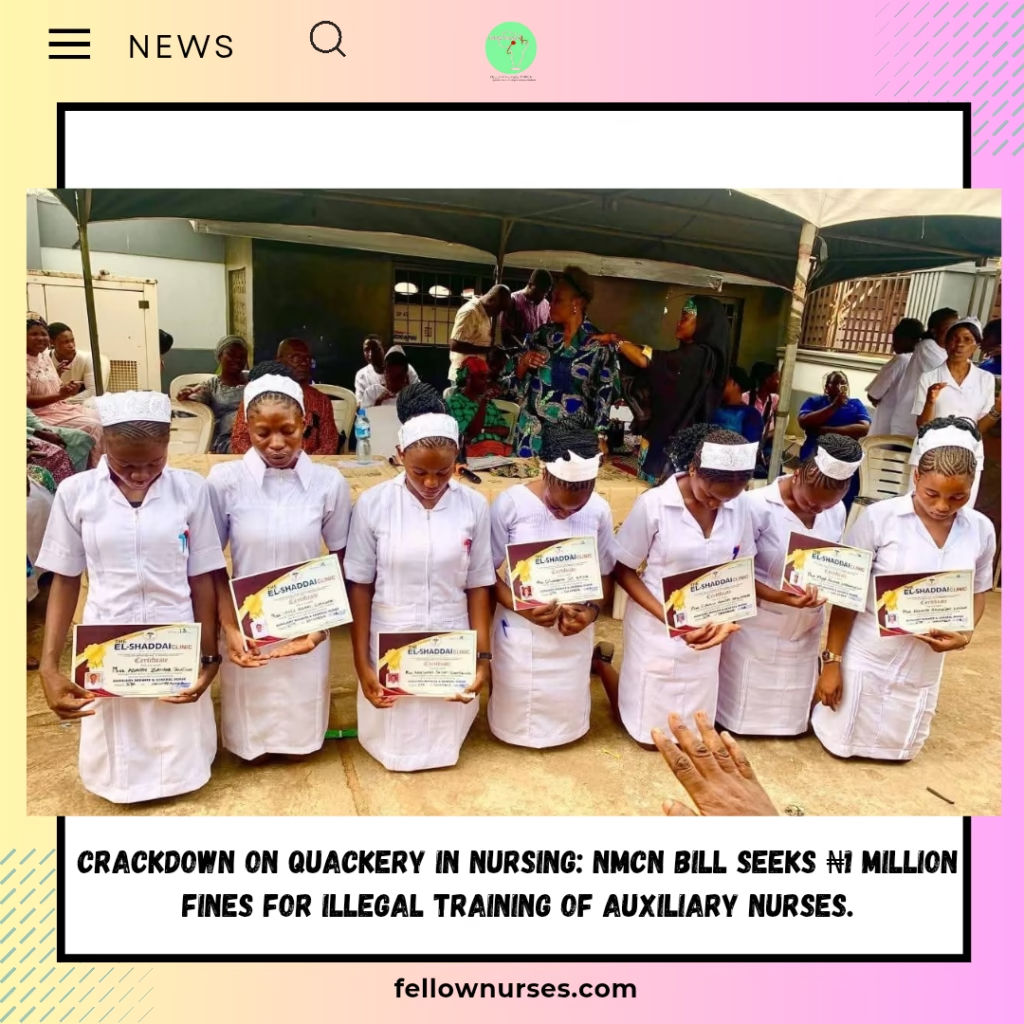
Crackdown on Quackery in Nursing: NMCN Bill Seeks ₦1 Million Fines for Illegal Training of Auxiliary Nurses
Abuja, 28 January 2026 – Yesterday, President Bola Tinubu transmitted 24 health sector amendment bills to the Nigerian Senate to address various aspects of the profession, including a proposal to significantly strengthen penalties against quackery in the Nursing and Midwifery (Registration etc.) Act (Amendment) Bill.
The bill seeks to update the principal Act (Cap N143, Laws of the Federation of Nigeria 2004), which currently imposes fines of ₦1,000 to ₦2,000 or short prison terms for offences such as unauthorised training of nurses or midwives, establishment of illegal training programmes, or employment of unregistered persons in nursing roles. These outdated penalties have been criticised as inadequate deterrents in the face of widespread quackery.
👉 Join our Whatsapp channel Here
Under the proposed amendments to Sections 20 and 21 (offences and penalties), fines would be substantially increased, with provisions allowing for penalties of up to ₦1,000,000 (one million naira) for individuals or entities engaged in unauthorised training or practice. This includes the operation of informal “auxiliary nurse” programmes informal, unlicensed training schemes that produce unqualified assistants who often perform nursing duties in private facilities.
Auxiliary nursing has no legal recognition under Nigerian law. The NMCN, the sole regulatory body for nurses and midwives, maintains that only registered and licensed professionals may practise. Despite this, private hospitals and clinics responsible for a significant portion of healthcare delivery have increasingly relied on such unqualified personnel due to workforce shortages and cost pressures, raising serious concerns about patient safety, medication errors, and poor health outcomes.
The proposed harsher penalties aim to empower enforcement actions, including prosecutions and closures of illegal training centres. They align with ongoing NMCN efforts to collaborate with state health authorities, professional associations like the National Association of Nigeria Nurses and Midwives (NANNM), and law enforcement to identify and eliminate quackery. Recent statements from NMCN leadership emphasise a commitment to protecting the profession’s integrity and elevating standards amid global migration pressures on Nigeria’s nursing workforce.
Broader provisions in the bill include streamlined administrative timelines (e.g., 90 days for student indexing and 30 days for licensing), recognition of additional qualifications such as advanced practitioners, and governance reforms to make the council more efficient.
The transmission is part of a wider review of health laws approved by the Federal Executive Council, covering other bodies such as NAFDAC, Federal Medical Centres, and the Medical Laboratory Science Council. The Senate is expected to deliberate on the bills, with potential input from the House of Representatives before any presidential assent.
Registered nurses, educators, and health stakeholders are urged to monitor and engage in the process to ensure the reforms effectively address enforcement gaps while supporting legitimate professional development and workforce expansion.
👉 Join our Whatsapp channel Here
Fellow Nurses Africa is the independent voice of African nursing, we educate, inform and support nurses across Africa

Kehinde Oluwatosin is one of the many editors here at Fellow Nurses Africa and fellownurses.com.
He is a registered nurse with a Master of Science degree in healthcare leadership from the University of Hull, United Kingdom. Kehinde is passionate about advancing the nursing profession across Africa. As Co-Founder of Fellow Nurses Africa, he plays a key role in shaping editorial direction, ensuring our content educates, informs, and empowers nurses continent-wide.
With expertise in leadership, patient flow, and healthcare operations, Kehinde brings valuable insights to nursing news, career development, and policy discussions. He is committed to amplifying the voice of African nurses and driving positive change in the profession.