

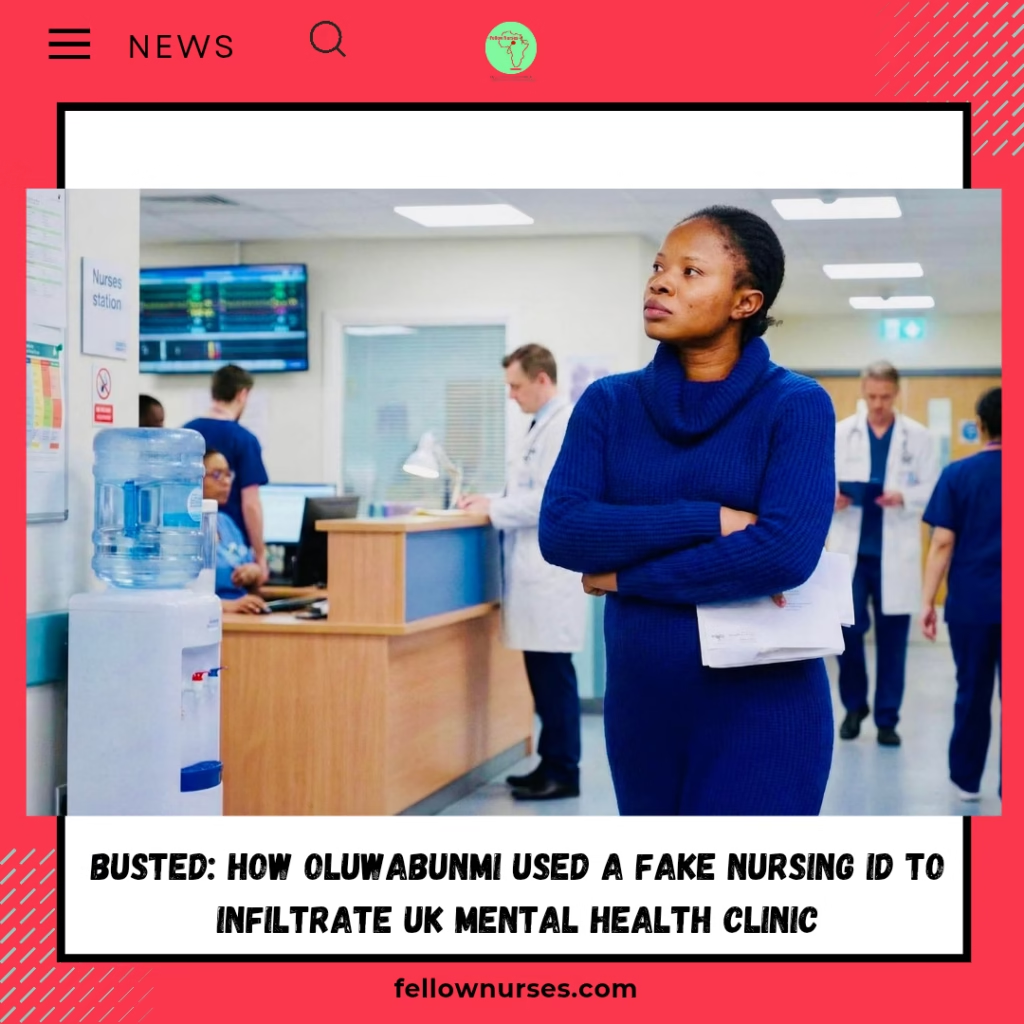
Busted: How Oluwabunmi Used a Fake Nursing ID to Infiltrate UK Mental Health Clinic
By FNA NEWS
Published: 28 January 2026
Introduction
A 30-year-old Nigerian national, Oluwabunmi Adeliyi, has been sentenced at Cardiff Crown Court for using a stolen identity to pose as a qualified healthcare support worker in secure mental health facilities. Despite having no training or qualifications in mental health care, she completed four shifts at high-risk units, raising serious concerns about vulnerabilities in NHS agency vetting processes and the potential for harm to vulnerable patients.
The Fraudulent Scheme
Adeliyi, who arrived in the UK in 2022 on a student visa with her family, used a false ID in the name of Bisola Elizabeth Oladipupo—a registered healthcare worker who has since fled to Nigeria—to secure employment through the Pro Nursing Healthcare agency. She overlaid her own passport photo on the original document, allowing her to bypass initial checks and gain access to restricted wards.
👉 Join our Whatsapp channel Here
In 2023, she carried out shifts at the Caswell Clinic in Bridgend, a medium-secure unit for patients detained under the Mental Health Act, often those with criminal backgrounds, and Neath Port Talbot Hospital in Baglan. These facilities require staff to have specialized training in areas like de-escalation, restraint techniques, and emergency protocols to manage complex mental health needs and ensure safety.
During her shifts, Adeliyi exhibited behaviors that underscored her lack of expertise: she struggled with basic uniform requirements, such as properly wearing a required safety belt; locked fire safety doors, which could have catastrophic consequences in emergencies like fires or violent incidents; and left her personal phone on the ward, breaching protocols designed to protect patient confidentiality and staff security. She also accessed and contributed to confidential patient observation notes, despite her unqualified status.
The fraud netted her approximately £1,739, but the real cost was the risk to patient and staff safety. A subsequent review by the Swansea Bay University Health Board found no direct harm occurred, largely due to her limited patient interactions, but the judge noted the potential for “untold harm.”
How She Was Caught
The deception unraveled on 7 February 2023, during a night shift at Caswell Clinic. A vigilant receptionist spotted the tampered ID and challenged Adeliyi, who initially refused to hand it over. The issue was escalated, leading to CCTV reviews and contact with the real Bisola Elizabeth Oladipupo, who confirmed the misuse. Adeliyi’s phone, seized during her arrest on 8 March 2023, revealed evidence of the additional shifts.
She provided no comment in her initial police interview but made full admissions in a second interview on 27 April 2024. Adeliyi pleaded guilty to four counts of fraud by false representation. The agency involved, Pro Nursing Healthcare, was suspended pending investigations.
Sentencing and Mitigation
At Cardiff Crown Court, Recorder Mark Powell KC described the offenses as “serious” and highlighted the risks: “You put the patients at risk because you didn’t know how to deal with them and you put staff at risk. You locked doors which should have remained open and you didn’t know what you were doing.”
Adeliyi received a 10-month prison sentence for each count, to run concurrently and suspended for two years. She was also ordered to complete 100 hours of unpaid work and a 15-day rehabilitation activity requirement. In mitigation, her defense noted her lack of prior convictions, genuine remorse, her studies at Cardiff Metropolitan University, her new role in customer services, and her responsibilities as the primary caregiver for her young daughter, with another child expected soon.
Expert Analysis: A Nurse’s Perspective on Patient Safety Risks
As an experienced mental health nurse, I can attest that secure units like Caswell Clinic demand rigorous training to handle volatile situations. Unqualified individuals accessing these environments not only breach trust but could lead to mishandled crises, such as improper restraint or delayed emergency responses. This case echoes broader issues in UK healthcare staffing, where agency reliance amid shortages can expose gaps in verification.
The incident underscores how fraud can exploit systemic pressures, including post-Brexit visa changes and workforce deficits. While no harm occurred here, similar lapses elsewhere have resulted in tragedies, emphasizing the need for enhanced biometric checks and real-time database cross-referencing.
Advocacy for Stronger Safeguards
This case should serve as a wake-up call for the NHS and regulatory bodies like the Nursing and Midwifery Council (NMC). Advocacy groups, including the Royal College of Nursing, have long called for mandatory fraud detection training and stricter agency audits. Implementing digital ID verification and whistleblower protections could prevent future infiltrations, prioritizing the safety of detained patients who rely on skilled care.
In conclusion, while Adeliyi’s suspended sentence reflects her personal circumstances, it highlights the delicate balance between justice and deterrence in healthcare fraud. Strengthening protocols is essential to maintain trust in our mental health services.
👉 Join our Whatsapp channel Here
Fellow Nurses Africa is the independent voice of African nursing, we educate, inform and support nurses across Africa

Kehinde Oluwatosin is one of the many editors here at Fellow Nurses Africa and fellownurses.com.
He is a registered nurse with a Master of Science degree in healthcare leadership from the University of Hull, United Kingdom. Kehinde is passionate about advancing the nursing profession across Africa. As Co-Founder of Fellow Nurses Africa, he plays a key role in shaping editorial direction, ensuring our content educates, informs, and empowers nurses continent-wide.
With expertise in leadership, patient flow, and healthcare operations, Kehinde brings valuable insights to nursing news, career development, and policy discussions. He is committed to amplifying the voice of African nurses and driving positive change in the profession.



I think this so called auxiliary should be attach to doctors, they’re the one trained them so they should be call auxiliary doctors
A nurse trained a nurse is a nurse
Any one trained by a doctors shd be auxiliary doctors