LASUTH Faces ₦500m Compensation Demand Over Woman’s Death After Alleged Medication Error
FNA NEWS, 25th Of September, 2026
The family of a 59-year-old woman who died at the Lagos State University Teaching Hospital in 2024 is seeking ₦500 million in compensation, alleging that she was given the wrong medication while recovering from surgery.
👉 Join Fellow Nurses Africa on WhatsApp
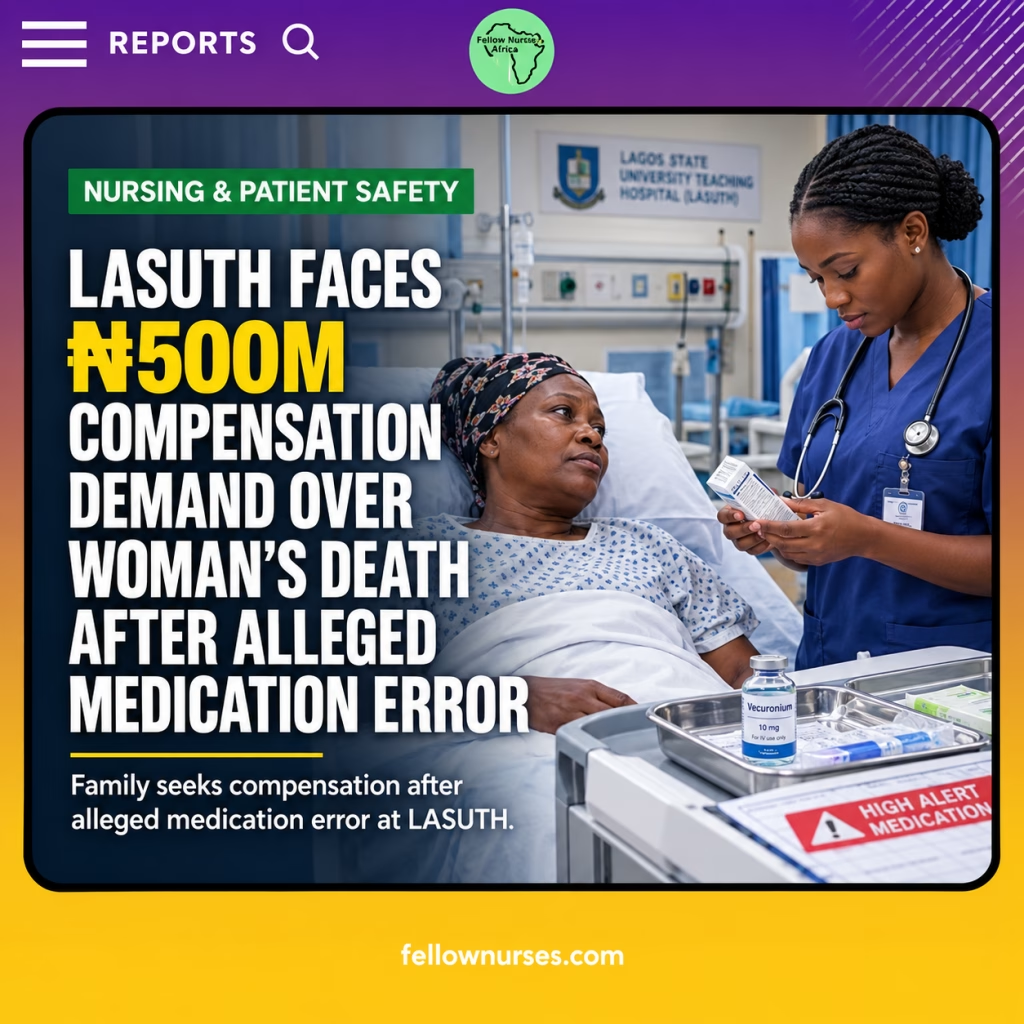
The family of a 59-year-old woman who died at the Lagos State University Teaching Hospital (LASUTH) in January 2024 has demanded ₦500 million in compensation from the hospital over what it alleges was a medication error that led to her deterioration and eventual death.
The demand was contained in a 14 September 2026 letter from Wale Ogunade Chambers, lawyers representing the deceased’s adult children, and was addressed to the Chief Medical Director of LASUTH, according to a report by Independent Newspaper Nigeria.
The woman, identified as Mrs Adegoke Mosekola Dorcas, was admitted to LASUTH for treatment of a right adrenal mass and underwent a right adrenalectomy in January 2024.
According to the family’s lawyers, she experienced significant bleeding and cardiac arrest during the operation and was subsequently managed in the intensive care unit before being transferred to the surgical ward.
The family alleges that she had subsequently regained consciousness and was considered fit for discharge.
However, they say that on 16 January 2024, a nurse administered a drug identified as vecuronium (Neovec-10) through the patient’s arterial line.
The family’s account, reproduced in the legal demand, alleges that the drug was presented to them as an antibiotic.
The family says that shortly after the injection, Mrs Adegoke developed severe breathing difficulties, seizures and cardiac arrest. She was returned to intensive care but later developed hypoxic brain injury and died on 24 January 2024, according to the lawyers’ account.
What is vecuronium?
Vecuronium is not an antibiotic. It is a neuromuscular blocking agent used as an adjunct to general anaesthesia, including to facilitate endotracheal intubation and provide skeletal muscle relaxation during surgery or mechanical ventilation.
The official drug information warns that vecuronium causes paralysis and, if administered in error, can lead to respiratory arrest and death. It states that the drug should only be administered where facilities for intubation and artificial respiration are immediately available.
This makes the alleged medication error particularly significant from a patient-safety perspective.
The Institute for Safe Medication Practices has also documented accidental administration of neuromuscular blockers as a medication-safety risk, including cases where patients were not intended to receive the drugs and were not being mechanically ventilated.
Post-mortem report cited in the case
👉 Join Fellow Nurses Africa on WhatsApp
According to Independent, the family’s legal documents include a LASUTH post-mortem report signed by consultant pathologist Dr D.A. Sanni.
The report reportedly lists hypoxic brain injury, cerebral oedema, adverse drug reaction and bronchopneumonia among the causes/findings associated with the death.
It also reportedly records several pathological findings and states that samples, including blood, urine, vitreous fluid, gastric contents, liver, kidney and lung samples, were retained for toxicological examination.
These findings are part of the documents cited by the family and do not, by themselves, establish legal liability for the hospital or any individual healthcare worker.
LASUTH had previously announced an investigation
👉 Join Fellow Nurses Africa on WhatsApp
The allegation was publicly reported shortly after the incident in January 2024.
At the time, LASUTH said it had constituted a high-powered panel to investigate the allegation of wrong medication administration.
The hospital said there would be no cover-up and that any worker found responsible would be dealt with administratively. It also said the patient was receiving intensive care and that the findings of its investigation would be made available after the investigation.
LASUTH’s statement also cautioned that adverse events can occur in medicine and said a thorough investigation was necessary to determine whether human error or another factor was responsible.
FNA has not identified a publicly available report detailing the final outcome of that investigation.
The family’s latest legal demand is therefore also seeking copies of relevant internal investigation reports and information relating to any petitions made to professional regulatory bodies, according to the September 2026 report.
A wider patient-safety concern
The case raises broader questions about medication safety, particularly the handling and administration of medicines capable of causing severe harm when used incorrectly.
The World Health Organization identifies medication errors as a major source of avoidable harm and says errors can occur at several points in the medication-use process, including prescribing, dispensing, administration and monitoring.
WHO specifically highlights high-alert medicines and high-risk situations as areas requiring stronger safety measures. It recommends a systems-based approach that considers the medicine, healthcare professionals, patients and the working environment rather than focusing only on individual mistakes.
For nurses and other healthcare professionals, medication safety involves more than administering a prescribed drug. Correct patient identification, medication verification, appropriate labelling, clear communication, documentation and escalation of unexpected reactions are all important components of safe practice.
The vecuronium prescribing information itself emphasises the need to confirm the correct product and avoid confusion with other injectable medicines in clinical settings.
Family gives LASUTH 30 days to respond
The family’s lawyers have reportedly demanded ₦500 million in compensation, a formal apology and access to relevant investigation documents.
They have given LASUTH 30 days to respond, according to the September 2026 report, with the lawyers warning that further legal and regulatory action could follow if the matter is not resolved.
At the time of publication, FNA had not identified a publicly available response from LASUTH to the family’s latest compensation demand.
The matter remains a dispute between the family and the hospital. The allegations against the nurse and LASUTH have not been established by a court judgment in the sources reviewed by FNA.
For the nursing profession, however, the case reinforces an important patient-safety principle: medication errors involving high-alert medicines can have consequences far beyond a single administration, making robust systems for medication verification, storage, communication and monitoring essential to safe care.
👉 Join Fellow Nurses Africa on WhatsApp
Fellow Nurses Africa is the independent voice of African nursing, we educate, inform and support nurses across Africa

Durowoju Abisola is a registered nurse, nurse writer and On-Air Correspondent at Fellow Nurses Africa (FNA), passionate about nursing leadership, health education and advocacy.
Through journalism, storytelling and content creation, she amplifies important conversations around nursing, healthcare and the experiences of nurses in Nigeria. She is committed to using her voice and professional knowledge to educate the public, challenge misconceptions and inspire the next generation of nurses.