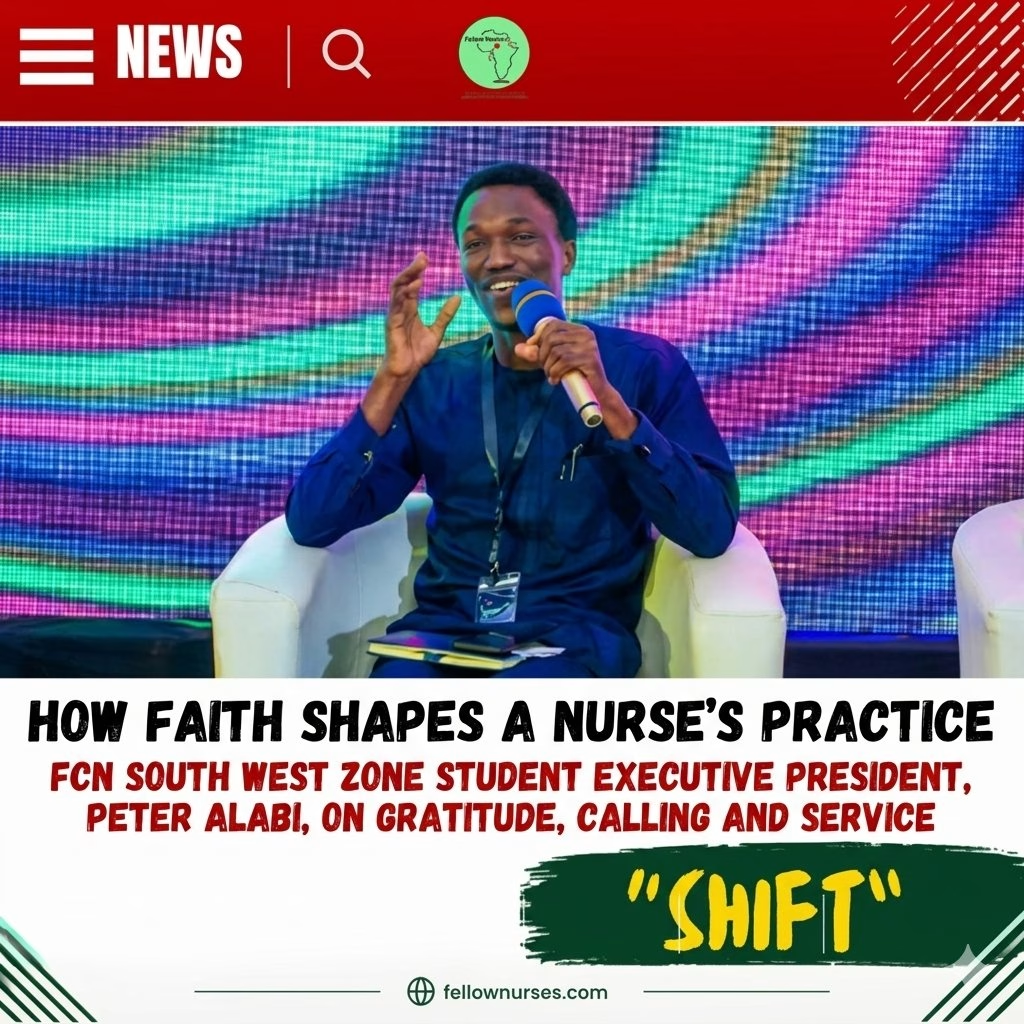
How Faith Shapes a Nurse’s Practice: Peter Alabi on Gratitude, Calling and Service
FNA NEWS, 24th Of September, 2026
For Nurse Peter Alabi, nursing is more than a profession. It is a practice shaped by faith, gratitude and a commitment to serving others.
👉 Join Fellow Nurses Africa on WhatsApp
A mental health nurse with the Neuropsychiatric Hospital, Aro, Abeokuta, Peter Alabi also serves as the Student Executive President of the Fellowship of Christian Nurses (FCN), South West Zone.
In an interview, Peter Alabi shared how his Christian faith influences the way he approaches nursing, from the mindset with which he enters the workplace to how he understands the profession as a calling and a form of service.
Faith as a foundation for nursing practice
For Peter Alabi, faith is not simply a personal belief. He sees it as something that should influence behaviour and professional practice.
“My definition of faith is a belief that practically gives legs to my behaviour; it gives legs to my practice.”
He explained that one of the clearest ways his faith influences his nursing practice is through gratitude.
Alabi said he starts his day with gratitude and goes into his workplace with an appreciation for what God has already done.
He believes that whatever a person appreciates God for can become better, and that perspective shapes the way he approaches his responsibilities as a nurse.
For him, the nursing workplace also demands qualities such as spiritual courage, wisdom, accuracy and sharp decision-making.
His faith, he said, helps him look to God for these qualities as he carries out his professional responsibilities.
How gratitude influences his approach to nursing
Gratitude emerged as a central part of Peter Alabi’s reflection on faith and nursing.
He described entering his workplace with an attitude of thanksgiving, connecting that mindset with his ability to approach the demands of nursing.
The connection between gratitude and nursing is particularly relevant in a profession where practitioners regularly encounter complex clinical situations, emotional demands and difficult decisions.
For Peter Alabi, gratitude provides a personal and spiritual foundation from which he approaches those challenges.
The perspective also reflects a broader understanding of nursing in which the practitioner brings not only technical knowledge to patient care but also personal values, attitudes and a sense of responsibility.
Is nursing a calling?
The question of whether nursing is a calling is one that frequently arises among Christian nurses.
Alabi believes it can be.
He explained that, in his understanding, a calling involves being invited to do something in a way that allows others to benefit.
For him, this description aligns with nursing because nurses have an opportunity to use their work to positively affect the lives of others.
“For many, nursing is a call. We are invited to do it in a way and manner that, with their lives, their practice can actually be a blessing to others.”
His understanding of nursing as a calling is therefore closely connected to service.
Rather than viewing nursing only as a job or career, Alabi sees it as an opportunity to use his professional role to contribute to the wellbeing of others.
Why Alabi also sees nursing as a ministry
👉 Join Fellow Nurses Africa on WhatsApp
Beyond describing nursing as a calling, Peter Alabi also views it as a ministry.
He explained that ministry, from his perspective, involves being a vessel through which others can benefit.
This understanding is rooted in his Christian faith and his belief that nurses can represent their faith through the way they serve.
For Peter Alabi, the purpose of ministry is ultimately connected to representing the one who has sent a person to serve.
He therefore sees nursing as both a calling and a ministry, particularly for Christian nurses who understand their professional service through the lens of their faith.
However, his interpretation is a personal faith perspective rather than a definition of nursing itself. Nursing remains a regulated healthcare profession grounded in professional education, clinical competence, ethics, accountability and patient safety.
Faith does not replace professional responsibility
Peter Alabi’s comments highlight the way personal faith can coexist with professional nursing responsibilities.
For a Christian nurse, faith may provide a framework for approaching work, patients and difficult situations. But professional nursing practice still requires appropriate education, clinical competence, evidence-informed decision-making and adherence to professional standards.
In Peter Alabi’s account, faith supports the mindset with which he approaches these responsibilities.
His emphasis on wisdom, accuracy and decision-making is particularly notable because these are also central demands of safe nursing practice.
The intersection of faith and nursing, therefore, is not necessarily about choosing between spirituality and professionalism. For Peter Alabi, the two exist alongside one another.
What does “Shift” mean for nurses?
Alabi was also asked about this year’s Zonal Leadership Conference theme, “Shift,” and what nurses should expect from the conference.
His response was strongly rooted in his Christian faith.
👉 Join Fellow Nurses Africa on WhatsApp
He said he believes nurses are not starting from “ground zero”. Instead, he sees the theme as a continuation of the work already taking place and an opportunity for nurses to move into new dimensions.
“I’m seeing people shifting in the name of the Lord. I’m seeing people shifting in the will of the Lord. I’m seeing people shifting by the power of God.”
He identified wisdom, abundance and innovation among the areas in which he expects participants to experience a shift.
For Alabi, the theme represents both personal and spiritual transformation.
He expressed his belief that those attending the conference should expect a meaningful shift in their lives and experiences.
A message of faith, service and professional identity
Alabi’s perspective offers an insight into how faith can shape the professional identity of nurses who practise within Christian communities.
His emphasis on gratitude, wisdom, courage and service reflects the way he understands his own nursing journey.
At the centre of his message is the belief that nursing provides an opportunity to serve others while remaining grounded in personal faith.
For Christian nurses, that perspective may provide a framework for understanding the purpose behind their work.
For the wider nursing profession, it also raises an important question about professional identity: how do nurses’ personal values influence the way they approach care, responsibility and service?
For Peter Alabi, the answer begins with faith.
And as nurses gather around the theme of “Shift,” his message is one of expectation, service and transformation.
👉 Join Fellow Nurses Africa on WhatsApp
Fellow Nurses Africa is the independent voice of African nursing, we educate, inform and support nurses across Africa.

Durowoju Abisola is a registered nurse, nurse writer and On-Air Correspondent at Fellow Nurses Africa (FNA), passionate about nursing leadership, health education and advocacy.
Through journalism, storytelling and content creation, she amplifies important conversations around nursing, healthcare and the experiences of nurses in Nigeria. She is committed to using her voice and professional knowledge to educate the public, challenge misconceptions and inspire the next generation of nurses.