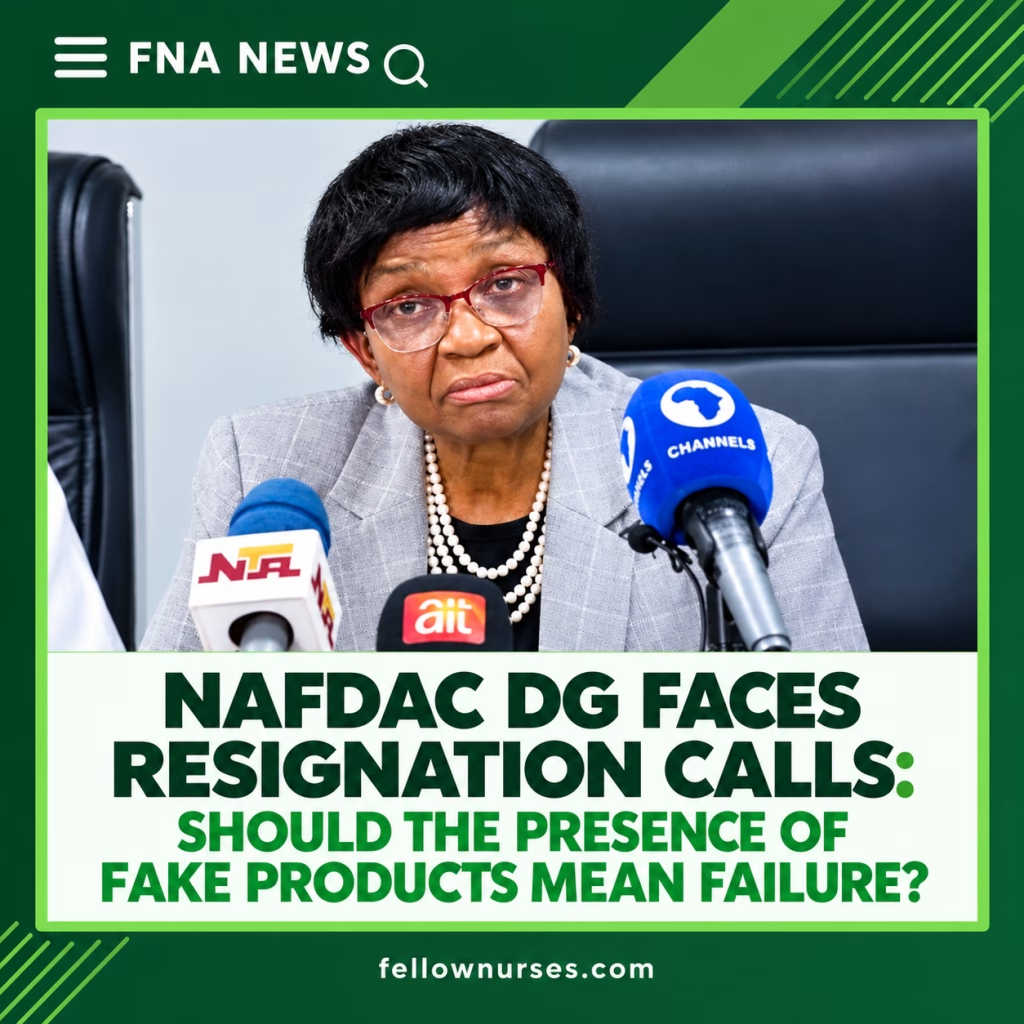
NAFDAC DG Faces Resignation Calls: Should the Presence of Fake Products Mean Failure?
The Director-General of the National Agency for Food and Drug Administration and Control (NAFDAC), Prof. Mojisola Adeyeye, has rejected calls for her resignation amid concerns over the continued circulation of counterfeit and substandard products in Nigeria.
👉 Join Fellow Nurses Africa on WhatsApp
Speaking to journalists in Lagos, Adeyeye defended her record at the agency and questioned whether the continued existence of fake products should be used as the sole measure of her performance.
She said she returned to Nigeria after more than three decades in the United States, including about 30 years as a professor, because she wanted to serve the country.
Adeyeye also recalled the challenges she said she inherited when she assumed office in 2017.
According to her, NAFDAC had about ₦3.2 billion in outstanding liabilities, while between 70 and 80 per cent of its laboratory equipment was not functioning. She said the agency paid about ₦3.1 billion of the inherited liabilities by November 2018 and reduced unnecessary expenditure, including official travel.
She further pointed to NAFDAC’s regulatory progress, including its attainment of World Health Organization Maturity Level 3 for medicines and vaccines regulation. The WHO confirmed that Nigeria maintained the status in 2025, describing the level as a stable, well-functioning and integrated regulatory system.
Adeyeye also highlighted NAFDAC’s enforcement efforts, including the destruction of counterfeit products reportedly worth more than ₦1.5 trillion over the past three years.
But this raises an important question:
👉 Join Fellow Nurses Africa on WhatsApp
Does the presence of fake products automatically mean the regulator has failed?
Not necessarily.
The discovery, seizure and destruction of counterfeit products can demonstrate active enforcement. At the same time, their continued presence in markets shows that significant gaps remain.
And those gaps cannot be addressed by NAFDAC alone.
The fight goes beyond medicines
The conversation about unsafe products in Nigeria must also go beyond fake medicines.
Unwholesome foods, counterfeit drinks, cosmetics, medical devices and other unregulated products can also threaten public health.
NAFDAC’s own strategic plan identifies substandard and falsified medical products, unwholesome foods and other regulated products as areas requiring stronger inspection, enforcement and compliance.
This means manufacturers, importers, distributors, pharmacies, patent medicine vendors, healthcare professionals, law-enforcement agencies, government institutions, the media and consumers all have a role to play.
Consumers also matter. NAFDAC provides channels through which suspected substandard or falsified products can be reported, including information about where the product was purchased and evidence such as photographs or packaging.
Accountability should remain
👉 Join Fellow Nurses Africa on WhatsApp
While NAFDAC’s achievements deserve recognition, they should not make the agency immune to scrutiny.
The important questions should include: How are counterfeit products entering the supply chain? How effective is market surveillance? Are offenders being successfully prosecuted? Are regulatory gaps being closed quickly enough? And are Nigerians becoming safer as a result?
Calling for a DG’s resignation is one form of accountability. But it should not become a substitute for examining the entire system.
For NAFDAC, enforcement must continue. For government, regulatory agencies must receive the resources and cooperation required to do their jobs. For businesses, compliance must come before profit. For healthcare professionals and vendors, vigilance is essential. And for consumers, buying medicines and food products from legitimate sources and reporting suspicious products can make a difference.
The presence of fake products is a serious public-health problem. But solving it requires more than removing one person from office.
NAFDAC must remain accountable for its mandate, while every part of the supply chain must accept responsibility for protecting Nigerians.
Ultimately, the question should not only be whether the NAFDAC DG should resign.
The bigger question is: what must Nigeria do to make fake medicines and unsafe products harder to manufacture, import, distribute, sell and consume?
👉 Join Fellow Nurses Africa on WhatsApp
Fellow Nurses Africa is the independent voice of African nursing, we educate, inform and support nurses across Africa.

Durowoju Abisola is a registered nurse, nurse writer and On-Air Correspondent at Fellow Nurses Africa (FNA), passionate about nursing leadership, health education and advocacy.
Through journalism, storytelling and content creation, she amplifies important conversations around nursing, healthcare and the experiences of nurses in Nigeria. She is committed to using her voice and professional knowledge to educate the public, challenge misconceptions and inspire the next generation of nurses.