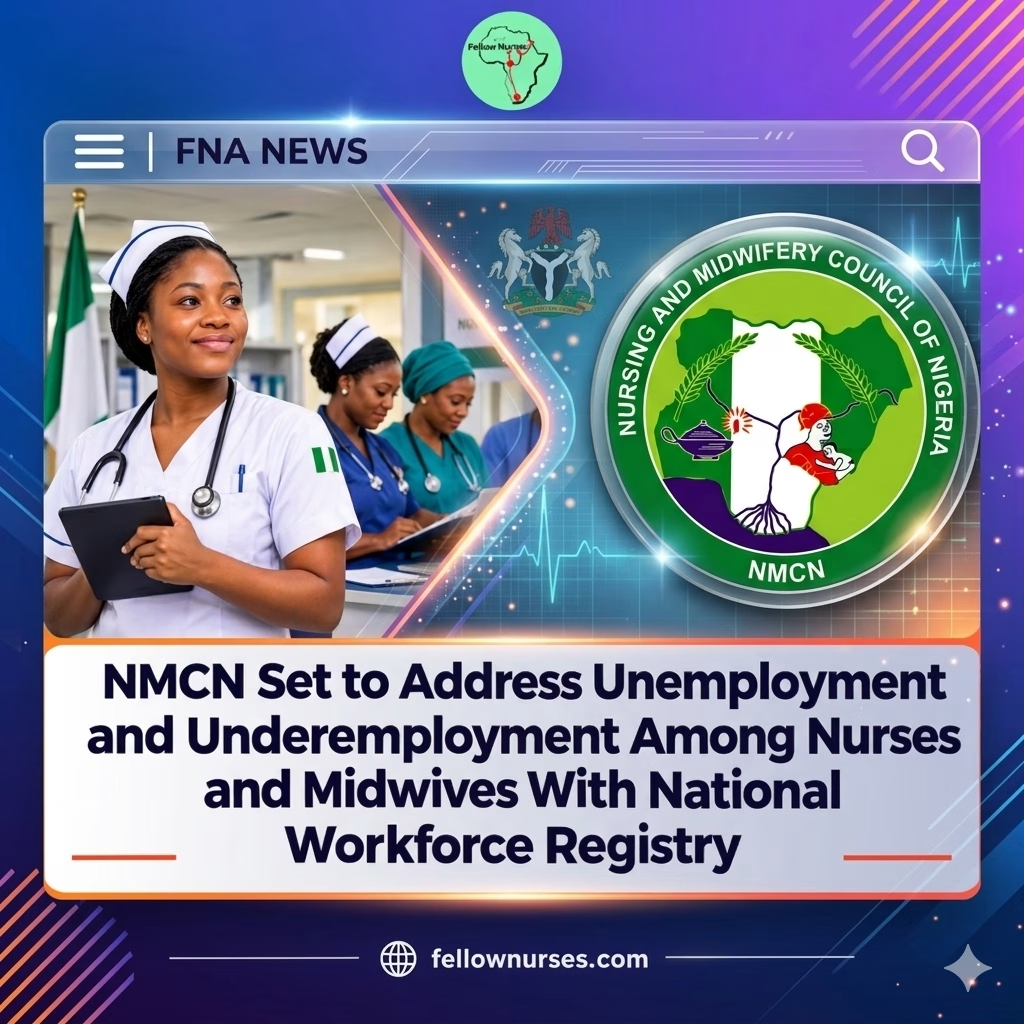
NMCN Set to Address Unemployment and Underemployment Among Nurses With National Workforce Registry
FNA NEWS, 17th of September, 2026
New MMRS Digital Hub is designed to connect nurses and midwives with verified employers while helping build a clearer picture of Nigeria’s nursing workforce.
👉 Join Fellow Nurses Africa on WhatsApp
The Nursing and Midwifery Council of Nigeria (NMCN) is set to introduce a National Nursing Workforce Registry designed to improve access to employment opportunities for nurses and midwives and strengthen workforce planning in Nigeria.
The Registry is part of the Midwives Mobilization & Redeployment Scheme (MMRS) Digital Hub, an NMCN-implemented platform that brings together workforce recruitment, deployment, professional development and career opportunities. The initiative comes as nurses and midwives continue to navigate challenges around employment, underemployment and the uneven distribution of health professionals across the country.
Rather than requiring professionals to depend solely on traditional recruitment channels, the new Registry is designed to create a central workforce pool where qualified nurses and midwives can build professional profiles and become visible to participating employers.
How the National Workforce Registry will work
According to MMRS, nurses and midwives will be able to create and manage professional profiles within the Registry.
The platform is intended to connect professionals with employment, deployment, mentorship and other professional opportunities. It also identifies opportunities across the public sector, private healthcare institutions and non-governmental or development organisations. This means a nurse looking for employment could create a professional profile and indicate relevant employment preferences and professional interests.
For employers, the model is different from relying entirely on conventional recruitment channels.
MMRS says participating employers will be able to search and recruit verified nursing and midwifery professionals through an MMRS-mediated hiring process.
In simple terms, the system is intended to create a direct connection between professionals and organisations looking for qualified nursing and midwifery staff.
A potential new route for unemployed nurses
For nurses who are unemployed or underemployed, the Registry could provide another route to employment.
Instead of repeatedly searching through separate job advertisements or relying on informal networks, professionals would have the opportunity to maintain a workforce profile within a national system.
The Registry is not, however, a guarantee of employment.
Creating a profile does not automatically mean a nurse will receive a job. Employment will still depend on available positions, professional qualifications, employer requirements and recruitment processes.
The difference is that the platform is designed to make qualified professionals more visible to organisations looking for nursing and midwifery personnel.
Why the Registry could also matter to NMCN
The initiative has implications beyond recruitment.
A structured national workforce registry could provide NMCN with a more organised source of information about the country’s nursing and midwifery workforce.
The MMRS webinar registration process included fields such as current employment status, preferred employment sector, professional designation, state of residence, years of professional experience and professional area of interest. Such information could potentially help workforce planners understand where professionals are available, what sectors they are interested in and where workforce gaps may exist.
This could be particularly useful when considering the distribution of nurses and midwives between urban centres, rural communities, primary healthcare facilities and other parts of the health system.
However, it would be premature to describe the Registry as an existing national database of all unemployed nurses.
The official MMRS webinar information stated that the September 16, 2026 webinar was held before Registry onboarding begins, indicating that the system is being introduced in stages.
More than a job platform
The National Workforce Registry is one part of a much wider MMRS Digital Hub.
The platform describes MMRS as a national digital workforce infrastructure supporting nurses and midwives from professional registration and workforce participation through deployment, professional development and employment.
Its wider programmes include the Nigeria Jubilee Fellows Programme (NJFP), Continuing Professional Development (CPD), mentorship and other professional opportunities.
Nigeria Jubilee Fellows Programme
👉 Join Fellow Nurses Africa on WhatsApp
The MMRS platform identifies the Nigeria Jubilee Fellows Programme as a programme connecting nursing and midwifery professionals with deployment opportunities, clinical mentorship and professional development.
The platform currently reports more than 1,700 fellows deployed across all 36 states and the Federal Capital Territory. MMRS also states a broader target of more than 10,000 midwife deployments by 2029.
Continuing Professional Development
The Digital Hub also plans to provide accredited continuing professional development opportunities for nurses and midwives.
MMRS currently lists more than 200 accredited courses and modules planned as part of its CPD programme.
Mentorship and career development
Mentorship is another component of the system.
MMRS says approved mentors can support fellows through career development plans, mentoring sessions and longer-term professional growth.
The platform also lists opportunities such as jobs, fellowships, scholarships, grants and conferences for nursing and midwifery professionals.
How it differs from the existing NMCN professional portal
For nurses, it is important to understand that the MMRS Workforce Registry is not simply a replacement for the existing NMCN professional portal.
The NMCN professional portal provides regulatory services including licence renewal, professional profile updates, verification and Certificate of Good Standing applications.
The MMRS Digital Hub has a broader workforce and career-development focus, including employment visibility, recruitment, deployment, mentorship and professional opportunities.
The distinction is important because nurses may still need to maintain their professional and licensing information through the appropriate NMCN regulatory channels.
What nurses and midwives should watch for
👉 Join Fellow Nurses Africa on WhatsApp
The September 16 national webinar was intended to introduce the Registry, explain how professional profiles will work, outline how employers will interact with the workforce pool and prepare nurses and midwives for onboarding.
As the Registry moves into onboarding, professionals should look for official instructions on:
- How to create a Registry profile
- The documents and professional information required
- How NMCN registration and licence status will be verified
- How employers will access professional profiles
- How recruitment will take place
- Whether there are any fees associated with using the platform
- How personal and professional data will be protected
Nurses and midwives should also be cautious about unofficial recruitment links or individuals requesting money in the name of MMRS.
The official MMRS website identifies the platform as being implemented by NMCN and provides its official contact channels. ([MMRS Digital Hub][1])
A possible shift in Nigeria’s nursing workforce management
The significance of the National Workforce Registry extends beyond whether it helps one nurse find one job.
If implemented effectively, it could create a more structured connection between nurses seeking opportunities, employers seeking qualified professionals and policymakers responsible for workforce planning.
For nurses, the immediate benefit could be greater visibility to potential employers.
For healthcare organisations, the platform could provide a central pool from which to identify qualified nursing and midwifery professionals.
For NMCN and other workforce planners, the information generated through a structured registry could potentially support better understanding of workforce availability and employment preferences.
But the success of the initiative will ultimately depend on how widely nurses and employers adopt it, how accurately professional information is maintained, how effectively recruitment is managed and whether available opportunities match the needs of the workforce.
For a profession as central to Nigeria’s health system as nursing, building a better connection between qualified professionals and available opportunities could be an important part of addressing workforce challenges.
The National Workforce Registry therefore represents more than another digital platform. It is an attempt to build a more organised system around who Nigeria’s nurses and midwives are, where they are available, what opportunities they seek and how healthcare organisations can find them.
👉 Join Fellow Nurses Africa on WhatsApp
Fellow Nurses Africa is the independent voice of African nursing, we educate, inform and support nurses across Africa.

Durowoju Abisola is a registered nurse, nurse writer and On-Air Correspondent at Fellow Nurses Africa (FNA), passionate about nursing leadership, health education and advocacy.
Through journalism, storytelling and content creation, she amplifies important conversations around nursing, healthcare and the experiences of nurses in Nigeria. She is committed to using her voice and professional knowledge to educate the public, challenge misconceptions and inspire the next generation of nurses.