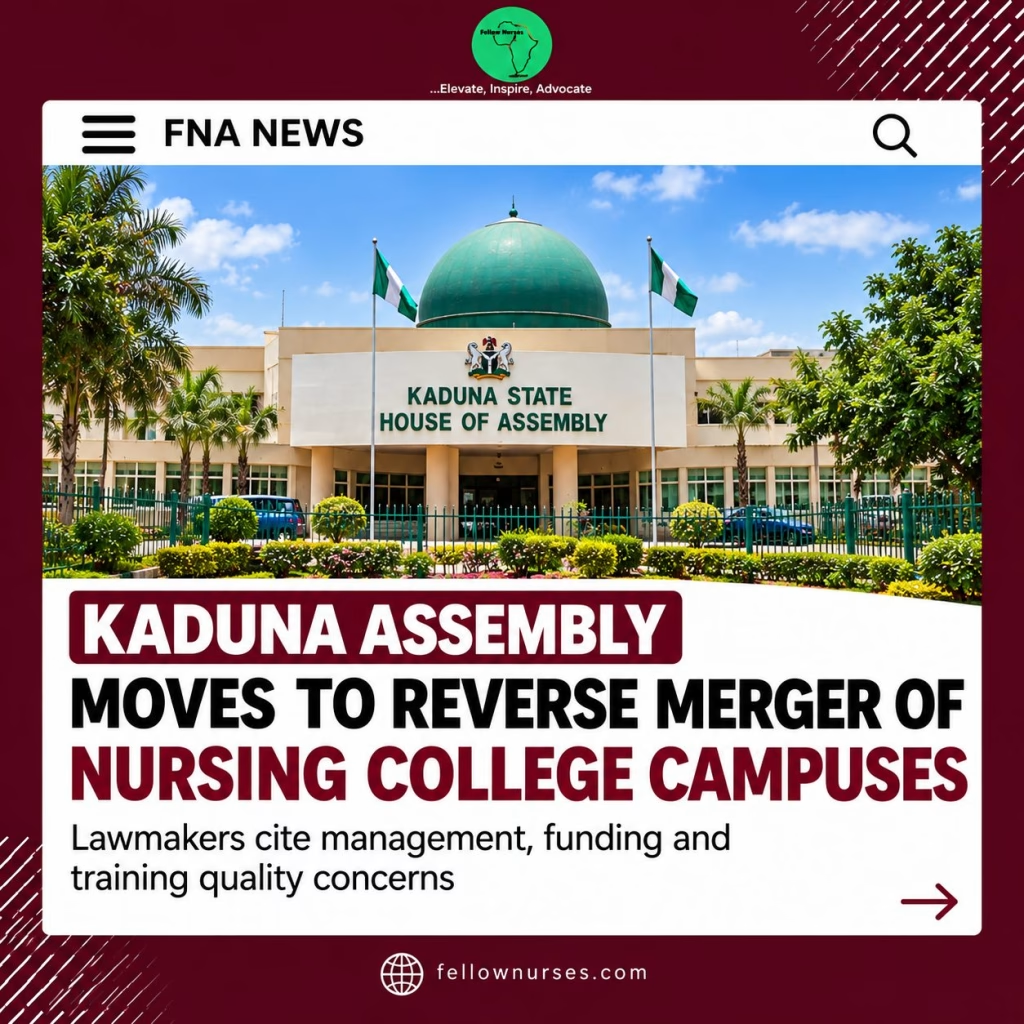
Kaduna Assembly Moves to Reverse Merger of Nursing College Campuses Over Management and Funding Concerns
FNA NEWS, 15th Of OCTOBER, 2026
The proposed reform would give the three campuses greater administrative independence, with lawmakers arguing that the current structure has created challenges for coordination, funding and nursing education.
👉 Join Fellow Nurses Africa on WhatsApp
The Kaduna State House of Assembly is considering legislation to reverse the merger of three campuses of the Kaduna State College of Nursing and Midwifery, following concerns that the existing administrative structure is affecting institutional management, funding and the quality of professional training.
The proposal seeks to grant greater independence to the campuses in Tudun Wada, Kafanchan and Pambegua, allowing them to manage their operational needs and respond more effectively to local infrastructure and academic challenges.
The development was reported on October 14, 2026, following deliberations at the Kaduna State House of Assembly.
Why Kaduna lawmakers want to reverse the merger
The proposal was initiated by Ali Kalat, the lawmaker representing Jema’a Constituency, who raised concerns about the challenges associated with managing the three campuses under a single administrative structure.
According to reports the merger was established under the Kaduna State College of Nursing and Midwifery Law of 2018, which brought the former nursing and midwifery institutions under one multi-campus system.
Under the current arrangement, the provost operates from the Tudun Wada campus, while deputy provosts oversee the Kafanchan and Pambegua campuses.
Kalat argued that the arrangement had created difficulties in communication, coordination and the timely release of operational funds to the campuses.
These challenges, he maintained, have made it more difficult for the individual campuses to address their administrative, financial and infrastructural needs.
The lawmaker believes that restoring their independence would allow each campus to manage its resources more effectively and improve the delivery of nursing and midwifery education.
How the proposed de-merger could affect nursing students
👉 Join Fellow Nurses Africa on WhatsApp
The debate goes beyond administrative arrangements. It raises important questions about the learning environment, resource allocation and the quality of professional training available to nursing and midwifery students.
A multi-campus institution can benefit from shared leadership, coordinated academic standards and pooled resources. However, such a structure also requires efficient communication, transparent funding arrangements and effective oversight across all locations.
Where these systems are inadequate, delays in funding and decision-making can make it harder for individual campuses to respond to pressing operational needs.
Greater campus autonomy could help address these concerns by enabling management teams to make decisions based on their specific circumstances. However, independence alone would not guarantee better outcomes.
The success of any reform would depend on adequate funding, qualified teaching staff, suitable learning facilities, effective governance and compliance with the standards set by the relevant regulatory bodies.
For students, the priority should be uninterrupted training, access to essential learning resources and the consistent delivery of approved nursing and midwifery programmes.
What happens next?
The proposed de-merger requires legislative action before it can become a legal reality.
Following deliberations on the issue, the Assembly indicated that the existing law governing the college would need to be reviewed and amended to provide a legal basis for the proposed changes.
Kalat said he was preparing a bill to reverse the merger arrangement. Relevant committees of the Assembly are expected to examine the existing legislation and proposed amendments as the process moves forward.
Until the legislative process is completed, the three campuses remain part of the existing multi-campus institution.
Campus autonomy must translate into better education
The proposed reform presents Kaduna State with an opportunity to reconsider how its nursing and midwifery training institutions are managed.
However, the central question should not be whether a unified institution or independent campuses are inherently better. It should be which governance structure delivers stronger educational outcomes, more accountable spending and better-prepared healthcare professionals.
If the merger has contributed to delays in funding, weak coordination or inadequate infrastructure, the state government and college management must establish clear evidence of these problems and demonstrate how the proposed changes would resolve them.
A de-merger should also include transparent funding arrangements, clearly defined responsibilities, measurable academic performance indicators and safeguards against duplication of administrative costs.
Equally important, nursing and midwifery students should not bear the burden of institutional restructuring. Any transition must protect their academic progress, maintain approved training standards and prevent avoidable disruption to teaching and clinical placements.
Kaduna State’s decision could have wider implications for discussions about the governance of professional health training institutions. The outcome will depend not simply on separating the campuses, but on whether the new structure improves accountability, strengthens teaching and learning, and produces competent graduates for the healthcare system.
For now, the proposal remains under legislative consideration. Its ultimate value will be measured by the improvements it delivers to students, educators and the quality of nursing and midwifery education in the state.
👉 Join Fellow Nurses Africa on WhatsApp
Fellow Nurses Africa is the independent voice of African nursing, we educate, inform and support nurses across Africa.

Durowoju Abisola is a registered nurse, nurse writer and On-Air Correspondent at Fellow Nurses Africa (FNA), passionate about nursing leadership, health education and advocacy.
Through journalism, storytelling and content creation, she amplifies important conversations around nursing, healthcare and the experiences of nurses in Nigeria. She is committed to using her voice and professional knowledge to educate the public, challenge misconceptions and inspire the next generation of nurses.