Law Graduates Association of Nigeria Urges Madonna University to Reverse Nursing Student’s Expulsion Over Viral Video
FNA NEWS, 7th Of October, 2026
The association says the disciplinary action should be proportionate to the misconduct and allow room for correction and rehabilitation.
👉 Join Fellow Nurses Africa on WhatsApp
The Law Graduates Association of Nigeria (LAWGAN) has urged the management of Madonna University, Elele Campus, Rivers State, to reconsider the expulsion of a 500-level nursing student over a viral video recorded within the university’s teaching hospital.
The association also called for a review of the suspension imposed on 14 other nursing students involved in the incident, arguing that disciplinary measures should correct misconduct without unnecessarily ending a student’s academic and professional journey.
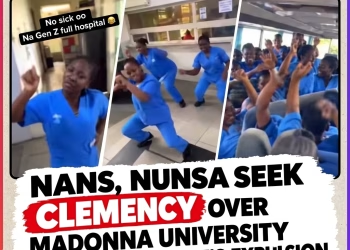
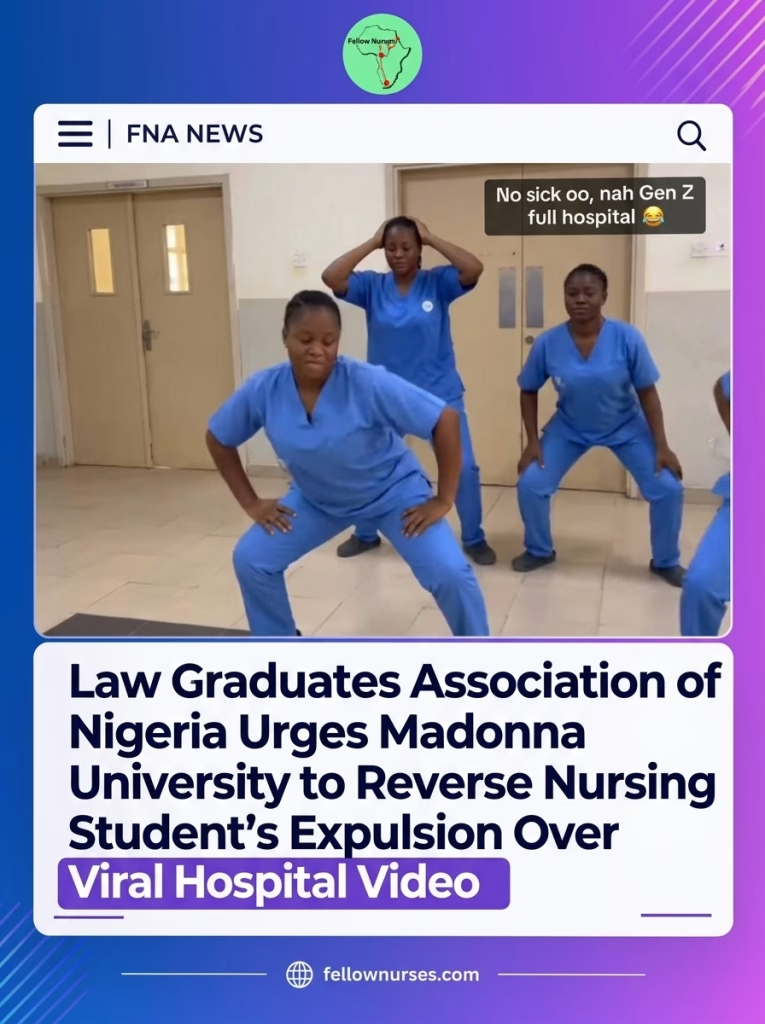
The controversy followed the circulation of a social media video showing nursing students dancing in different areas of the university premises, including a hospital environment. The video carried the caption, “No sick oo, nah Gen Z full hospital,” and subsequently attracted widespread attention online.
Madonna University later confirmed that disciplinary action had been taken against the students. Reports indicate that one 500-level nursing student was expelled, while 14 others were suspended for one year. The Nigerian Universities Nursing Students’ Association (NUNSA) also confirmed the sanctions and said it had begun engaging relevant stakeholders and the university management over the matter.
LAWGAN calls for reconsideration
In a statement signed by its President, Kayode Bello, and Public Relations Officer, Ojo Clement, LAWGAN acknowledged the authority of educational institutions to enforce discipline and uphold standards.
However, the association appealed to Madonna University to reconsider what it described as the severity of the sanctions, particularly the expulsion of the final-year student.
LAWGAN said it does not condone conduct that undermines the dignity, professionalism or ethical standards expected of nursing students. It nevertheless argued that disciplinary measures should be proportionate to the misconduct and should serve a corrective and rehabilitative purpose.
The association suggested alternatives including a stern written warning, an undertaking, suspension or another proportionate disciplinary measure that would allow the affected student to continue her education while remaining accountable for the incident.
‘Discipline should also create room for correction’
👉 Join Fellow Nurses Africa on WhatsApp
LAWGAN said the students had invested years of study, financial resources and effort in pursuing their nursing education and professional ambitions.
It argued that expelling a student at the final stage of a professional programme could have significant consequences for the individual’s academic and future career prospects.
The association therefore called for an approach to discipline that goes beyond punishment.
“We believe that discipline should not merely punish wrongdoing but should also provide an opportunity for young people to recognise their mistakes, learn from them and make better choices in the future,” LAWGAN said. It also urged the affected students to demonstrate that they understood the seriousness of their actions and the professional standards expected of them as future nurses.
Growing calls for review
LAWGAN’s intervention comes after similar calls from student and nursing groups.
The National Association of Nigerian Students (NANS) had appealed to Madonna University to replace the expulsion with a stern warning, arguing that the students’ conduct was inappropriate but that permanent expulsion could have lasting consequences for their education and careers.
NUNSA National has also called for constructive dialogue and a fair review of the disciplinary measures. The association said it had commenced engagements with relevant stakeholders and the university management to represent the interests and welfare of the affected students.
The calls for reconsideration have, however, not dismissed the concerns surrounding the students’ conduct.
The incident has raised wider questions about social media use by nursing students, professional behaviour in clinical environments and the boundaries between personal expression and the responsibilities attached to healthcare training.
For nursing students, clinical environments are not simply locations for academic learning. They are professional spaces where issues such as patient dignity, confidentiality, institutional rules and appropriate conduct are particularly important.
At the same time, the growing calls for clemency have shifted part of the conversation towards proportionality, rehabilitation and whether disciplinary sanctions should permanently derail a student’s professional aspirations.
A wider conversation for nursing education
The Madonna University case highlights a challenge that nursing schools and students are increasingly likely to face as social media becomes deeply integrated into student life.
The question is not only whether students should be held accountable when their conduct breaches institutional or professional expectations. It is also how nursing institutions can combine accountability with education, ensuring that disciplinary processes help students understand the professional responsibilities they are preparing to assume.
For now, LAWGAN has joined NANS, NUNSA and other stakeholders calling for Madonna University to reconsider the sanctions.
The association’s appeal is ultimately for the university to “temper justice with mercy” while maintaining appropriate disciplinary measures and giving the affected students an opportunity to learn from the incident.
The development leaves an important question at the centre of the debate: when a nursing student violates professional expectations, should the primary goal of discipline be punishment, or should it also create a pathway for correction and rehabilitation?
👉 Join Fellow Nurses Africa on WhatsApp
Fellow Nurses Africa is the independent voice of African nursing, we educate, inform and support nurses across Africa.

Durowoju Abisola is a registered nurse, nurse writer and On-Air Correspondent at Fellow Nurses Africa (FNA), passionate about nursing leadership, health education and advocacy.
Through journalism, storytelling and content creation, she amplifies important conversations around nursing, healthcare and the experiences of nurses in Nigeria. She is committed to using her voice and professional knowledge to educate the public, challenge misconceptions and inspire the next generation of nurses.